

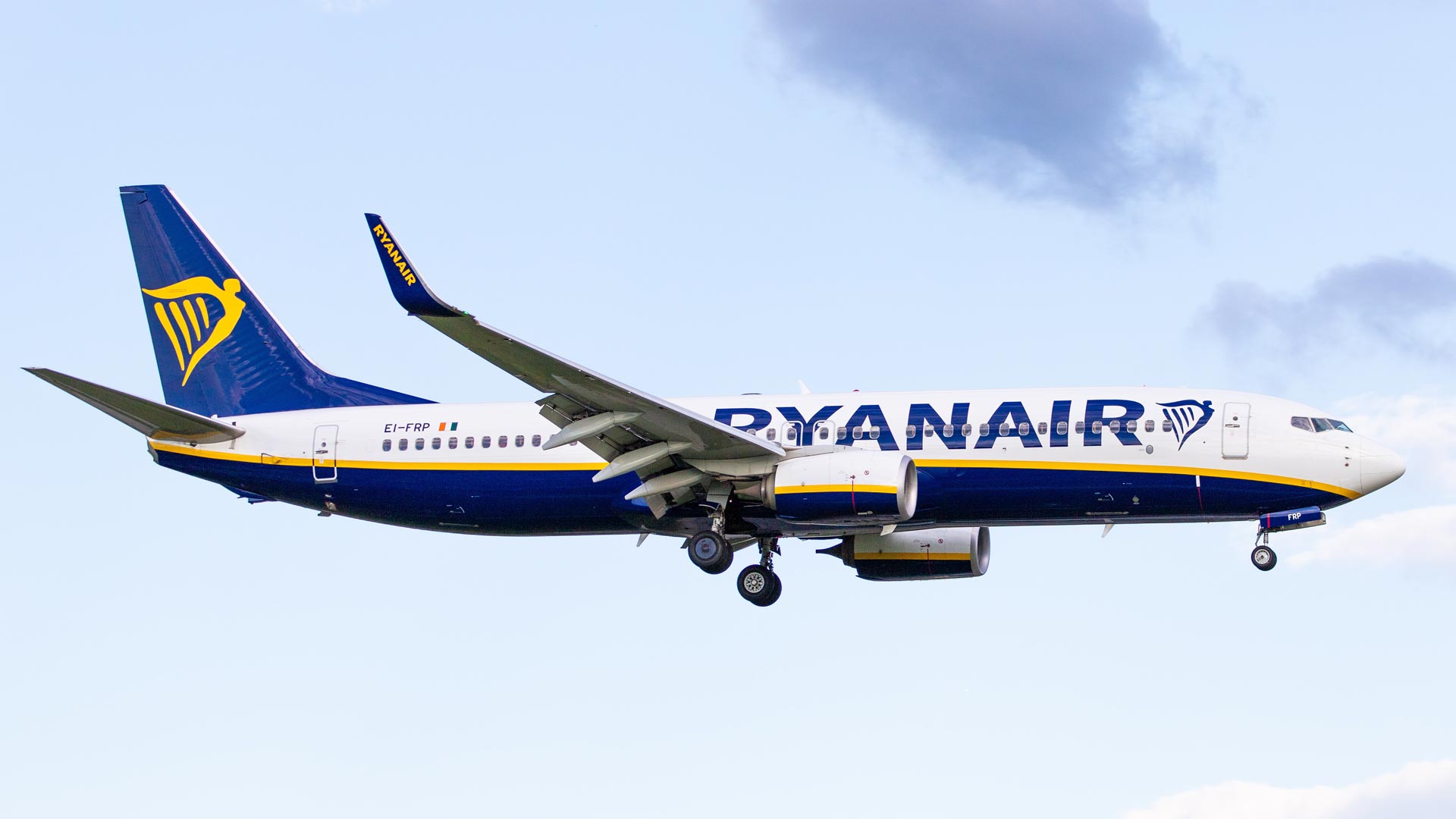
Ryanair has reported an after-tax profit of €1.72bn for the fiscal-year second quarter, driven by record passenger traffic and higher fares.
After-tax profit rose 20% over the same period last year, while revenue rose 8% to €5.48bn.
Ryanair also reported its fiscal-year H1 results, delivering an after-tax profit of €2.54bn — an increase of 42% over the same period last year.
However, Ryanair Group CEO Michael O’Leary said the substantial percentage gain can be partly attributed to the company’s “weak” performance during Easter in the prior year period.
In Ryanair's 2025 fiscal year’s H1, passenger traffic grew 3%, but fares and revenue each rose 13%, with the latter coming in at €9.82bn.
In an investor call, O’Leary said the company benefitted from having the full Easter holiday in Q1, helping the airline to “fully recover” the 7% fare decline that it suffered in the previous year's second quarter.
Passenger growth for the most recent quarter increased 2% to 61 million. Neil Sorahan, Ryanair Group CFO, said this was “slightly ahead” of expectations but still “way behind” Ryanair’s normal passenger growth.
“We were short of aircraft coming into the peak summer period due to Boeing deliveries, but, thankfully, they are being caught up now,” he added.
Operating costs rose 4% in fiscal-year H1, or 1% on a per passenger basis, to €6.96bn. Significant contributors to these costs included higher air traffic control (ATC) fees, which were up 14%, and EU SAF mandate compliance costs, but these were partly offset by fuel hedges.
As far out as FY H2 2026 and FY 2027, the Group’s fuel costs are 85% hedged at just under $67 per barrel.
Among its highlights from this fiscal year's second quarter, Ryanair took delivery of 199 ‘Gamechanger’ 737-8200 aircraft as of the end of September, bringing its total 737 fleet to 636.
During October, Ryanair took delivery of five more 737-8200 aircraft, bringing its total 737 fleet to 641.
O’Leary said that Boeing’s “improved” delivery rates had allowed the airline to carry extra passengers in H1 and expand capacity during the peak October mid-term school holidays.
As of today, Ryanair is awaiting delivery of only six more 737-8200 aircraft out of a total order book of 210.
These last remaining aircraft are expected to be delivered by September 2026, and are expected to drive 4% traffic growth to 215m in FY 2026.
O’Leary noted that Boeing is expected to receive MAX 10 certification in mid-2026, and is expected to meet its contractual delivery dates of 15 MAX 10 aircraft to Ryanair in spring 2027 and 300 by March 2034.
“We expect European short-haul capacity to remain constrained to at least 2030 as the big two OEMs remain behind on aircraft production, and Pratt & Whitney engine repairs continue to be an issue for many Airbus operators,” said O’Leary.
Sorahan noted that Ryanair’s purchase of 30 spare LEAP engines are expected to arrive by the end of the current fiscal year.
O’Leary described the company’s balance sheet is “strong”, with gross cash of €3bn as of September 30, 2025.
This takes into account €1.2bn of debt repayments, including an €850m bond in September, as well as €1.1bn capex and €0.4bn shareholder distributions.
The CEO added that Group liquidity is further “boosted” by a revolving credit facility of which €1bn is undrawn.
Net cash rose to over €1.5bn from €1.3bn at the end of March 2025, leaving the Group “well positioned” to fund capex and pay its last remaining bond (€1.2bn) in May 2026 from internal liquidity.
“This financial strength widens the cost gap between Ryanair and our competitors, many of whom remain exposed to expensive long-term finance and rising aircraft lease costs,” said O’Leary.
The CEO added that Ryanair’s bond repayment in May 2026 will leave it in the “unique” position, among non-government-owned airlines, of having zero debt.
Among the tailwinds anticipated in the near- to mid-term, O’Leary said that EU airline consolidation will accelerate and unprofitable airlines will withdraw capacity from markets where they are “unable to compete” with Ryanair’s lower costs.
“Industry capacity constraints, combined with our widening cost advantage, strong balance sheet, low-cost aircraft orderbook, and industry leading operational resilience will facilitate Ryanair’s controlled profitable growth to 300m passengers per annum by FY34,” he said.