

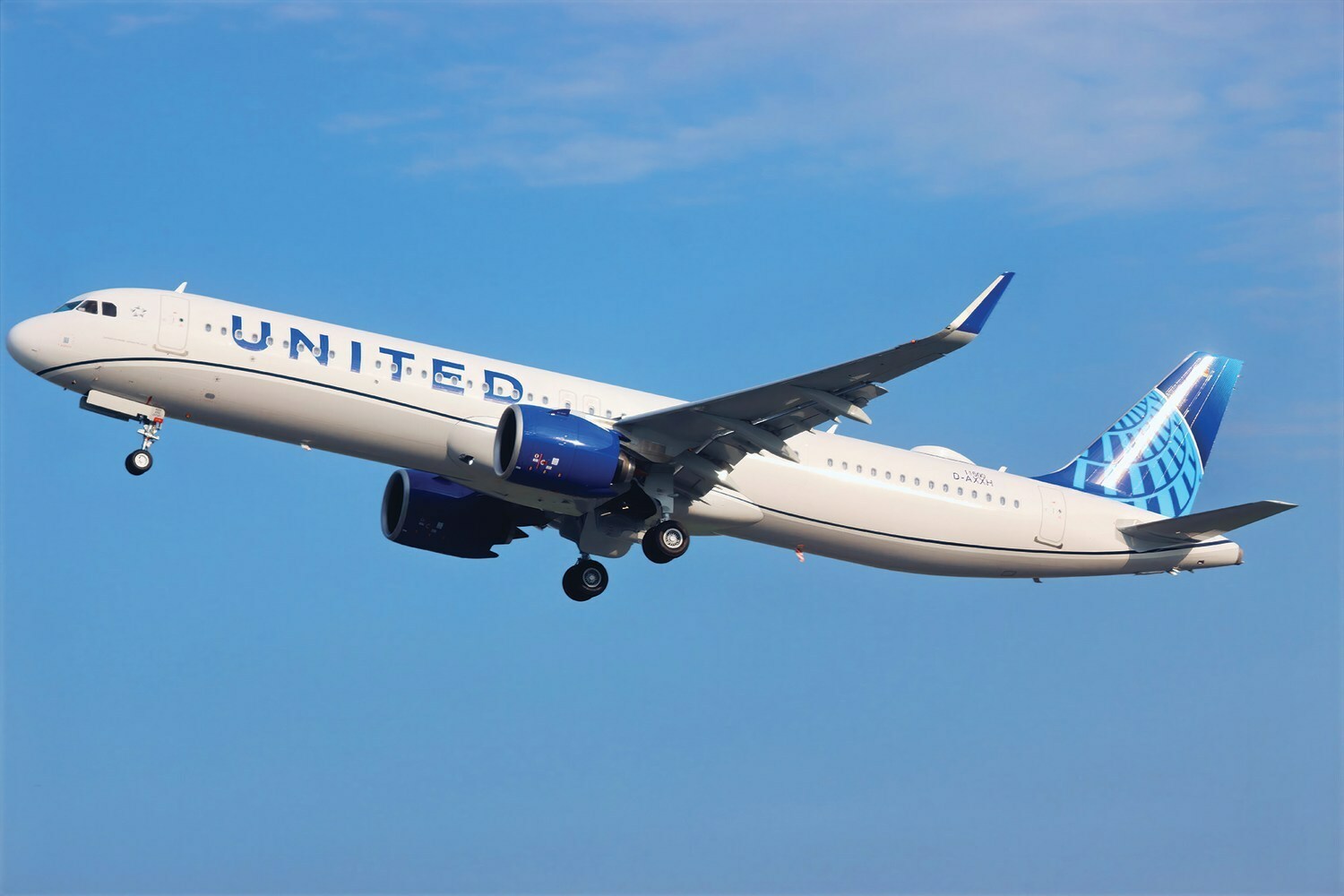
United Airlines has forecast a drop in revenue during the second quarter of the year, warning that full year earnings could swing depending on the state of the US economy.
The company said that expectations for the year have become bimodal – either the US economy will remain weaker but stable, or it may enter into a recession. United is therefore providing two separate guidance benchmarks based on these two different macroeconomic views.
In a stable economic environment, the airline expects full year adjusted earnings per share (EPS) to range from $11.50 to $13.50, in line with estimates made by the airline at the start of the year. However, if a recession hits, United projects EPS could fall to between $7 and $9, resulting in a 5% drop in revenue during the second quarter.
Speaking on United's first quarter earnings call on April 16, 2025, airline CFO Michael Leskinen stated that full-year EPS guidance of $11.50–$13.50 would only come to fruition if “current booking trends hold, costs remain tightly controlled, and second-half fuel prices average 20 cents lower than in the first half”.
For the second quarter of the year, United guided adjusted EPS between $3.25 and $4.25.
The airline also said that planned domestic capacity will be cut by 4%, starting in the third quarter of 2025, citing current demand trends. This follows Delta Air Lines’ announcement last week that it would be trimming capacity in the back end of the third quarter, citing weakening demand on domestic and regional routes.
United said it will adjust its fleet utilisation, including further reductions in off-peak flying on lower-demand days, a strategy it expects to maintain through the fourth quarter. Additionally, the airline will retire 21 aircraft earlier than originally scheduled.
Despite this outlook, the airline said that its forward bookings over the last two weeks have remained stable, with premium cabin bookings up 17% and international up 5% when compared to figures recorded during 2024.
In addition to this outlook, United posted its best first-quarter financial results in the past five years, reporting a first-quarter profit with an operating revenue of $13.2bn, up by just over 5% on the same period of the year prior. Total revenue per available seat mile (TRASM) saw growth of 0.5% when compared to the first three-month period of 2024.
During the first quarter earnings call, CEO Scott Kirby described the first three months of the year as "eventful" and highlighted two key themes: United’s strong operational performance and its financial resilience, driven by a loyal customer base and permanent market share gains. Kirby noted that United is one of only two US airlines expecting to post a profit for the quarter, despite broader market challenges.
The company also posted diluted EPS of $1.16 and adjusted diluted EPS of $0.91, within the $0.75 to $1.25 guidance range provided at the start of the quarter. Pre-tax earnings totalled $500 million, with a pre-tax margin of 3.6%. Net income of $400 million.
Passenger revenue rose 4.8% to with premium revenue up 9.2% and business revenue up 7.4%. Cargo and other revenue also rose by high single digits. TRASM rose 0.5% in the quarter with yields up 1.2% in line with investor forecasts.
United ended the quarter with $18.3bn in liquidity, generating $3.7bn in operating cash flow and $2.3bn in free cash flow. Free cash flow generation was noted as being a “top priority” for the airline going forward.
“We are impressed by the ongoing improvements the company has achieved in its March quarter results over the last several years,” said TD Cowen analysts Tom Fitzgerald and Helane Becker.
The analysts added: “It averaged a 4.4% adjusted EBIT margin in March quarters between 2017 and 2019, and this year's results put it closer to pre-COVID profitability. The airline flew its largest ever schedule to Latin America this past quarter and likely benefited from product investments such as Spanish translations in the United app.”
United chief commercial officer Andrew Nocella noted that off-peak domestic demand softened in the first quarter, with domestic main cabin revenue per available seat mile (RASM) declining and a gap of around 40% opening between peak and off-peak periods. On the international side, Nocella emphasised that most of the demand remains US - origin driven. Japan and Germany were both flagged as strong-performing markets, while foreign-origin demand has softened but has largely been offset by US - based travellers.
Speaking on tariffs, the airline reaffirmed that aircraft orders are not expected to be affected by tariffs, with most A321neo deliveries set to come from Airbus' Alabama facility, with Kirby stating that he sees this as an opportunity to “strengthen ties” with Airbus.
Kirby also noted - in response to a question on whether there is a current crisis in the aerospace industry - that it is “way too early to be declaring a crisis”. He added that we are still in the “opening game” of how these tariffs will play out for global economies.
In addition, United's first mainline aircraft equipped with Starlink Wi-Fi is expected to enter service before the end of 2025, with Starlink-equipped planes starting to fly as early as next month.