

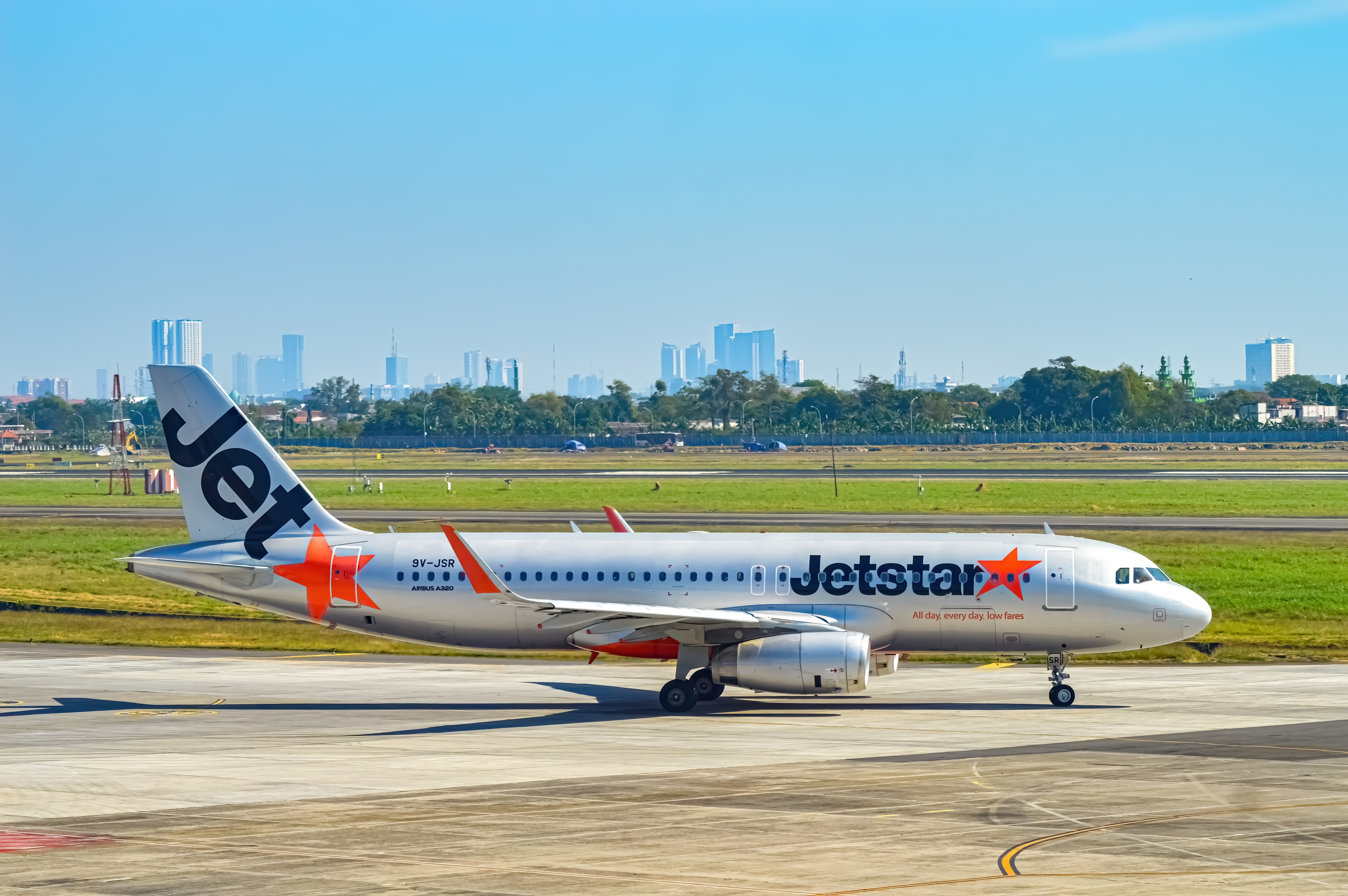
Qantas will close its Singapore-based low-cost carrier, Jetstar Asia, blaming the decision on rising supplier costs, high airport fees, and intensified competition in the Asia-Pacific region.
The Australian airline said that it has been “fundamentally challenging” for Jetstar Asia to deliver returns comparable to the stronger-performing core markets within the Qantas Group, with all airline operations ceasing on July 31, 2025.
The closure of the airline will see 13 Jetstar Asia A320 aircraft progressively redeployed throughout “core markets” in Australia and New Zealand. This will also allow for the redeployment of up to A$500 million ($325.4 million) in capital, supporting Qantas’ fleet renewal program.
A total of 16 intra-Asia routes will be impacted by the closure of Jetstar Asia, with no changes to Jetstar Airways and Jetstar Japan services into Asia, Qantas confirmed.
The Australian carrier noted that the redeployment of these 13 mid-life Airbus aircraft will support growth, while creating more than 100 local jobs, replacing leased aircraft in Jetstar Airways’ domestic operation and reducing its cost base.
Over 500 job losses are expected at Jetstar Asia once the 20-year-old airline ceases operations. All affected employees will be provided with redundancy benefits as well as employment support services, with Qantas noting that it is “actively working” to find job opportunities across the airline group and with other airlines in the region for these impacted employees.
Jetstar Asia operates around 180 weekly services at Singapore’s Changi Airport and carried about 2.3 million passengers in 2024, around 3% of the airport’s total traffic.
“Unfortunately, despite our best efforts, the local market conditions have ultimately impacted our ability to continue to offer the everyday low fares that are our DNA,” said John Simeone, Jetstar Asia CEO. “And while today is a very difficult and sad day, I am also incredibly grateful and appreciative of our Jetstar Asia team and their tireless support and service to our customers and our airline.”
The airline is expected to post an A$35 million ($22.7 million) underlying EBIT loss this financial year ending June 30, 2025. Qantas CEO Vanessa Hudson stated that despite efforts, some of Jetstar Asia’s supplier costs have increased by up to 200%, which has materially changed its cost base.
Qantas said that the closure of the low-cost carrier will result in one-off redundancy and restructuring costs, as well as the non-cash expensing of historical foreign currency translation losses from equity reserves and asset write-downs from consequential changes in the group’s fleet structure.
The combined impact is currently estimated to be approximately A$175 million ($113.9 million). The direct pre-tax cash impact will be approximately A$160 million ($104.1 million), predominantly in the next financial year, including unwinding Jetstar Asia’s working capital.
This will be materially mitigated by working capital benefits from growth in Jetstar Airways utilizing the redeployed aircraft, and from consequential tax adjustments impacting tax payments across the group for the coming years.
Jetstar Airways will continue to fly from Australia into Asia, including to all its popular destinations across Singapore, Thailand, Indonesia, Vietnam, Japan, and South Korea.