

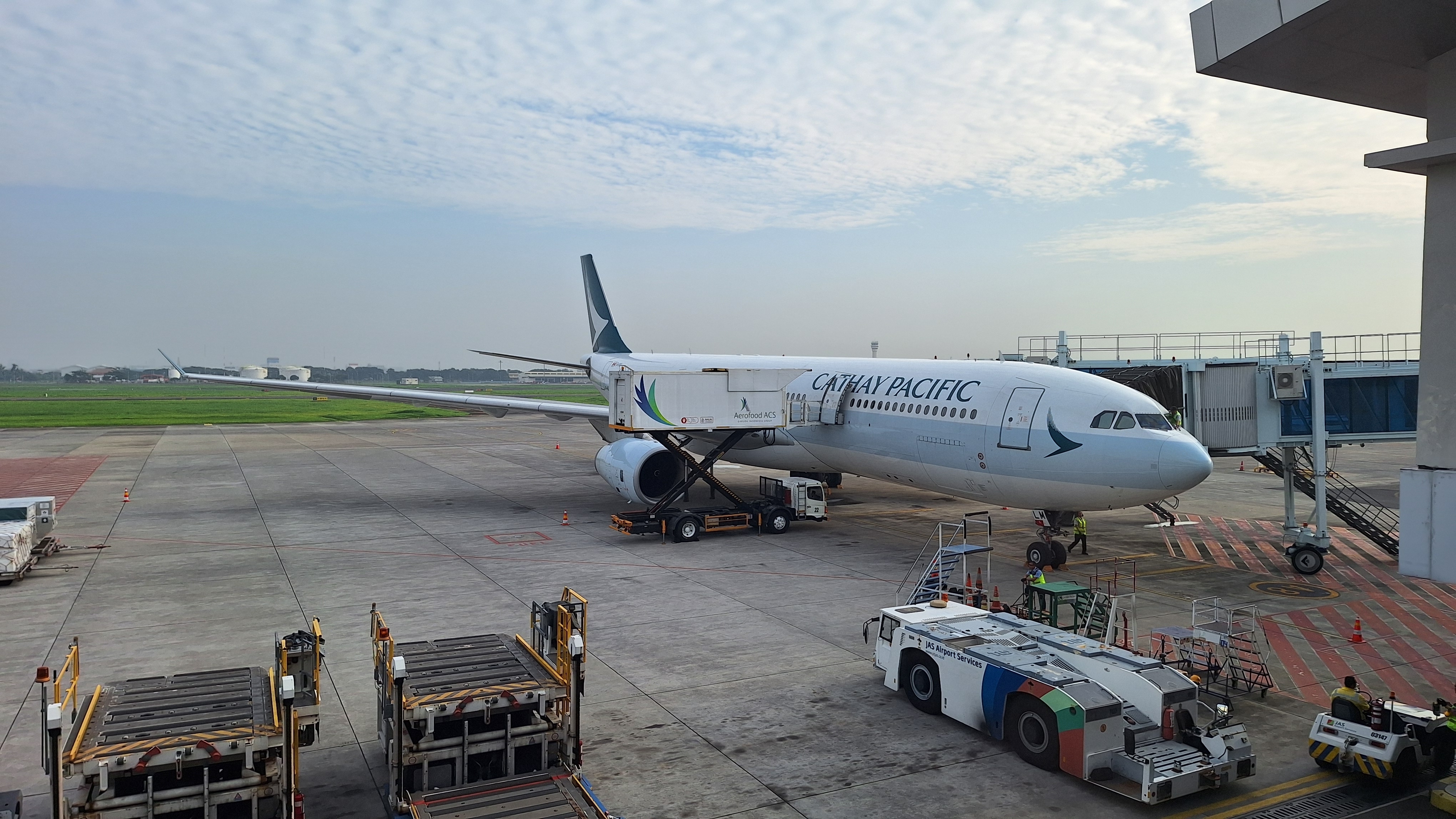
The Cathay Pacific Group has placed an order for 14 additional 777-9 aircraft, bringing its total order for the model to 35, with options for seven more. The aircraft are expected to support Cathay’s expansion plans in long-haul travel.
This order comes as the airline group reported a marginal 1% increase in first-half profit to HK$3.65bn ($465 million) on August 6, 2025, with this increase supported by strong passenger numbers, lower fuel costs, and a steady cargo performance.
Revenue for the six-month period rose 9.5% on the prior year to HK$54.3bn ($6.91bn), up from HK$49.6bn ($6.31bn) a year earlier.
“Over the past few years, we have embarked on an all-encompassing fleet renewal and expansion plan, which includes orders for over 100 new narrowbody, regional widebody, long-haul widebody and large freighter aircraft,” said Cathay Group chair Patrick Healy.
Healy noted that this latest order pushes the group's total investment to well over HK$100bn ($12.74bn), encompassing new cabin products, upgraded lounges, and digital innovations. These enhancements are aimed at further reinforcing Hong Kong’s position as a global aviation hub.
Following the result, the group announced a first interim dividend of HK20 cents ($0.025) per ordinary share, amounting to HK$1.3bn ($165.5 million). This matches the dividend paid in 2024.
Despite the increase in traffic and operational capacity, the group saw declining yields across both its passenger and cargo segments.
At Cathay Pacific, passenger yield dropped 12.3% to HK60.4 cents ($0.076), while passenger revenue per available seat kilometre (ASK) fell 9.9%. Low-cost carrier HK Express reported more increased pressures, with passenger revenue per ASK dropping 27.3%, and yield fell 21.6%, with its load factor declining from 85% to 78.9%.
The cargo business also saw challenges. Although volumes increased, cargo yield declined 3.4%, while cargo revenue per available freight tonne kilometre (AFTK) was down 5.6%.
Despite the pressures, Cathay remains upbeat about its outlook. The group said it remains "fully confident" in Hong Kong’s role as a global aviation hub, pointing to the more than HK$100bn in investment in new aircraft, lounges, and technology. Travel demand is expected to remain strong in the near term, with the airline planning to expand its network and enhance customer service.
However, the cargo business remains exposed to external risks. The company acknowledged that market conditions are uncertain and said it would continue to be “vigilant and agile” while investing in specialised cargo offerings and sustainability initiatives.
HK Express, which has recently launched new routes, continues to face short-term challenges. While there has been a pickup in bookings to Japan, levels have yet to return to normal.
“These routes will take time to mature,” the company said. “However, our customers have responded well to them initially.”
Cathay added that it is taking a long-term view of HK Express and remains confident in its path to profitability as the airline improves efficiency and strengthens its operations.