Almost half of all scheduled departures from the Middle East have been cancelled since the start of the regional conflict on February 28, according to new data from aviation analytics firm Cirium.
Cirium analysis shows that 30,922 flights out of 62,795 scheduled departures from the Middle East were cancelled or did not operate, representing 49.2% of all flights over the period.
Disruption peaked in the first days of the conflict when more than 65% of flights were cancelled on March 1–3, as airlines rapidly suspended services across large parts of Middle Eastern airspace.
While disruption remains severe, the data suggests conditions are gradually stabilising, with the cancellation rate falling to 26.5% on March 18, less than half the peak levels seen earlier in the crisis.
The impact has been particularly acute for airlines based in the Gulf and Levant.
Since February 28:
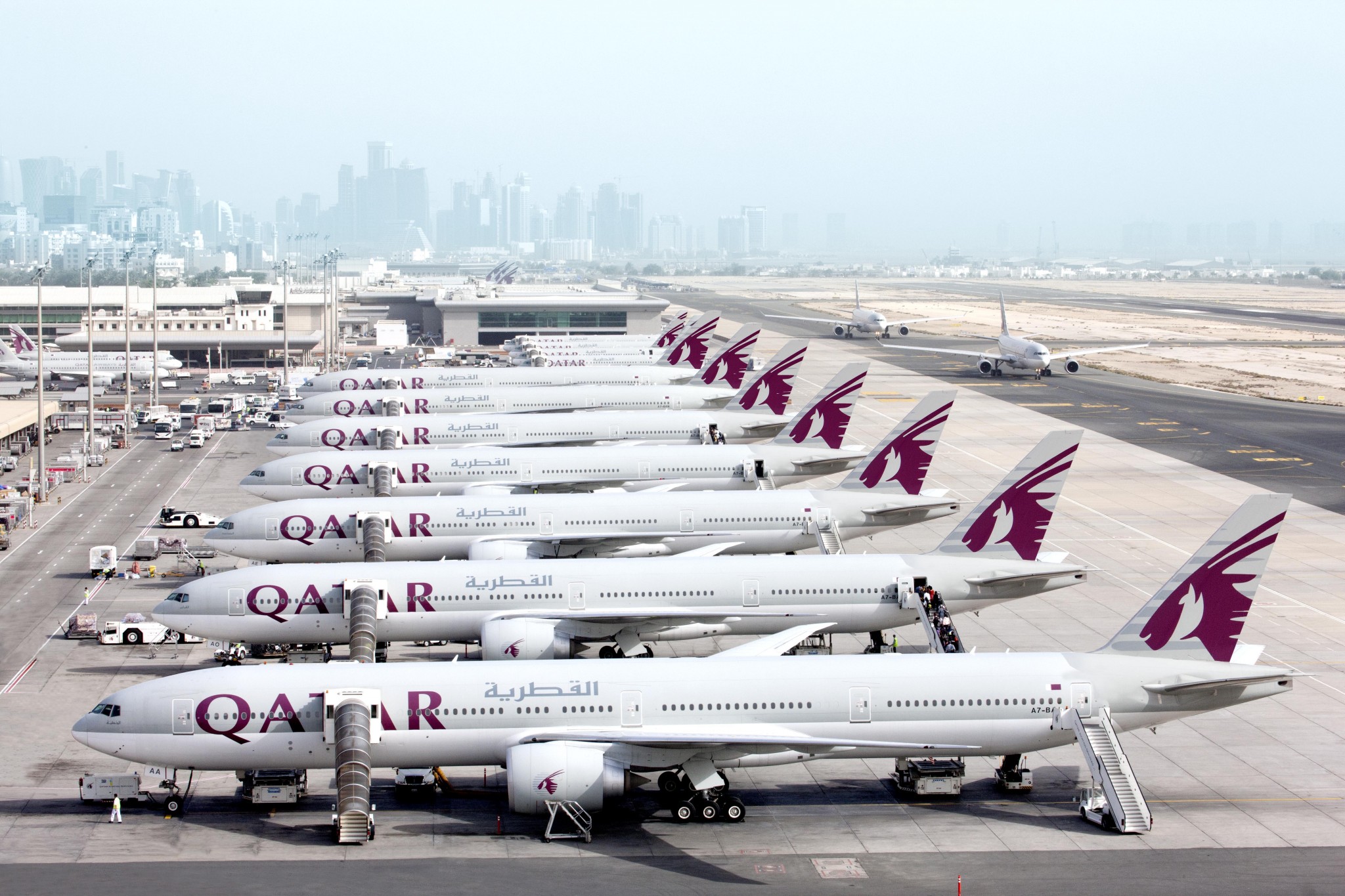
Qatar Airways cancelled 4,765 flights (92.9%)
Gulf Air cancelled 1,948 flights (98.1%)
Kuwait Airways cancelled 1,074 flights (97.1%)
El Al cancelled 898 flights (86.9%)
Etihad Airways cancelled 2,288 flights (77.8%)
Other regional carriers have maintained more limited operations. Saudia, for example, cancelled 1,112 flights out of 8,066 scheduled departures, representing 13.8% of its schedule, while Flynas cancelled around 24.8% of flights.
On March 18, disruption remains uneven across airlines. Gulf Air and Air Haifa cancelled 100% of scheduled departures, while Qatar Airways cancelled more than 82% of flights and Kuwait Airways nearly 95%.
Major international carriers have also been forced to suspend large portions of their Middle East operations. Air France cancelled 83% of scheduled flights today, while British Airways cancelled almost 65%.
Cirium noted that the figures represent departing flights only from the Middle East, excluding Türkiye and inbound services. When accounting for return sectors, the number of disrupted flights would roughly double.
Applying typical load factors suggests that millions of passengers have likely been affected by the disruption, making it one of the largest aviation operational shocks in the region in recent years.
Flight disruption across Middle East slowly easing after early-March peak