

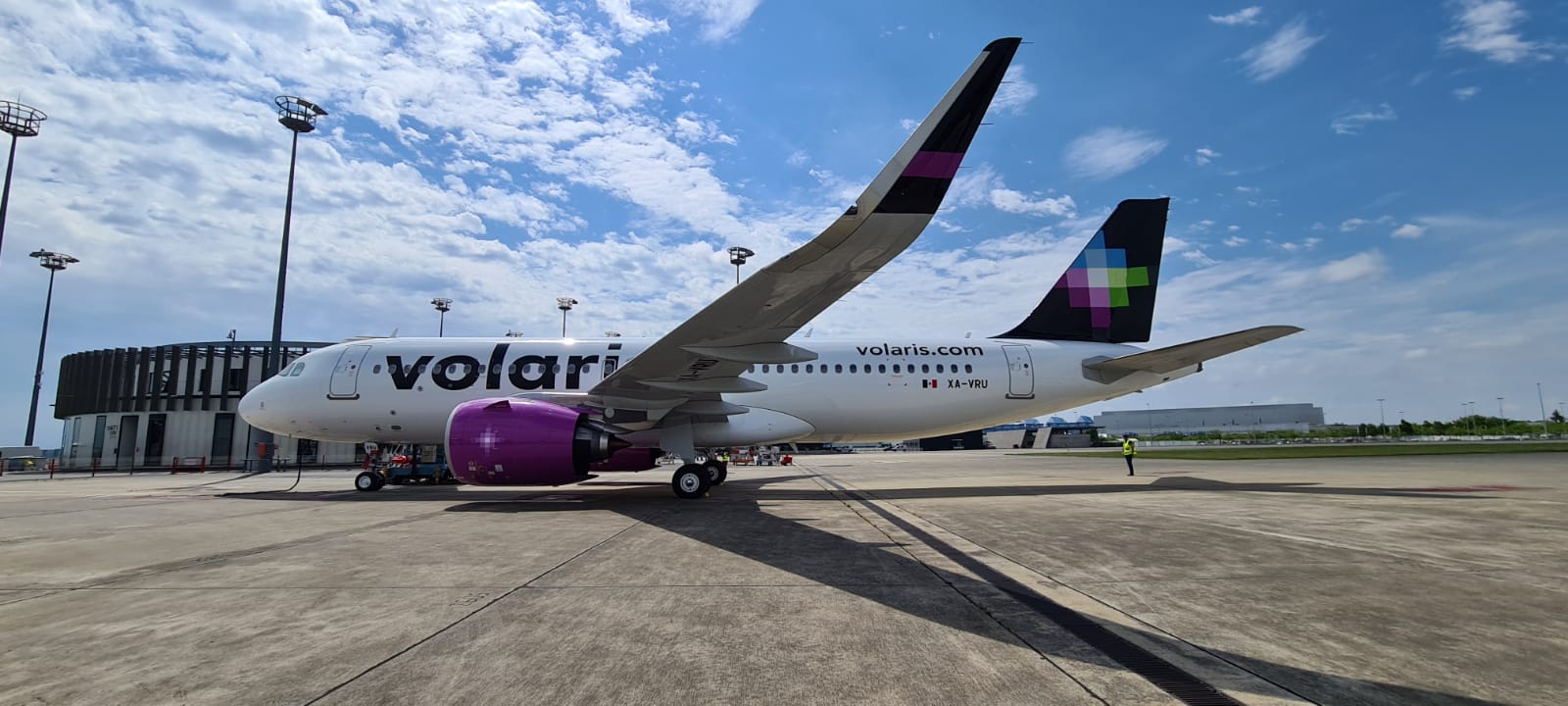
Volaris has said it expects to end 2026 with around 25 aircraft on ground (AOG). The grounded aircraft are a result of ongoing geared turbofan (GTF) engine inspections.
Management said it is at an “inflection point” in AOGs, which peaked at 41 aircraft in January 2026. With aircraft going back into operation, the company said it will average around 33 AOGs for 2026. During the fourth quarter of 2025, AOGs averaged 36.
“We expect a steady reduction from here on, with more meaningful improvement in the second half and toward year-end,” management said.
The company is planning 7% capacity growth for 2026, with this capacity “more skewed towards” the international market. Domestic capacity growth is expected to be low- to mid-single digits.
First half of 2026 will see lower capacity growth compared to 2025. The first quarter of 2026 is expected to be up around 3%, compared to a 6.3% increase in first-quarter 2025.
“We do have flexibility to move up and down within the range of a few percentage points as we move forward,” said Volaris management during the call.
Despite this growth, the airline said the number of aircraft in its fleet will be flat when comparing 2025-end to 2030.
The growth will be coming from putting its grounded fleet back into operation, offset by 14 planned redeliveries during the year.
The updates came amid the airline reporting a decline in profits for its fourth-quarter and full-year 2025 results.
For the quarter, net profits fell 91.3% to $4 million. Operating income fell 14.5% to $100 million. This was a result of operating expense growth outpacing revenue increase.
Quarterly revenues were up 5.6% to $882 million, while total operating expenses climbed 8.9% to $782 million.
EBITDAR was relatively flat, down 0.9% to $328 million.
During the full year, revenues were down 3.3% to $3bn, with operating expenses up 6.4% to $2.9bn.
During the company's earnings call, management maintained the “strength” of the ultra low-cost model.
Operating income fell 67.3% during the year to $135 million, while net income swung from a positive $126 million in 2024 to a net loss of $104 million. EBITDAR fell 13.4% to $988 million.
“While the pull-forward of maintenance activity and higher redelivery accruals will temporarily pressure unit costs early in the year, these proactive actions position us to restore fleet availability sooner, improve profitability as the year progresses, and narrow the EBITDAR-to-EBIT margin spread by approximately four percentage points,” said Volaris CEO and president Enrique Beltranena.
Capex for 2026 is expected to be around $350 million and its EBITDAR margin at around 33%.
For the first quarter of the year, TRASM is expected be around 8.50 cents, while CASM excluding fuel is set to be around six cents. EBITDAR margin for the first quarter is projected to be around 25%.
The company closed 2025 with a net debt to LTM EBITDAR ratio of 3.1x, up from 2.6x at the end of 2024.