

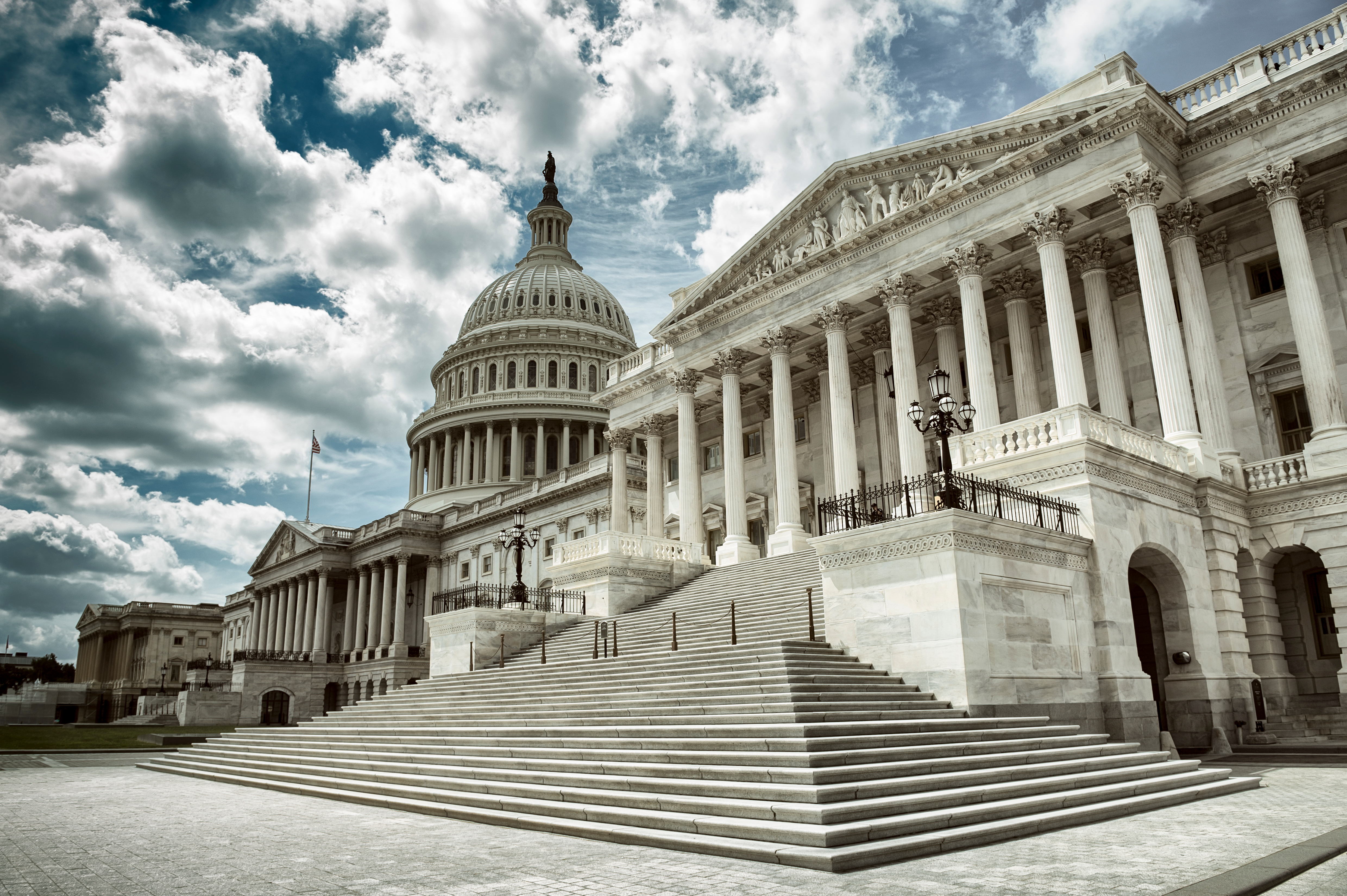
As the US government shutdown enters its tenth day, and looks set to enter its second week, aviation analysts believe the industry is “performing well” despite the chaos in Washington, DC.
On Friday (October 10), TD Cowen published a new report looking at the health of US air travel during the shutdown so far and considering its readiness to endure an extended shutdown.
Tom Fitzgerald, airline analyst at TD Cowen, said the firm has been “encouraged” by US airline performance during the first nine days of the shutdown.
“Despite some concerning headlines and noise on social media, there have not been prolonged ground stops or a notable spike in cancellations,” he said.
“Some airports have seen periods of delays, but not to the level where the system is disrupted.”
Fitzgerald said that air traffic control (ATC) and the Transportation Security Administration (TSA) have built up “valuable muscle memory” from working through three prior shutdowns since 2013.
This experience has allowed ATC and TSA staff to maintain operational standards despite the heightened stress of working through the latest government shutdown, and despite threats to government paychecks.
As noted by Fitzgerald, the shutdown is taking place during a longstanding shortage of air traffic controllers in the US.
TD Cowen puts the shortage at around 3,500, but the National Air Traffic Controllers Association (NATCA) puts it closer to 3,800.
Prior to the shutdown, Transportation Secretary Sean Duffy had unveiled plans to “supercharge” the recruitment of air traffic controllers, but these plans cannot go forward without the required funding from Washington, DC.
The Transportation Secretary has therefore been among the loudest voices calling on Congress to reopen the government.
To complicate the situation further, Duffy revealed this week that around 10% of air traffic controllers have missed work during the shutdown.
According to Duffy, at least some of these controllers have called in sick in order to avoid working.
However, as noted by Delta Air Lines CEO Ed Bastian, speaking to CNBC yesterday, it is not clear whether these controllers are objecting to the shutdown itself or to the existing staff shortages.
Turning to the financial health of US air travel, TD Cowen said that Delta offers the strongest example of an airline that is thriving despite the many and varied challenges of 2025, including the government shutdown.
Yesterday, as covered by Airline Economics, Delta posted a record third-quarter revenue of $15.2bn — an increase of 4.1% year over year — and guided up 2-4% for the following quarter.
Asked about the impact of the shutdown, Delta President Glen Hauenstein said the airline has “not seen a material effect to date”.
Comparing the current shutdown to the 2019 shutdown, Hauenstein said the impact this time around has been less pronounced.
While Delta lost about $1 million per day during the 2019 shutdown, the 2025 shutdown has been even less significant in revenue terms.
Hauenstein attributed this to the decline in travel among government employees — a trend that had already been in motion since Q1 this year due to reductions imposed by the Department of Government Efficiency (DOGE).
At the same time, premium and corporate travel at Delta have more than made up for the loss of civil servant passengers, with revenue across premium and corporate growing 9% and 8% respectively during the quarter.
As such, TD Cowen sees the US aviation industry weathering the impact of the shutdown, and even contributing to its prompt resolution.
Chris Krueger, of TD Cowen's Washington Research Group, expects the shutdown to continue into next week, but also expects that its potential impact on air travel — which contributes $1.3trn to the US economy — could help politicians come to an agreement.
“We are cautiously optimistic that a resolution will be achieved next week, though we acknowledge that it may take a few days of elevated bottlenecks to drive a resolution,” he said.
“We believe investors should be reassured by the industry's operational resilience, and view it as emblematic of its improving ability to adapt to the inevitable challenges that get thrown at airlines.”