
Industry faces "unprecedented" financing needs notes ALC chair
13th January 2025

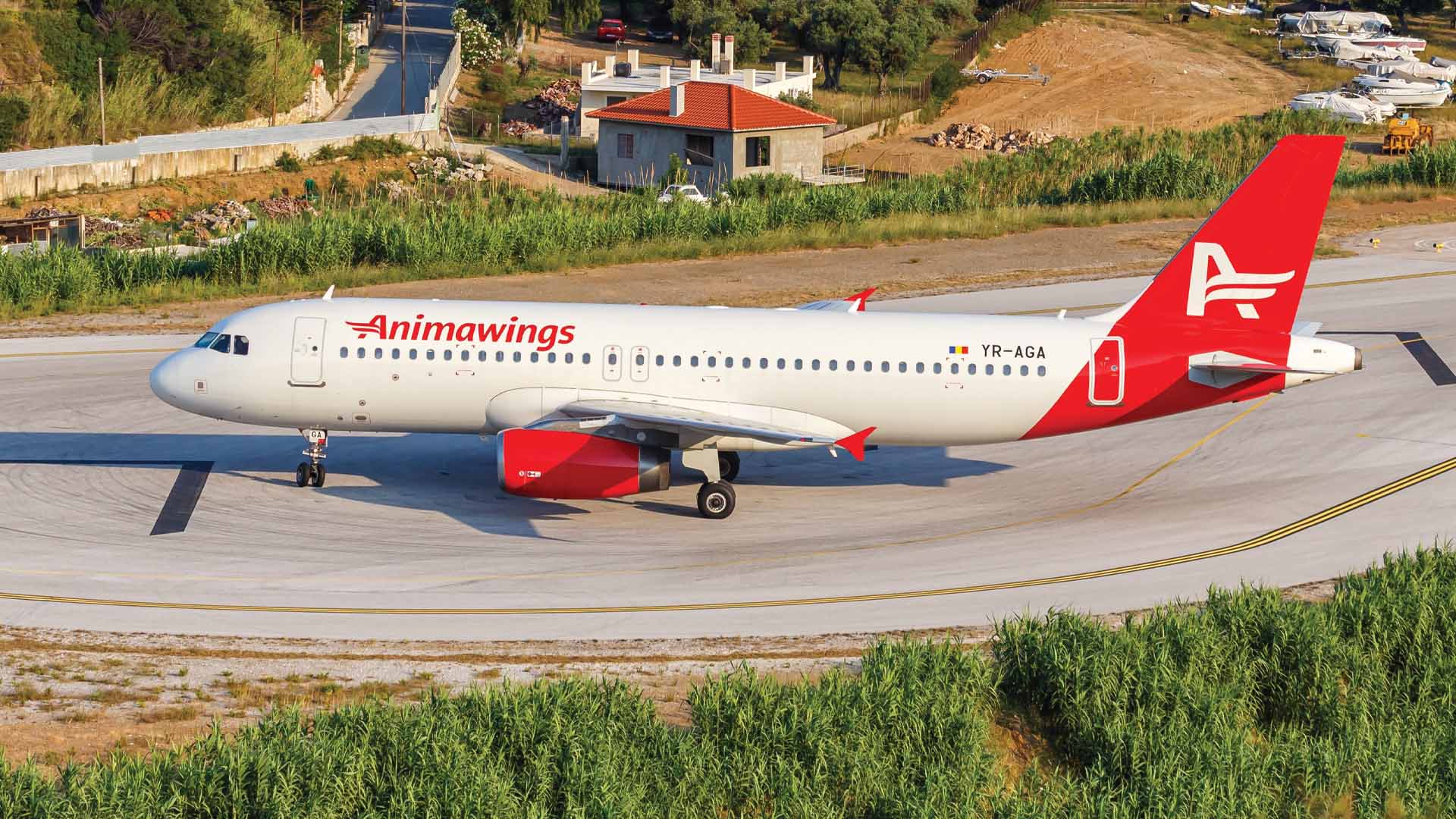
With its new fleet of A220s, Animawings is poised for growth. CFO Alin Ratoi discusses the airline’s growth strategy with Jonathan Kenwright.
It is an era of great change for Animawings. The Romanian airline, which burst onto the European market less than five years ago with an inaugural flight between Bucharest and Thessaloniki in July 2020, is now poised for significant expansion. In just a short period of time, Animawings has grown from a small Romanian carrier to a rising star in Eastern European aviation. As the airline eyes ambitious growth, it faces both opportunities and obstacles in a rapidly evolving industry.
Established back in 2019, Animawings was originally partly owned by Greek flag carrier Aegean Airlines, which held a 25% stake, while the majority 75% share was owned by European tour operator Memento Group.
Fast forward to July 2020, the airline obtained its air operator’s certificate (AOC) and commenced charter operations.
In January 2021, Animawings expanded its services by selling tickets directly through its website, offering flights from 11 Romanian airports to destinations in Africa, Europe, and the Middle East. Nine months later, in October 2021, Aegean Airlines increased its ownership of the airline to 51%.
What followed was eight months of negotiations between the airline’s shareholders, with the Romanian Competition Council approving Memento Group’s repurchase of Aegean’s shares in February 2024, making it the sole owner of the airline. At the close of 2024, the airline is expecting to see a successful year, with estimated profits in the region of €1 million.
In light of such a positive few months for the airline, Animawings is poised for a new chapter, but one that is expected to come with a number of challenges. Airline Economics sat down with Animawings chief financial officer (CFO) and vice president of the board, Alin Ratoi, in Dublin during its Growth Frontiers 2025 conference.
Ratoi delved into the hurdles the airline is facing, and how it plans to overcome them, while highlighting what is next for Animawings. “It’s an expansion, a significant one, but we have the experience,” he said. “We know how to manage this type of situation.”
The airline began commercial operations of its first A220 aircraft on December 17, 2024, only two days after receiving the aircraft from Airbus’ factory in Mirabel. “I do believe that we are the only airline to begin operating the aircraft type so soon after receiving it, this is what we were told by Airbus,” he said. This was the first A220 to be delivered to a Romanian carrier.
Prior to commercial operations, the airline had implemented training systems, pilot training and aircraft registration, in order take advantage of a smoot transition for the aircraft type into its fleet.
Animawings had scheduled its first A220 operation for September 2024, but due to delays from Airbus, this was pushed back. Ratoi noted that delays occurred a “couple of times”, emphasising that delays are still anticipated, with deliveries of A220s scheduled throughout 2025. “We signed for six units that will be delivered through to the beginning of 2026; we are really hoping that these additional four aircraft arrive on time and that we don’t experience any more delays.”
Before receiving its first two A220s Animawings operated only two aircraft, two leased A320s. Transitioning to a new aircraft type brought not only opportunities but also challenges. Like the airline’s A320 fleet, these new Airbus aircraft will also be leased, with two coming from Air Lease Corporation, with the following four from Azorra.
In addition to the very real prospect of aircraft delivery delays hanging over Animawings, it is not however the greatest challenge ahead. Ratoi sees an even greater obstacle impacting growth over the coming two-year period. As the airline begins to integrate this new aircraft into operations, an issue has already arisen: a growing shortage of spare parts for the A220 airframe, including a lack of Pratt & Whitney engines.
“There are currently huge lead times on spare parts for the A220, we are trying our best to buy some stock to keep in reserve, in particular for multiples and other spares that we know as an airline that we will need in the future,” he said. “We are in the process of looking everywhere on the market for these parts, but unfortunately this is a new product and there are not many suppliers and parts readily available for us.”
Ratoi also referred to the lack ofengines, noting that if the airline experiences any engine issues it would result in aircraft groundings for “long periods of time” as he said there is a “huge queue” for GTF engines. “There are no engines on the market to lease or buy, so we are trying to offset this risk by all means possible. We are looking on the market to see if we can source any spare engines, but there are none. It is a real issue that we are facing.”
Despite these challenges Rotai said that the airline chose the aircraft type to follow suit with similar carriers in the region such as airBaltic – which operates the largest A220 fleet globally – noting that the aircraft type offers suitable capacity for the airline’s growth initiatives. He said that the airline did not opt for purchasing a large bulk order of A320 or A321 aircraft specifically because it did not want to enter into direct competition with the “main players” within Eastern Europe - Wizz Air and Ryanair. With larger capacities and higher frequencies, these airlines dominate the market, prompting Animawings to carve out its own strategic niche.
Animawings operates flights to primary airports, typically the largest airports in multi-airport systems with the airports acting as the main or only gateways. “We are not going the same way as Ryanair,” said Ratoi, confirming that the airline will launch services to Charles de Gaulle in Paris and Arlanda in Stockholm, with flights set to begin in March and April 2025, respectively.
Additionally, the airline’s parent company, Christian Tour has signed a lease agreement for two A320 aircraft that will be operated for charter operations. The aircraft will be used by the Romanian travel firm and other third parties. Ratoi stated that the airline’s A220s will be used for scheduled operations, while this fleet of A320s will focus on charter flights, in order to accommodate an expected high demand during the busy summer season.
The introduction of A220 aircraft to the airline’s fleet will not only bolster capacity on the carrier’s growing network, but it will also enable Animawings to help meet sustainability targets both within the industry and within Romania.
As a member of the European Union, Romania along with other EU member states, began to push the usage of sustainable aviation fuel (SAF) around 2021 in line with the European Union’s broader push toward sustainability within the aviation sector. Airlines are required to integrate 2% SAF into operations by 2025. Romanian airline Blue Air and the nations flag carrier Tarom have also implemented SAF into operations.
These aircraft are set to enable a transition into a greener phase, with the A220 providing a 25% reduction in CO2 emissions per seat, in comparison to Airbus’ previous generation of small single-aisle aircraft. The aircraft additionally features a noise footprint that is 50% smaller than earlier models and produces 50% less NOX emissions than CAEP/6 standards.
Animawings is looking for strategic growth across various sectors, one of those being network expansion, something of which Ratoi noted as a key “priority” for the airline.
According to the CFO, Animawings would be open to commencing a service to Ukraine, once tensions in the region have subsided, as conflict between the country and Russia continues nearly three years after Russia’s invasion in 2022.
“We anticipate that there will be a demand for flights between Romania and Ukraine, as we have many Ukrainians living within Romania. As an airline however we need to make sure that operating to places such as Kyiv is safe, as there is a lot of reconstruction to undertake before we even think about operating flights to the country,” said Ratoi.
He also emphasised a desire to commence operations to Tel Aviv, after identifying the Israeli city as providing sufficient demand and traffic for it to be a viable asset within the airline’s network. Again, capacity was a concern, with Ratoi stating that until the airline receives its third A220 unit, such operations would not be possible due to the risk of aircraft delays and the airline having already scheduled flights across its existing network. “That would be a risky situation that I don’t want to get into,” he explained.
Once capacity is increased to a sufficient level, the Romanian carrier is poised to make a debut on the UK market, eyeing London as its next European destination.
Looking ahead, Ratoi expects the airline to make a small loss for the 12-month period, ending December 31, 2025, stating that “it is too early to say” how large or small the loss will be, but he confirmed that the airline has budgeted for decreased profit. This can be attributed to the rising costs associated with integrating new aircraft, parts, and engines, along with higher personnel expenses for engineers and pilots for its fleet of A220s, an investment Ratoi noted as being “significant” for the airline.
As Animawings sets its sights on new destinations and new aircraft, it faces an industry pressured with constraints that will undoubtedly test the airline’s resilience. But if recent growth is any indication, Animawings is an airline ready to rise to the occasion.