

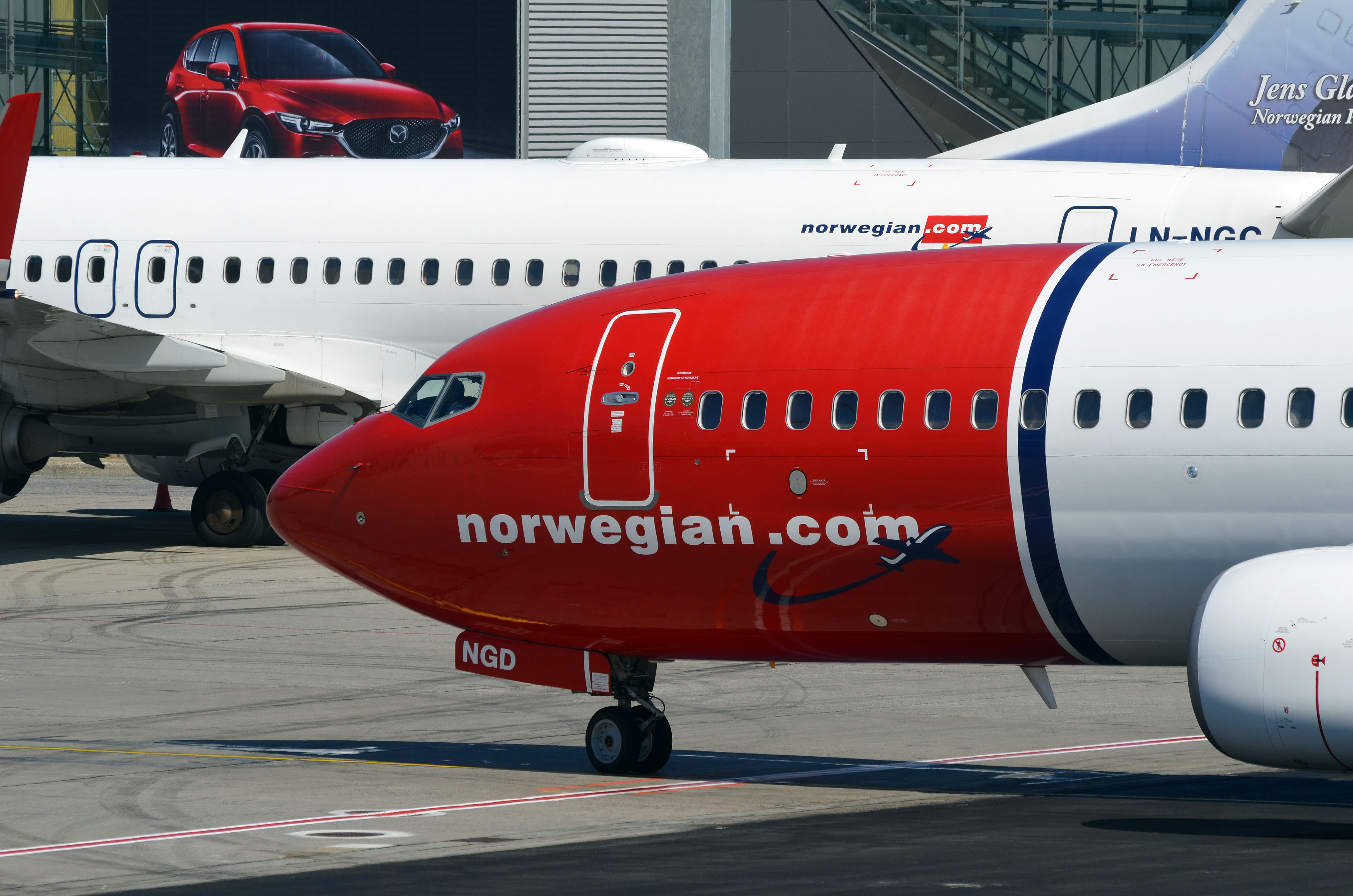
The Norwegian Group said it would pay out a dividend for the first time on July 11, after reporting a second quarter operating profit of 1.25 bn Norwegian crowns ($ 124 million), corresponding to an operating margin of 12.2%.
During the three month period, the group reported an operating revenue of 10.28bn crowns ($ 1.02bn), an increase from the 9.34 bn crowns ($927 million) that were booked during the second quarter of 2024. Of this Norwegian contributed 8.36bn crowns ($ 831 million) with Wideroe contributing 2 bn crowns ($ 198 million).
The group’s EBITDAR totalled 2.6 bn Crowns ($ 258 million), up from 1.84 bn crowns ($ 183 million) that was posted the year prior.
“The operating profit and margin are the second highest we have ever had in this quarter, and the passenger numbers and load factor are the highest in a second quarter since 2019,” said Geir Karlsen, CEO of Norwegian. “In addition, we have reached a significant milestone as Norwegian, for the first time in our 23-year long history, will pay out a dividend.”
The group's board of directors has decided to pay a dividend of 0.90 crowns ($0.089) per share in August, as authorised by the company's 2025 annual general meeting. This dividend will be primarily funded from dividend reserves set aside for 2022 and 2023.
In the second quarter of 2025, the group carried a collective 7.6 million passengers, of which 6.5 million were passengers of Norwegian and 1.1 million of Wideroe. Compared to the same period last year, the number of passengers increased by 192,000 and 82,000 for Norwegian and Wideroe, respectively.
Quarterly load factor for Norwegian averaged at 85.2% during the quarter, up 2.8 percentage points from last year, while Wideroe recorded a load factor of 73.9%, an increase of 3.7 percentage points from the same period last year.
The company stated that current booking trends and an improved supply-and-demand balance in the European aviation market support an overall “encouraging outlook” for the Norwegian Group.
Looking ahead, Norwegian expects its unit costs, excluding fuel, to increase by a low to mid-single-digit percentage during the remainder of the year, compared to 2024.