

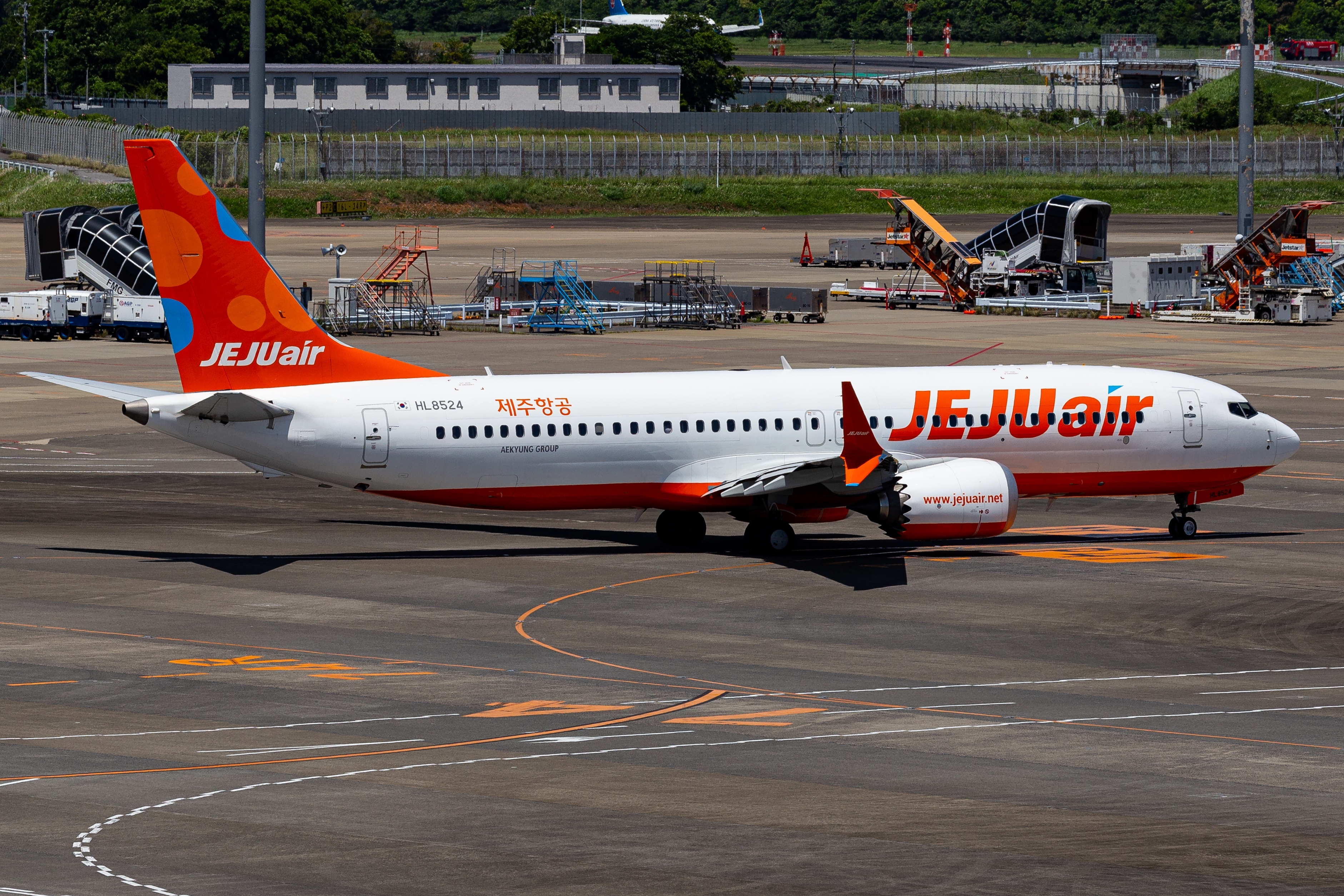
South Korea’s Jeju Air has reported an operating loss of 32.6bn Korean won ($23.2 million) during the first quarter of the year, down significantly from an operating profit of 78.9 billion won ($56.3 million) that was recorded during the same period of the prior year. In addition, the airline reported a net loss of 32.7bn won ($23.3 million), down from a net profit of 47.2bn won ($33.7 million) a year prior.
Since the crash of a Jeju Air flight at Muan International Airport in December 2024, the airline reduced the number of flights it operated during the first three-month period of the year by 14.6%, when compared to the same period of 2024. Jeju Air flight 2216, which was travelling from Bangkok to Muan in the southwest of South Korea, crashed after skidding off the airport's runway and colliding with a concrete wall following a belly landing. The accident resulted in the deaths of all passengers on-board and all but two crew members, who were seated at the rear of the aircraft.
Most recently on May 14, 2025, families of those killed in the crash of flight 2216 have filed a criminal complaint against 15 people, including South Korea's transport minister and the airline's CEO, for professional negligence. The complaint states whether air traffic control responded appropriately and whether the reinforcement of a mound at the end of the runway violated regulations.
Police in South Korea have already opened a criminal investigation before this latest complaint, and barred Jeju Air CEO Kim E-bae from leaving the country, but no one has been indicted over the incident.
The airline posted a revenue of 384.7bn won ($274.7 million) during the quarter, down from 555.8bn won ($397 million) that was recorded during the same period of 2024.
Cost of sales totalled 374.7bn won ($267.6 million) from 430.7bn won ($307.6 million) in the same period of last year, reducing gross profit to just 10bn won ($7.1 million), down significantly from 125.2bn won ($89.2 million) that was recorded during the same three-month period of 2024.
Finance income declined to 1.45bn won ($1.03 million) from 4.95bn won ($3.53 million), while finance costs increased to 13.3bn won ($9.5 million) from 9.3bn won ($6.6 million). Earnings per share reflected a downturn, with basic and diluted losses per share of 412 won ($0.29), compared to earnings of 580 won ($0.41) and 566 won ($0.40), respectively that were posted last year.
The airline reported negative cash flow from operating activities of 53.8 billion won ($38.4 million) in the first quarter of 2025, compared with positive cash inflows of 118.5 billion won ($84.6 million) for the same period last year. Net cash used in operations stood at 43.2 billion won ($30.8 million), reversing net inflows of 128bn won ($91.4 million) in the first quarter of 2024.
Jeju Air said that costs during the quarter increased due to the depreciation of the Korean won against the US dollar, driven by what the airline described as “rising domestic and international uncertainties”.
The South Korean carrier Jeju Air will raise 130bn Korean won ($89.03 million) in short-term loans from financial institutions, in order to support upcoming pre-delivery payments for an order of 737 MAX 8 aircraft. This additional borrowing also represents 40% of the airline’s equity capital, which stood at 324.1bn won ($222.1 million) at the end of 2024.