

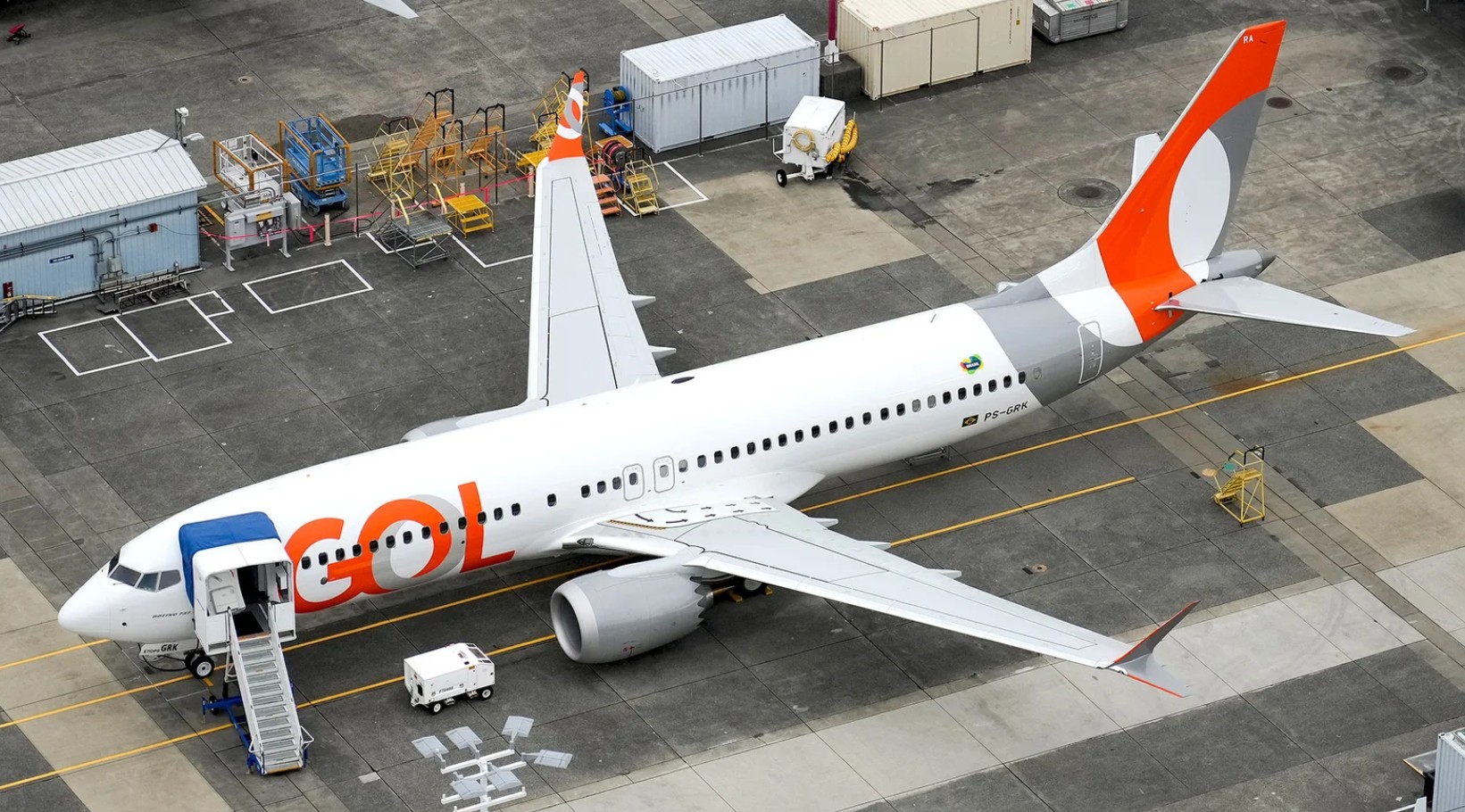
Gol has reported an increase in earnings and revenue for the second quarter of 2025, supported by a successful financial restructuring, improved network performance, and continued momentum in passenger demand.
The company posted net revenue of R$4.84bn ($968 million) during the quarter, a 22.9% increase on the prior year supported by a 24.1% rise in passenger transportation revenue. Revenue per available seat kilometres (RASKs) rose 3%, while passenger RASK (PRASK) climbed 4.1%. Average fares increased 6.3% to R$535.50 ($107.10).
Total operating costs rose 20.4% during the quarter to R$4.43bn ($886 million), primarily driven by currency depreciation and higher maintenance and depreciation expenses linked to fleet restoration. Maintenance costs surged 36.5% to R$423 million ($84.6 million), while depreciation and amortisation climbed 73.6% to R$731 million ($146.2 million). These increases were partially offset by lower unit fuel costs and fixed cost dilution from higher capacity.
Despite these cost pressures, recurring EBITDA rose 67.7% to R$1.13bn ($226 million), with the airline’s EBITDA margin improving 6.3 percentage points to 23.4%.
On the cash flow side, Gol generated R$1.1bn ($220 million) in operational cash during the quarter and reported total cash generation of R$1.87bn ($374 million), ending the period with R$3.87bn ($774 million) in cash and equivalents, a 49.3% increase on last year.
Gol’s capacity, measured in available seat kilometres (ASKs), expanded by 19.2%, driven by the return of 20 aircraft to its operational fleet and a 62.1% increase in international ASKs. Load factor improved 1.4 percentage points to 82.1%, reflecting more efficient deployment of capacity.
“These results underscore Gol’s recovery trajectory as it emerges from Chapter 11 protection with a more resilient and efficient business model,” the company said in a statement.
The airline exited Chapter 11 proceedings on June 6, reducing its net leverage ratio from 5.7x to 3.7x. This milestone follows a strategic five-year plan announced in May and financial support from parent Abra Group.
Operationally, the airline resumed and launched several domestic and international routes, while also expanding regional operations in Brazil, targeting seasonal and underserved markets such as Jericoacoara, Foz do Iguaçu, and Caldas Novas.
In line with these efforts, Gol reported a post-pandemic record for passengers carried in a second quarter, aided by a nearly fully restored fleet.
As of June 30, Gol operated a fleet of 141 Boeing aircraft, comprising 57 737 MAX, 76 737 Next Generation (NG), and eight 737-800BCF freighters. The carrier’s fleet remains entirely composed of 737 narrowbody jets, with 97% of the aircraft under operating leases and the remaining 3% financed through finance leases.
Beyond its core passenger operations, Gol’s Smiles loyalty program and GOLLOG cargo business delivered double-digit growth. Smiles added 3% more members, with revenue up 5.3%, while GOLLOG reported a 20.7% increase in revenue and a 14.2% rise in cargo volumes, supported by the addition of two dedicated freighters and continued demand from partner Mercado Livre.
The company said that with an optimised cost structure and an expanded network, it is positioned for continued growth in the second half of 2025.