

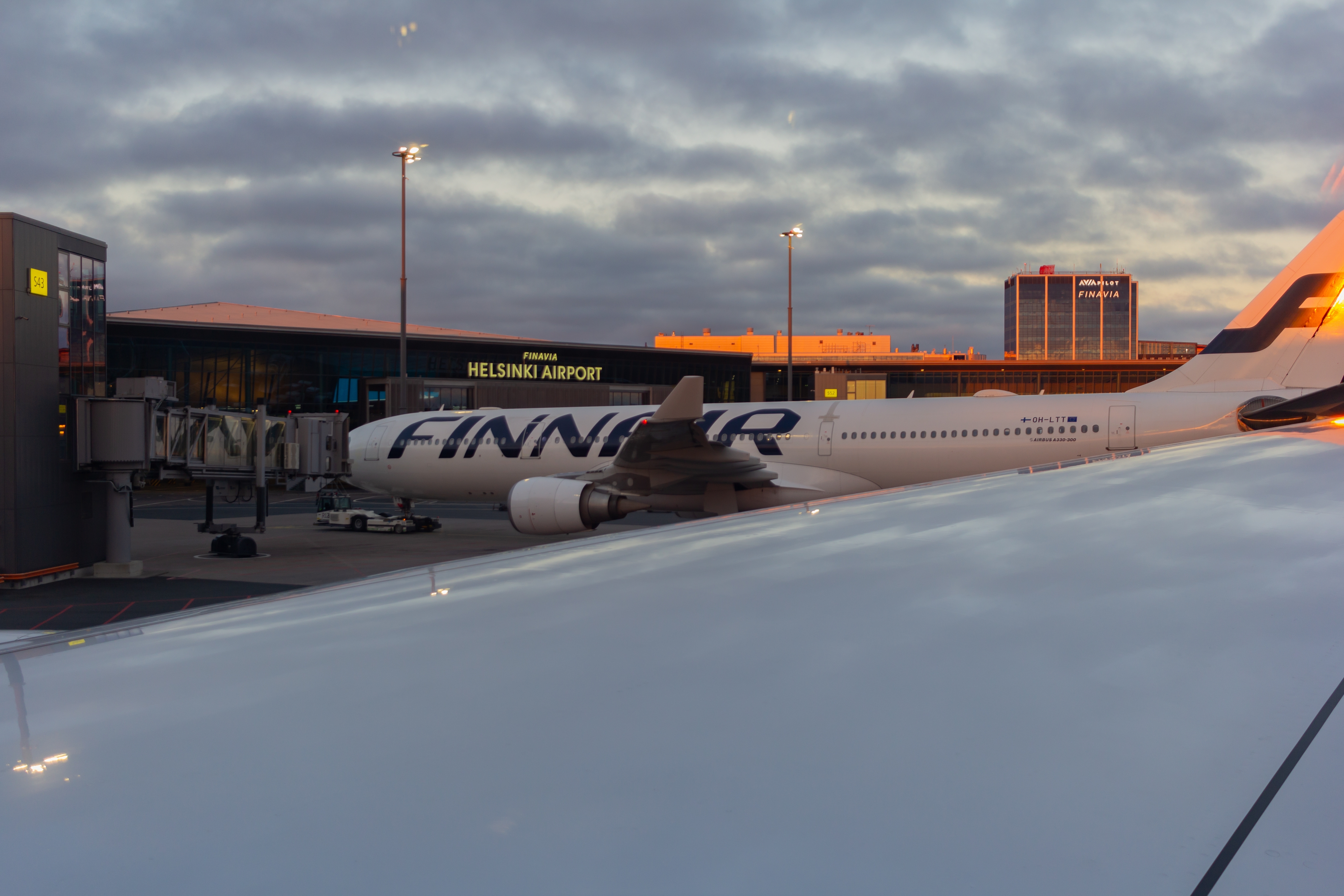
Finnair has reported a decline in earnings during the first quarter of the year, citing industrial action as having a negative impact on the company’s financials.
The airline posted an operating loss of €62.6 million ($71 million) during the quarter, compared to a loss of €11.6 million ($13.2 million) during the same period of the year prior.
“The weakening of the result was particularly affected by the industrial action of the Finnish Airline Pilots' Association, which had a negative impact of approximately €31 million ($35.2 million) on revenue, approximately €4 million ($4.5 million) on other operating income and approximately €22 million ($25 million) on comparable operating result,” stated Turkka Kuusisto, Finnair CEO.
Finnair Pilots' Union has been conducting industrial action since December, which has impacted the airline's ability to operate services. Pilots have conducted overtime and standby bans as well as short strikes. Most recently, Finnair stated that it will furlough 36 long-haul pilots from September to at least May 2026 due to changes in its wet lease agreement with Qantas. The partnership, which involved leasing A330s for two routes, will now continue only on the Sydney–Bangkok route.
In addition to reductions incurred by industrial action, the airline said that results were also negatively impacted by costs related to the use of sustainable aviation fuel (SAF), driven by changes in environmental regulation and changes in the EU emissions trading system, which together weakened the comparable operating result by a total of approximately €10 million ($11.3 million).
For the three-month period Finnair recorded a revenue of €694.2 million ($790.2 million), an increase of 1.9% on the year prior.
The airlines EBITDA margin decreased to 3.3% from 10.3% a year prior, while its net loss widened to €50.8 million ($57.8 million) from €29.9 million ($34 million). Unit revenue per available seat kilometre (RASK) edged down 0.4%, while unit cost per available seat kilometre (CASK) rose 6.8%.
Net cash flow from operating activities rose to €192.1 million ($218.6 million) from €138.9 million ($158.1 million) a year earlier.
The company reported a loss per share of €0.25 ($0.28).
During the first three-month period of 2025, the airline carried 2.6 million passengers, an increase of 2.6% on the year prior. Available seat kilometres (ASKs) increased by 2.3%, while average passenger load factor increased by 1.6 percentage points to 73.8%.
Despite reporting a rather bleak financial performance for the year's first quarter, Finnair has maintained its full-year outlook, stating that it expects global air traffic to continue growing in 2025. “Finnair’s guidance regarding capacity, revenue and comparable operating result for 2025, excluding any impact of industrial action, is unchanged,” it stated with results.
The airline did however acknowledge current global political and economic tensions: "Travel demand remained healthy during the first quarter and contributed to the strong cash flow,” commented Kuusisto. “However, at the start of the second quarter, the threat of trade wars and uncertainty related to economic development have increased significantly, which may weaken demand.”
Finnair expects to increase capacity by around 10% in 2025, including agreed wet leases, and forecasts revenue of €3.3–3.4bn ($3.75-3.87bn) with a comparable operating result of €100–200 million ($113.8 -227.6 million). Finnair stated that profitability will be impacted by EU sustainable aviation fuel mandates, higher navigation and landing fees, and seasonal weakness during the first quarter due to the timing of Easter.
These first quarter results follow full year financials posted by the airline on February 13, 2025, which noted that profit for 2024 totalled €37 million ($38.8 million), down from €254.3 million ($266.6 million) the year prior.