

easyJet beat expectations in its annual earnings, ending September 30, 2025, the airline reported today (November 25).
The carrier’s adjusted profit before tax was up 9%, totalling £665 million. Peel Hunt analysts Alexander Paterson and Ivor Jones said this was above its consensus expectations of £646 million.
The airline’s operating profit totalled £703 million, up 18% compared to the annual period a year prior. This was driven by both a £50 million increase in airline earnings, as well as a larger-than-expected £56 million increase in earnings from its holidays segment.
The airline’s holidays segment achieved its medium-term target early with a £250 million profit before tax, which “significantly outperformed” Peel Hunt’s guidance of over £235 million, driven by lower-than-expected costs.
The company’s CFO Jan De Raeymaeker said easyJet holidays still has “significant growth ahead”.
easyJet CEO Kenton Jarvis added: “easyJet holidays is today launching an even more ambitious goal having achieved its target early."
The holidays segment’s target has been lifted to £450 million profit before tax by FY30. For FY26, easyJet holidays customers are expected to grow up to 15% from a base of 3.1 million customers. The first half of the next annual period is already 80% sold.
“Visibility and confidence over our aircraft delivery profile is improving – helping to firm up timelines for the upgauging benefits that are ahead of us,” said Raeymaeker.
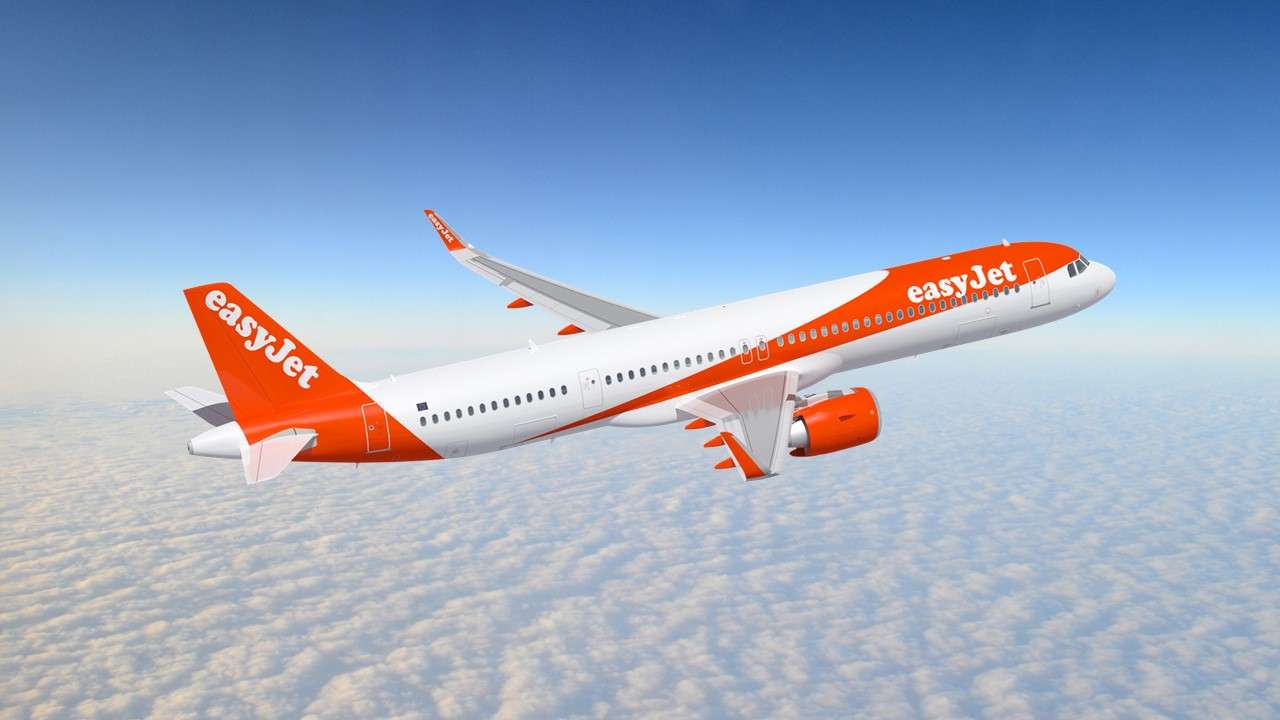
easyJet currently has a fleet of 356 Airbus A320 family aircraft – all powered by CFM engines. The airline has an orderbook spanning through 2034, including 290 A320neo family aircraft on order and 100 options.
Raeymaeker said these future deliveries will enhance cost efficiencies for the airline.
All 17 aircraft scheduled for delivery in FY26 are expected to be delivered on time.
“Confidence in the Airbus updated delivery profile is growing, helping to integrate timelines for upgauging efficiencies into our plans,” said Raeymaeker.
The company added that with its fleet currently comprising 85% of Airbus ‘neo’ types – 10 percentage points above target – the company has “sufficient financing flexibility in the future via sale and leasebacks, JOLCOs, as well as the debt market”.
With this accelerated aircraft delivery ramp up from Airbus, the airline expects “material upgauging benefit” in FY27 and FY28 as it retires its A319s.
The airline’s adjusted annual profit after tax was £499 million, up from £459 million a year prior.
The company proposed an ordinary dividend of 13.2 pence per share, which is up from 12.1 pence per share a year prior, amounting to £100 million. This will be paid on March 27, 2026. The dividend represents 20% of FY25 adjusted profit after tax.
The airline said 81% of first-quarter FY26 has been sold and second-quarter at 26% sold.
Unit costs are expected to see “modest inflation” in the next annual period as cost and operational efficiencies, alongside favourable fuel prices, partially offset market-wide cost inflation from increasing wages, maintenance, airport charges, and ESG.
The company said it will deploy “disciplined” seat capacity growth in FY26, with 4% in the first half and 2% in the second half – totalling 3% growth for the full year.