

China’s big three airlines have all reported declines in first quarter financials, with profits slipping in comparison to results posted during the same period of the year prior.
Air China, China Eastern and China Southern Airlines all saw losses deepen during the first three-month period of the year, as Beijing has reportedly stated this week that China's affected airlines have suffered greatly from the impact of US import tariffs.
After US President Donald Trump initiated sweeping global tariffs on economies around the world on April 2, 2025, China remains the only country currently facing such levies, following 90-day tariff freeze imposed by the president on other countries. In response to Washington’s 145% tariffs on Chinese imports, Beijing raised its own levies on US goods to 125%.
Just last week during its first quarter earnings, Boeing said that customers in China have indicated that they will not take the delivery of new aircraft from the manufacturer, given current economic uncertainty, as ongoing trade disputes between Beijing and Washington deepen. Two Boeing aircraft have already been returned by a Chinese customer to Boeing’s Seattle facility.
Looking at the carrier's results, China Southern Airlines posted a net loss of 747 million yuan ($102.7 million) during the first quarter of the year, reversing a profit of 756 million yuan ($103.9 million) that was recorded by the airline a year earlier.
Operating income fell 2.7% on the previous year to 43.41bn yuan ($5.96bn), while net cash flow from operating activities declined sharply by 54.7% to 4.43bn yuan ($609.1 million).
Basic and diluted earnings per share (EPS) came in at negative 0.04 yuan ($0.005) and 0.05 yuan ($0.0069), respectively, compared with positive 0.04 yuan in the same period of last year.
Within a stock exchange filing, state-owned China Southern cited a decline in net profit during the three-month period as being attributed to multiple factors, including shifts in traveller demographics, competitive pressures from high-speed rail networks and global supply chain constraints.
Air China, the country’s flag carrier, reported a net loss of 2.04bn yuan ($280.5 million) for the first quarter of the year, with this amount widening by 22.1% from a loss of 1.67bn yuan ($229.6 million) in the same period of 2024. After excluding non-recurring items, the loss deepened to 2.13bn yuan ($292.8 million), down 24.2% on the same period of the year prior.
Revenue was largely flat for the airline at 40.02bn yuan ($5.5bn), falling by a marginal 0.1%, while net cash flow from operating activities fell 11.3% to 8.34bn yuan ($1.14bn).
Basic and diluted EPS both declined to negative 0.12 yuan ($0.017) from negative 0.11 yuan ($0.015) a year ago.
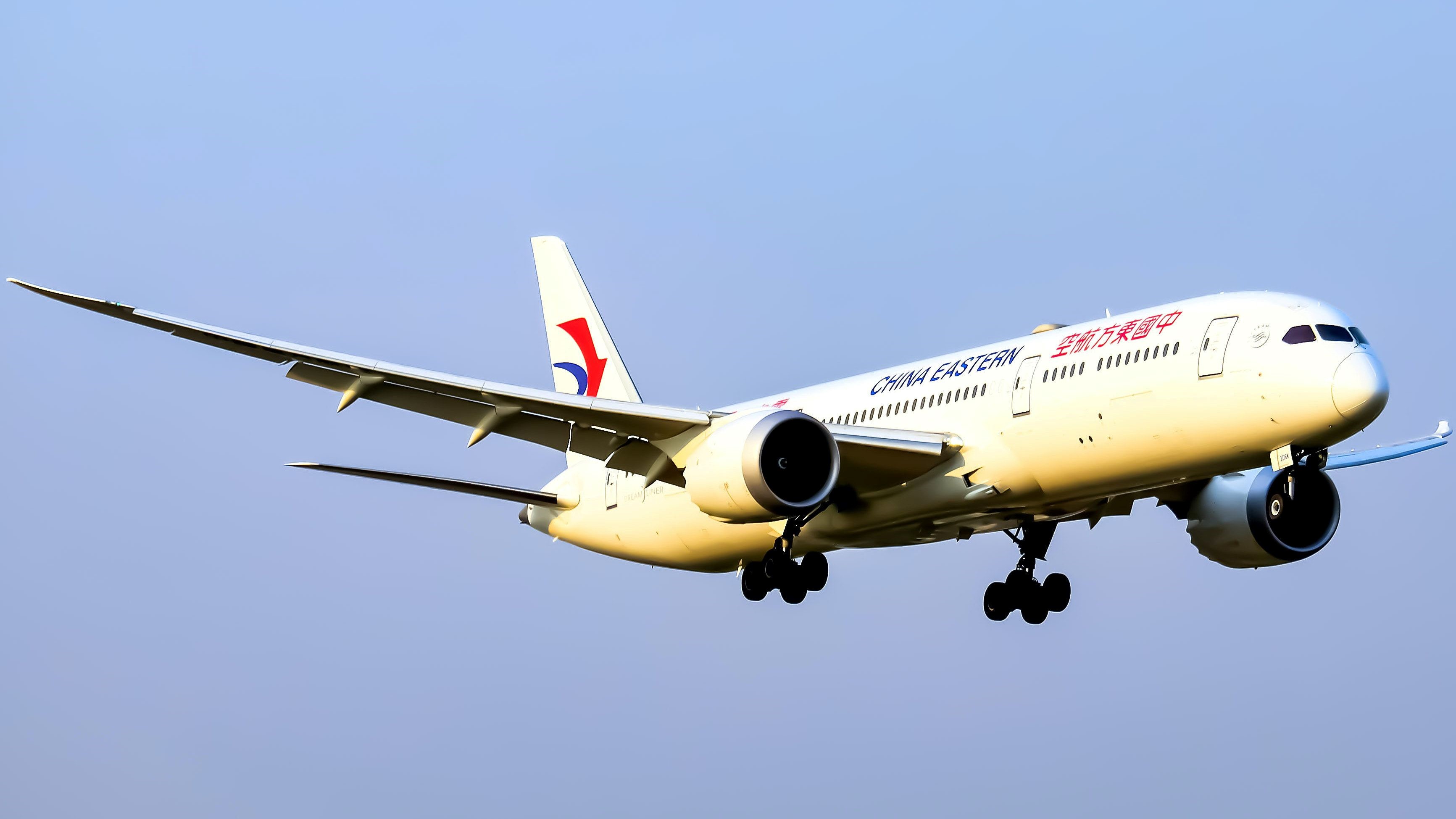
Following a similar trend to its peers, China Eastern reported a net loss of 995 million yuan ($136.8 million) for the first three-month period of 2025, compared with a loss of 803 million yuan ($110.4 million) in the same period last year. After excluding non-recurring items, the loss deepened to 1.11bn yuan ($152.6 million) from 971 million yuan ($133.5 million).
Revenue rose slightly by 0.65% during the quarter to 33.41bn yuan ($4.59bn), but net cash flow from operating activities fell 49.6% to 2.39bn yuan ($328.6 million). Basic and diluted EPS remained unchanged at negative 0.04 yuan.