

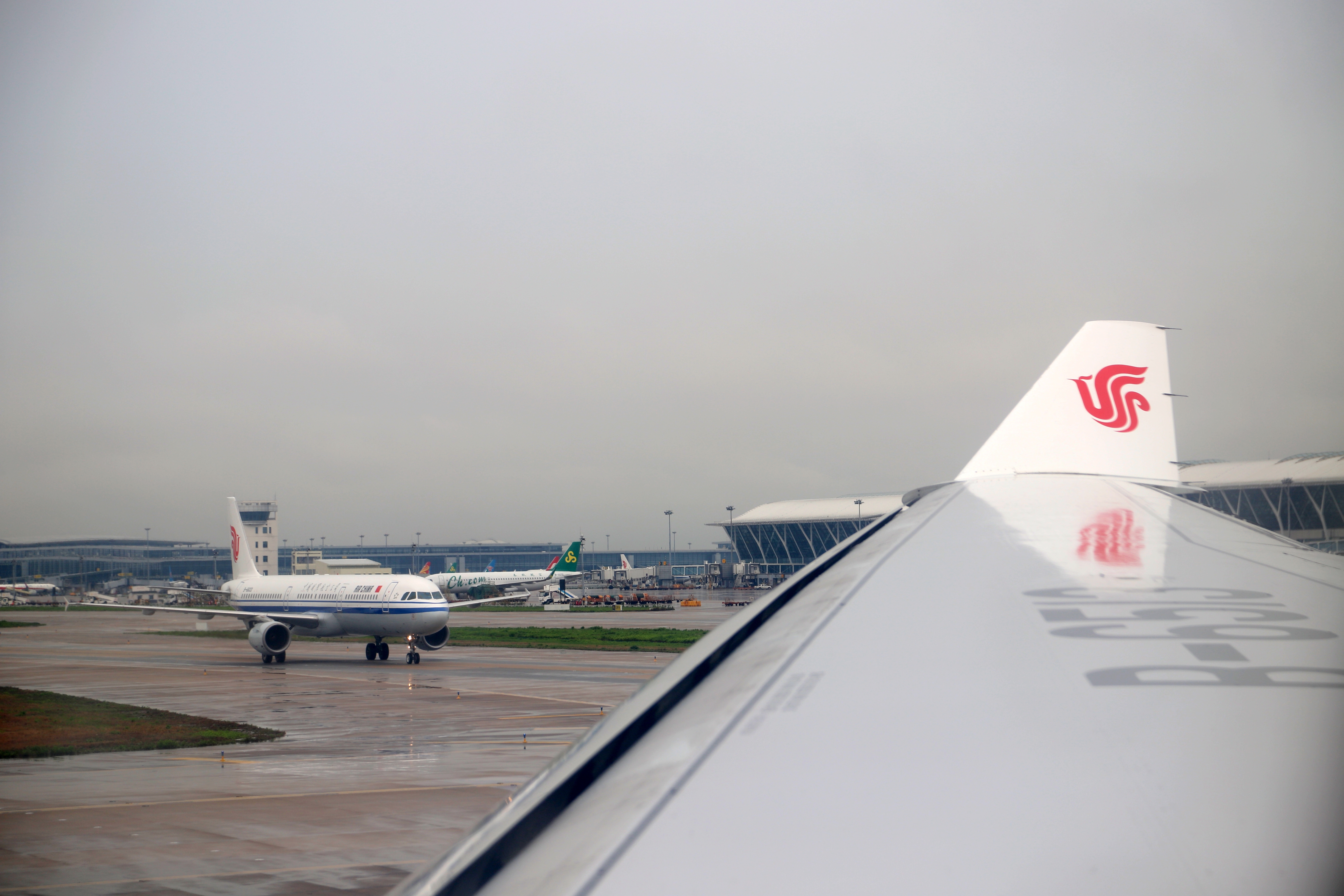
China’s three largest carriers – Air China, China Eastern and China Southern – have posted a combined second-quarter loss, despite improving travel demand and falling fuel costs.
The three airlines reported preliminary second-quarter losses totalling between 452 million and 1.8bn Chinese Yuan ($62 million to $248 million), with the midpoint at 1.1bn Yuan ($152 million), according to filings released after market close on July 14.
Although narrower than the 5.1bn Yuan ($703 million) loss in the second quarter of 2024 and 3.8bn Yuan ($524 million) loss in the first quarter of the year, with these latest results suggesting elevated costs and softer yields, according to a report conducted by HSBC Global Investment Research.
China Southern recorded the largest loss at the midpoint, 800 million Yuan ($110 million), followed by China Eastern at 405 million Yuan ($56 million). Air China reported a marginal profit of 94 million Yuan ($13 million), likely boosted by contributions from its stake in Cathay Pacific.
“We continue to argue that persisting price headwinds amid a soft macro-outlook remain a key earnings drag in 2025," the HSBC report stated.
Despite the rather challenging finical outlook, passenger load factors saw an improvement of 2.8 percentage points on the same period of 2024 to an average of 84%, 2.1 points above 2019 levels. Revenue passenger kilometres (RPK) increased by 10% on the year prior, indicating continued growth in air travel demand, although figures remained stable compared to the previous quarter.
Chinese airlines reported significant growth in passenger traffic throughout 2024, especially on international routes, as many European carriers continued to halt services to China. China Southern, China Eastern and Air China all made notable gains when it comes to passenger traffic, carrying over 460 million passengers across their networks collectively during the year.
Meanwhile, Singapore jet fuel prices declined during the second quarter of 2025 by 18% on 2024 and 10% on the previous quarter, helping to ease pressure on airline operating costs.