

Air Canada’s operating profits dropped C$48 million ($35 million) to C$418 million ($305 million) in the second quarter of 2025 amid a “challenging environment” with softening demand as ongoing economic and geopolitical uncertainties persist.
The company’s CEO Michael Rousseau said he was “generally pleased” with the results given the challenges it has navigated so far in 2025, stating that the year has “not been business as usual”. Additionally, the results were impacted by some currency fluctuations and also increased competition in parts of Asia.
Operating revenues were up C$113 million ($83 million) to C$5.6bn ($4.1bn), while operating expenses were up C$161 million ($118 million) to C$5.2bn ($3.8bn).
Net income dropped C$224 million ($164 million) to C$186 million ($136 million) in the quarter. However, the company noted strength in demand for Transatlantic flights, particularly with premium demand. The company said premium revenues had climbed 5%.
“We have strategically redirected capacity to high-demand markets and captured demand for premium services, leveraging the breadth and strength of our global network,” said Rosseau in a statement.
The company plans to increase capacity between 3.25% and 3.75% in the third quarter, compared to the same period last year. Air Canada’s capacity was up 2.5% in the second quarter. Yields are also expected to be flat in the third quarter.
The company said it removed capacity into the US on traditional US leisure markets such as Florida, Vegas, and Arizona, where there is higher competition.
“We are closely monitoring the state of the Canada-US sector, where we see a decrease in overall market capacity, we retain ample flexibility to respond to changing market conditions,” management said in the earnings call.
“We think we’re going to restore some of that capacity gradually, but right now we continue to plan an environment where things stay the same and where there is no real improvement in the overall demand position,” management said in the call. “We have a lot of flexibility to move capacity around, but we continue to think that the situation we’re in will continue all the way through the end of the year.
“But if things improve, we can be very agile and move capacity gradually or rapidly, depending on how market conditions evolve.”
The company said it has seen some stabilisation in Pacific markets after degradation in demand earlier in the year, and believes the company will see less degradation in unit revenues in late third quarter and fourth quarter.
Air Canada maintained its full year guidance with adjusted EBITDA of C$3.2 to C$3.6bn ($2.34-2.63bn); capacity up 1-3%; adjusted unit costs of 14.25 Canadian cents (10.4 US cents) to 14.50 cents (10.6 US cents); and free cash flow is expected to be break even, plus or minus C$200 million ($146 million).
In the second quarter, the company added three A220s CHECK and two 737 MAX aircraft. Air Canada expects another five A220s and one 737 MAX by the end of the year, with capital expenditure expected to be around C$3bn ($2.19bn) for the full year 2025. Year to date, the company has spent around C$1.4bn ($1.02bn).
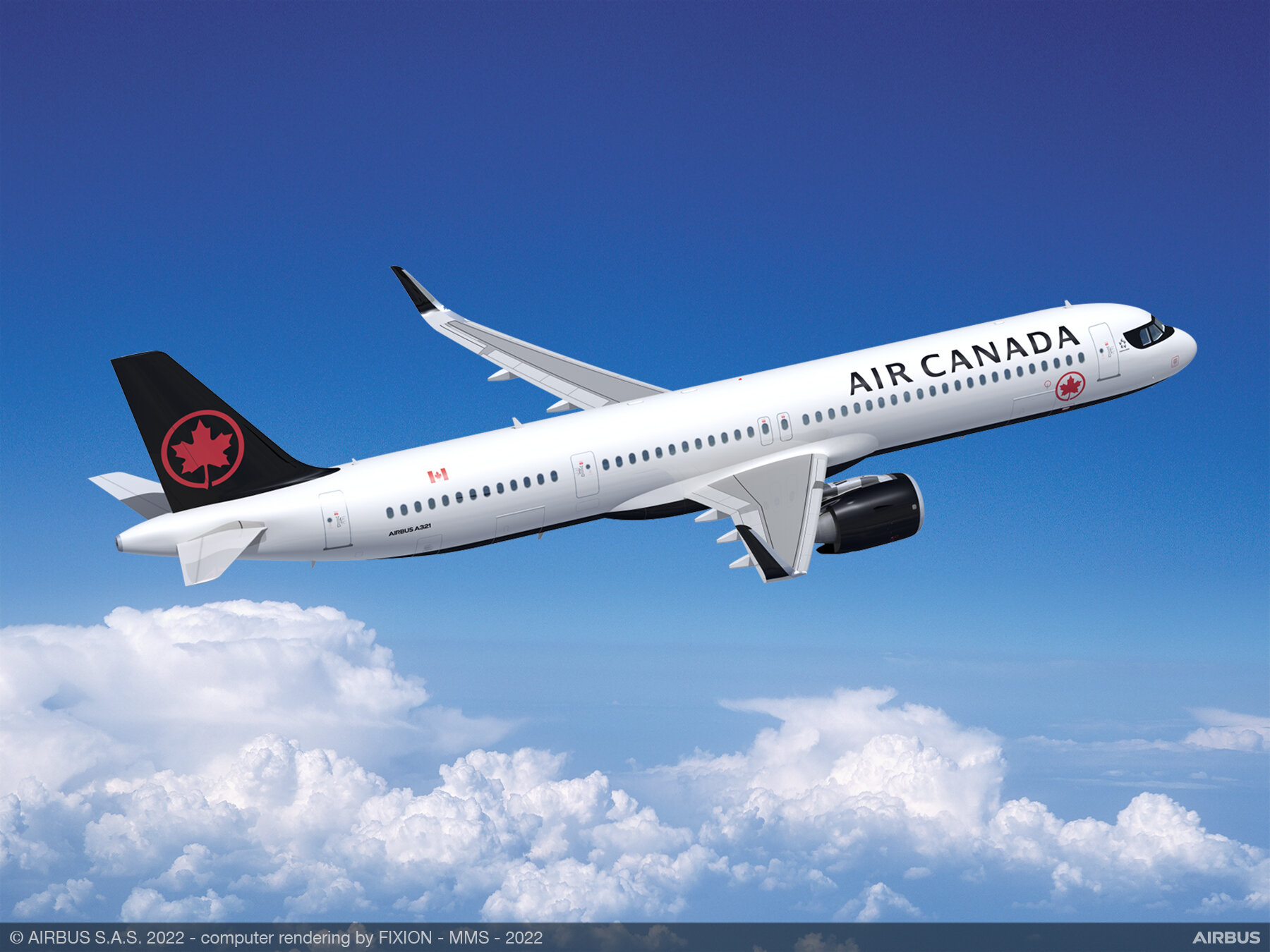
Deliveries of its A321XLR are expected to begin next year with 11 jets in total scheduled to be delivered in the year. Management said it will announce its XLR destinations in the “coming weeks”.
By the end of 2026, the company anticipates its first two 787-10 jets and another four 737 MAX aircraft. During the company’s earnings call, the company said it is “continually” looking for opportunities to optimise its fleet and transition to new aircraft.
“We have some older A319s, in particular, that as maintenance costs get high and we get into major events, we have alternative lift as we bring on the 737s,” management said.
Air Canada said it was “continuously assessing the evolution” of tariffs.
“Despite some modest impacts, we expect 2025 tariff costs to remain rather contained, particularly considering our planned deliveries for the remainder of this year,” said management.
As of the end of the quarter, the company’s net debt was C$4.8bn ($3.5bn) with a net debt to adjusted EBITDA of 1.4x.