

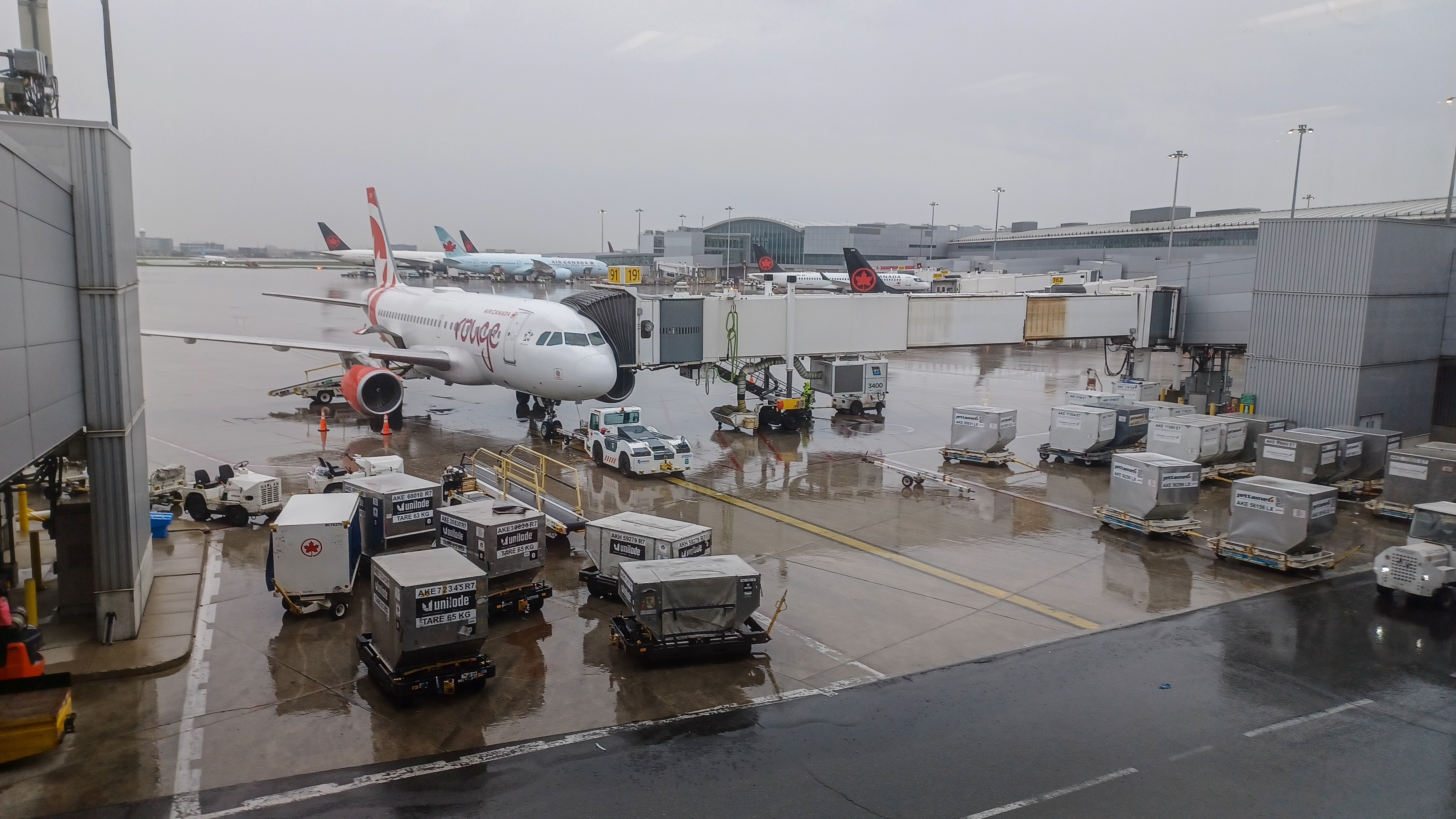
Air Canada has started gradually restoring operations after unionised flight attendants reached an agreement to end strike action, which had forced the airline to halt all operations over the past few days.
Initial departures on August 19, included routes from Toronto to Tokyo, Vancouver to Los Angeles, and Montreal to Toronto. These three flights were the first of 155 scheduled for the day.
The company acknowledged that a full recovery would take up to ten days, as aircraft and crew are repositioned and mandatory maintenance checks are completed on grounded jets.
Mark Nasr, Air Canada's executive vice president and chief operations officer, said some cancellations remain likely in the coming days as the carrier works to stabilise its global schedule.
In response to the disruption, Air Canada announced a new "exceptional disruption policy" to assist customers with transportation-related expenses. It also launched a public recovery dashboard to provide updates on the airline’s return to normal operations.
Air Canada and Air Canada Rouge operations had remained suspended after the Canadian Union of Public Employees (CUPE) said striking flight attendants would not obey a back-to-work order issued by the Canada Industrial Relations Board (CIRB) and won’t back down until a fair deal has been reached for their members.
The carrier had earlier offered a 38% increase in total compensation for flight attendants over four years, with a 25% raise in the first year, which the union deemed insufficient.
Flight attendants had sought pay for tasks such as boarding passengers, which are currently not remunerated. They are now paid for time when the plane is moving.
CUPE, which represents nearly 10,000 flight attendants at Air Canada and Air Canada Rouge, criticised the government’s intervention as a betrayal of workers’ rights. In a statement, CUPE national president Mark Hancock accused the government of siding with corporate interests.
Air Canada Express flights operated by Jazz and PAL Airlines have remained unaffected.