

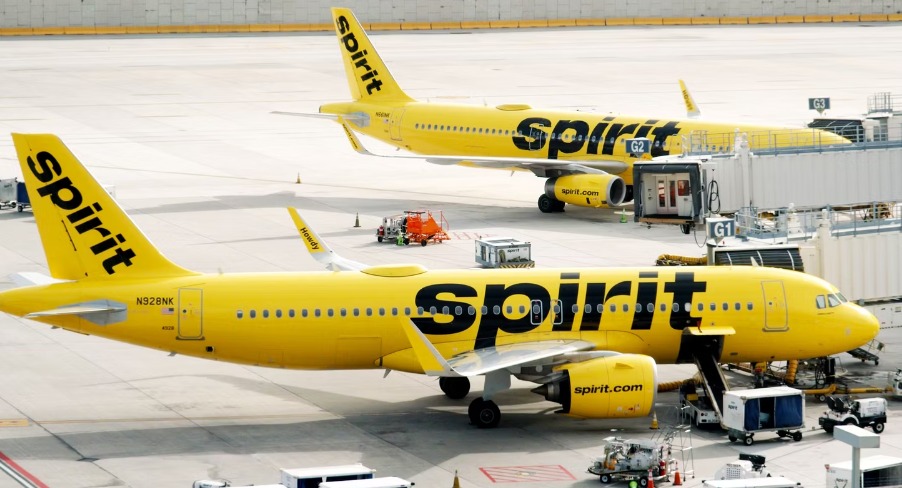
US low-cost airlines are increasingly seeking government assistance as surging jet fuel prices strain finances across the sector, according to reports from Reuters and Bloomberg.
Executives from several budget carriers, including Spirit Airlines, Frontier Airlines, Allegiant Air, Sun Country Airlines and Avelo Airlines, are set to meet US Transportation Secretary Sean Duffy to discuss relief measures as fuel costs surge due to the Middle East conflict.
The group, represented by the Association of Value Airlines, has urged lawmakers to temporarily suspend the 7.5% federal excise tax on airline tickets and the $5.30 per segment fee, arguing that such measures could offset roughly one-third of the additional fuel cost burden.
At the same time, Spirit Airlines has reportedly gone further, seeking hundreds of millions of dollars in emergency funding and even floating the possibility of offering the US government an equity stake to avoid potential liquidation. The airline is currently undergoing restructuring after filing for Chapter 11 bankruptcy protection for the second time in August 2025. Last week there was speculation that the airline was on the verge of being liquidated.
JetBlue lifeline
While some carriers are seeking direct government intervention, JetBlue Airways has moved to shore up its liquidity through private financing.
Chief executive Joanna Geraghty told employees the airline is not considering bankruptcy this year, citing access to capital including a recently secured $500 million aircraft-backed loan, with the option to raise an additional $250 million.
The financing is backed by a pool of Airbus A320 and A220 aircraft and forms part of a broader effort to manage liquidity as costs rise. JetBlue reported a $602 million net loss in 2025, with $9.1 billion in revenue and around $2.5 billion in liquidity, highlighting ongoing financial pressure but no immediate crisis.
Concerns have nonetheless grown after founder David Neeleman warned that if jet fuel prices average around $4.50 per gallon, the airline could face losses of up to $1.3 billion in 2026.
Intervention debate
The push for government support has sparked debate across the industry.
Supporters argue that the current crisis, driven largely by geopolitical factors beyond airlines’ control, warrants temporary relief similar to measures introduced during the Covid-19 pandemic. They warn that without intervention, carriers may be forced to raise fares further, cut capacity or, in extreme cases, cease operations, potentially reducing competition and connectivity.
Critics, however, caution that targeted bailouts could distort competition, particularly if assistance is limited to certain carriers. Industry observers note that many airlines are facing similar fuel pressures, raising questions about fairness and whether government support should be applied broadly or not at all.
There are also concerns that some carriers’ financial difficulties predate the current fuel crisis, meaning taxpayer support could effectively subsidise longstanding structural weaknesses rather than temporary shocks.
Under pressure
The financial strain comes as jet fuel prices have risen sharply following disruption to global oil supplies linked to tensions in the Middle East, forcing airlines worldwide to raise fares, cut routes and reassess growth plans.
For US low-cost carriers, whose business models rely heavily on price-sensitive customers and tight cost control, the surge in fuel costs is proving particularly challenging, intensifying calls for government action as the industry navigates one of its most volatile periods in years.