
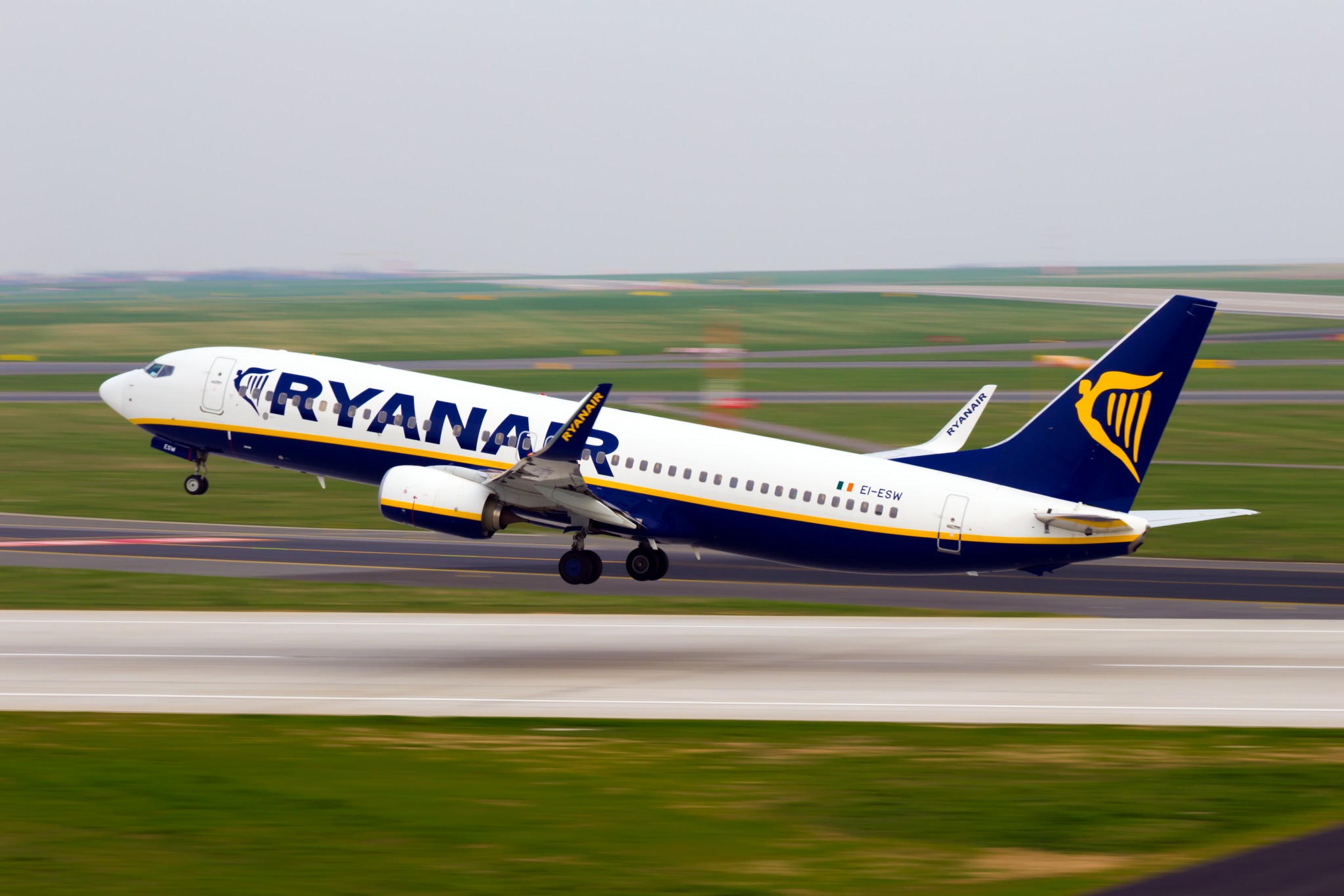
Ryanair reported a third-quarter profit after tax of €115 million pre-exceptionals, as traffic rose 6% to 47.5 million passengers and average fares increased 4%.
Revenue for the quarter ended December reached €3.21bn, up 9%, while unit costs remained flat excluding exceptional items. Profit was down 22% year on year, largely due to the absence of Boeing delivery delay compensation received in the prior period.
Group chief executive Michael O’Leary said the quarter reflected “strong demand and very strong cost control”, while chief financial officer Neil Sorahan highlighted “flat unit costs pre-exceptional charges” despite inflationary pressures.
Ryanair booked an €85 million provision linked to an Italian competition authority fine, representing around 33% of the total €256 million penalty. O’Leary described the ruling as “manifestly wrong and baseless” and said the airline was confident it would be overturned on appeal.
The airline lifted its full-year traffic forecast to 208 million passengers, up 4%, driven by early aircraft deliveries and resilient demand. It expects fares to rise by 8–9% for the year, ahead of previous guidance of 7%.
Ryanair is guiding for full-year profit after tax (pre-exceptionals) of €2.13bn to €2.23bn.
However, O’Leary cautioned that the final outcome remains exposed to “conflict escalation in Ukraine or the Middle East, macroeconomic shocks and any further impact of repeated European ATC strikes and mismanagement”.
Capacity growth remains constrained across Europe, with O’Leary pointing to aircraft delivery delays, engine availability issues and airline consolidation reducing short-haul supply.
Ryanair expects to take delivery of its final four Boeing 737-8200 “Gamechanger” aircraft in February, bringing the total to 210. Earlier-than-expected deliveries have allowed the airline to slightly raise traffic growth for the current year and plan for 4% growth to 216 million passengers in FY27.
O’Leary said Boeing is “increasingly confident” that certification of the 737-10 MAX will occur in summer 2026, with Ryanair due to receive its first 15 aircraft in spring 2027 as part of a 300-aircraft order.
“These aircraft allow us to engage in a decade of low-fare profitable growth to 300 million passengers by FY34,” he said.
Ryanair remains heavily hedged against fuel price volatility, with 84% of fuel hedged for Q4 at $76–77 per barrel and 80% hedged for FY27 at $67 per barrel, representing a projected 10% saving.
The group ended the quarter with €2.4bn in gross cash and around €1bn net cash, maintaining its BBB+ investment-grade credit rating.
Sorahan said Ryanair expects to repay its final €1.2bn bond in May 2026 from internal resources, leaving the group effectively debt-free.
Capital expenditure for FY26 is expected to be around €2bn, with a similar level anticipated for FY27. O’Leary said aircraft financing would be “mostly from internally generated cash, but we’ll also use bond or bank markets when it’s opportunistic”.
Ryanair said it is reallocating scarce capacity toward lower-cost markets such as Albania, Morocco, Slovakia and Sweden, while cutting exposure to higher-tax markets including Germany, Belgium and Austria.
For summer 2026, the airline plans to open new bases in Tirana, Trapani and Rabat, alongside more than 100 new routes.