

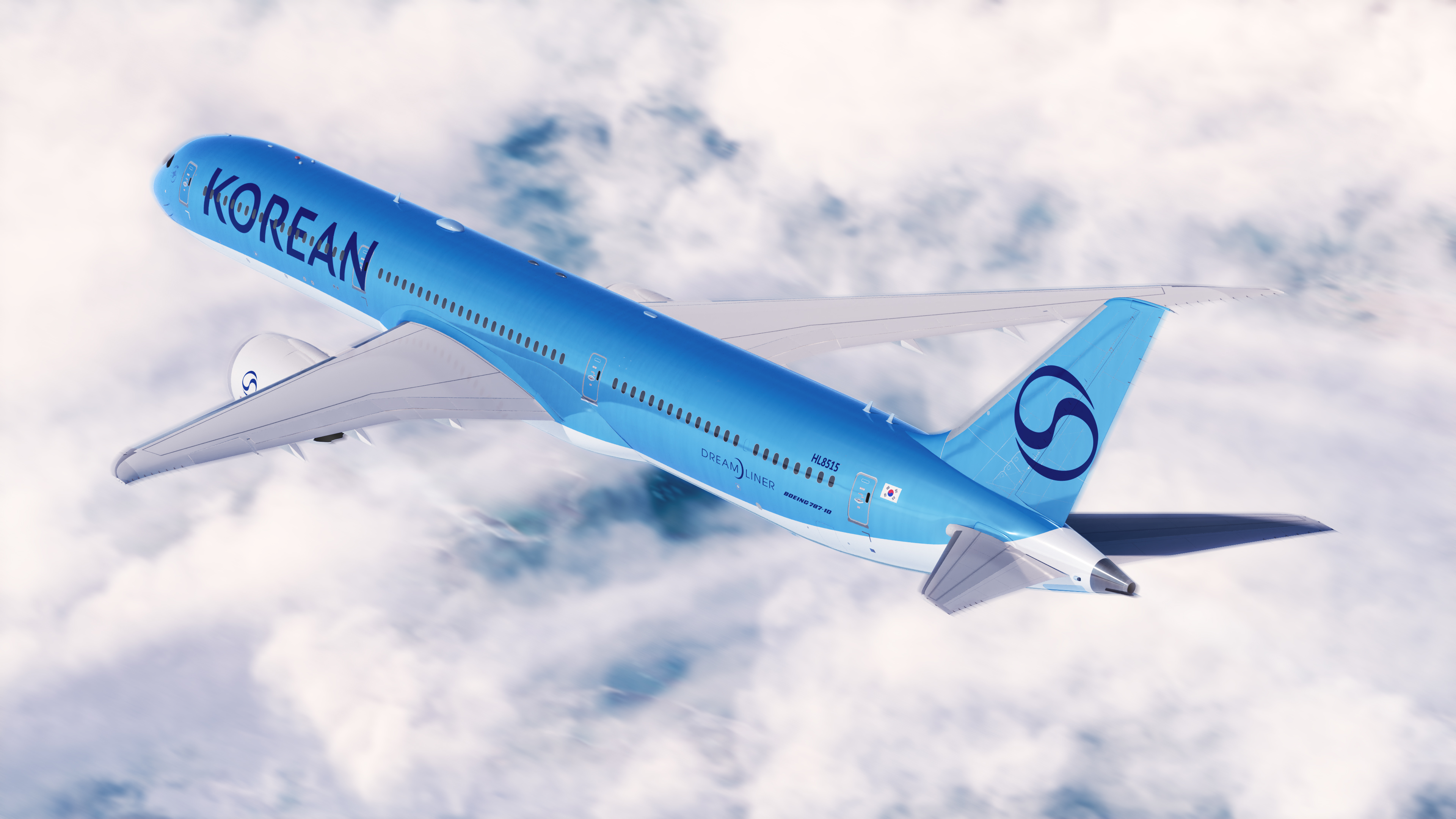
Despite a 2.6% increase in flight operations in 2025, Korean Air has managed to reduce its carbon emissions by 3.3% during the year.
Flight emissions totalled 12.18 million tonnes during the year, down over 420,000 tonnes from 2024's 12.6 million tonnes.
Korean Air said this was driven by “precise fuel management”. Additionally, collaboration across all operational sectors, including flight control, maintenance, and passenger services.
“This reduction was driven by collaboration across all operational sectors and the participation of our employees,” said a Korean Air representative. “We remain committed to meeting our carbon reduction goals and continuing our journey toward sustainable aviation."
The expansion of next-generation, fuel-efficient aircraft to 41.6% of total flights during the year helped boost the reduction.
Other measures included optimised flight paths, payloads, and cruise speed, as well as prioritising optimal alternate airports to lower required reserve fuel, and minimising APU usage. The airline also conducted periodic core washing and precision tuning for its engines to maintain peak efficiency.
Korean Air governs its carbon reduction through a quarterly committee that audits performance and sets strategy, as well as incentivising employee-led carbon reduction ideas.
The company has also used AI-powered systems to improve weight prediction data accuracy.