

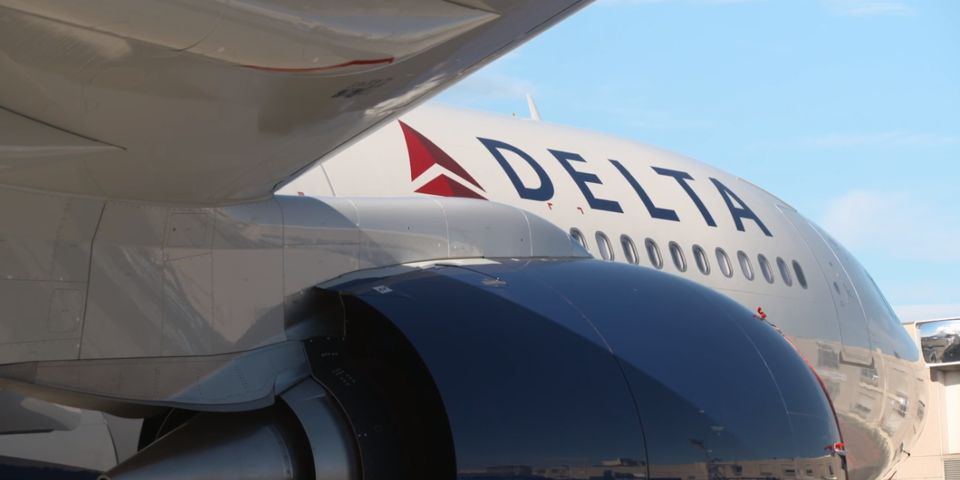
Delta Air Lines has placed a firm order for 31 additional Airbus widebody aircraft, comprising 16 A330-900s and 15 A350-900s, as strong premium demand and a confident earnings outlook shape its long-haul growth strategy.
The order, announced in Toulouse on 28 January, will take Delta’s widebody Airbus fleet to 55 A330neos and 79 A350s once deliveries are completed, further consolidating its focus on modern, fuel-efficient aircraft for international expansion.
“As we grow our international footprint and prepare our fleet to serve expanded long-haul markets, these aircraft will enhance our capabilities and elevate our premium offerings,” said Ed Bastian, Delta’s chief executive officer. “We value our long-standing partnership with Airbus, and with these widebody aircraft we will see additional operational efficiencies and long-term cost benefits in the years to come.”
The investment follows a year of resilient financial performance for the US carrier, driven largely by continued strength in its premium and loyalty businesses. Delta reported full-year adjusted earnings per share of $5.82 for 2025, with net income of $3.8bn. Adjusted operating revenues rose to $58.3bn, while premium revenue grew 7% for the year and 9.1% in the fourth quarter. Loyalty revenue increased 6%.
Management said the results were achieved despite “some very choppy points” in 2025, marked by economic uncertainty and trade tensions that prompted the airline to withdraw and later reinstate its outlook. “This gives us confidence that 2026 is going to be a great year,” management said during its earnings call.
That confidence is reflected in guidance for adjusted earnings per share of between $6.50 and $7.50 in 2026, representing a 20% increase at the midpoint. Delta expects premium products to remain a key earnings driver, while management said main cabin demand is likely to recover later in the year after declining 7% in the fourth quarter.
Airbus said the latest widebody order underscores Delta’s commitment to its product family. “Delta’s renewed confidence in both the A330neo and the A350 is a testament to our enduring partnership and the excellence of the Airbus widebody family performance,” said Benoît de Saint-Exupéry, Airbus EVP sales for commercial aircraft. “These aircraft offer the range, capacity and premium cabin experience Delta requires to grow into new markets and connect more of the world.”
Delta currently operates more than 500 Airbus aircraft across all product families, from the A220 to the A350-900. Its Airbus backlog stands at around 200 aircraft and includes the A350-1000, following an order for up to 40 A350-1000s placed in January 2024.
The A330-900 is powered by Rolls-Royce Trent 7000 engines and has a range of up to 8,100 nautical miles, delivering a 25% reduction in fuel burn and emissions compared with previous-generation competitors. The A350-900, capable of flying up to 9,700 nautical miles, uses advanced aerodynamics and lightweight materials to achieve similar efficiency gains. Both aircraft feature Airbus’ Airspace cabin and are certified to operate with up to 50% sustainable aviation fuel (SAF), with a target of 100% SAF capability by 2030.
The widebody investment comes alongside Delta’s recent diversification of its long-haul fleet. On the same day as its results announcement, the airline disclosed an order for up to 60 Boeing 787-10 Dreamliners, including 30 firm aircraft and 30 options — its first direct order for the type. Management described the move as a “natural evolution” after achieving scale with the A350 and A330 fleets.
“In the widebody space, fleet efficiency is really what wins the day,” management said. “Taking a 767 and replacing it with an Airbus A350 or a Boeing 787 drives better product and drives an incremental margin.”
The new aircraft are expected to support high-demand transatlantic and South American routes, where premium traffic has been particularly strong. Delta also highlighted the importance of its domestic network in feeding long-haul services from hubs such as New York, Los Angeles and Boston.
At the end of December 2025, the A350 Family had secured more than 1,500 orders from 67 customers worldwide, while the A330 Family had accumulated over 1,900 orders.