

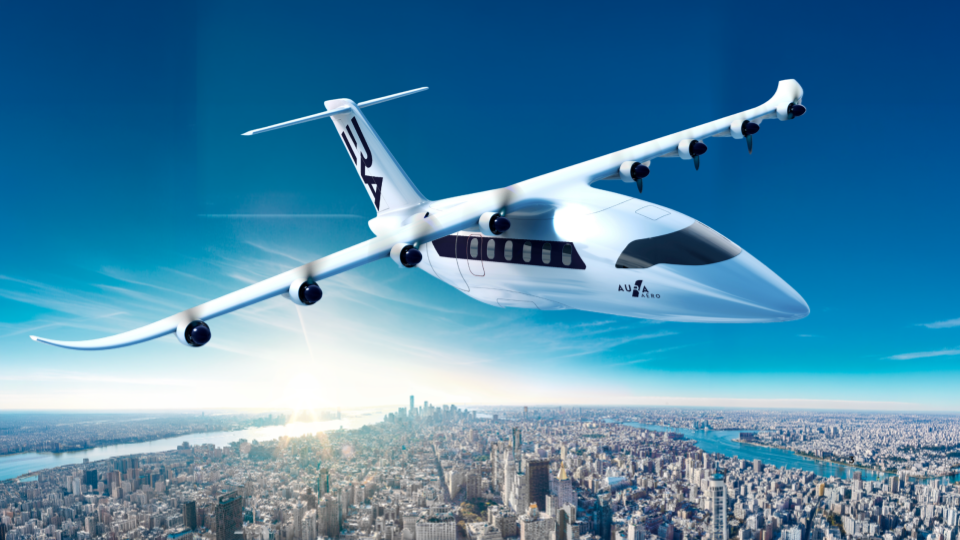
Aura Aero has raised €50m in a Series B funding round, taking total financing to €340m as the company moves towards industrial-scale production of its hybrid-electric aircraft.
The latest round was backed by a mix of industrial, institutional and deep-tech investors, including the French Tech Souveraineté fund managed by Bpifrance, the European Innovation Council (EIC) Fund, Safran Corporate Ventures, Innovacom, Blast, the Florida Opportunity Fund and EDF. The funding is complemented by grants from French and European programmes and financial support from the State of Florida for its US expansion.
The capital will be used to advance three core programmes: the ERA hybrid-electric regional aircraft, the INTEGRAL training aircraft, and the ENBATA drone platform. It will also support the development of industrial capabilities required for large-scale production.
Aura Aero has secured firm orders for its ERA aircraft, part of more than 700 purchase intentions and 20 confirmed orders, providing early commercial validation as it prepares to scale manufacturing.
The company is simultaneously building out production infrastructure on both sides of the Atlantic. In France, it has secured a building permit for a new factory at Toulouse-Francazal Airport, while in the US it is developing a 16-hectare site at Daytona Beach International Airport, supported by Space Florida. These facilities are expected to underpin the transition from development to series production.
The fundraising marks a shift from a research and development phase to execution and industrialisation, with the company aiming to bring multiple programmes to market. These include the first flight of a hybrid-electric regional aircraft, certification of a fully electric CS-23 aircraft, and development of a medium-altitude long-endurance drone.
Aura Aero said the combination of equity funding, public support and strategic investors provides the financial stability required to position itself as a long-term industrial player, aligned with France’s broader push to develop low-carbon aviation technologies under the France 2030 programme.
The company now faces the capital-intensive phase of scaling production, with further financing likely required as it ramps up manufacturing and moves towards certification and delivery of its aircraft.