
Air Peace orders five new E175s for fleet expansion and renewal
18th September 2023

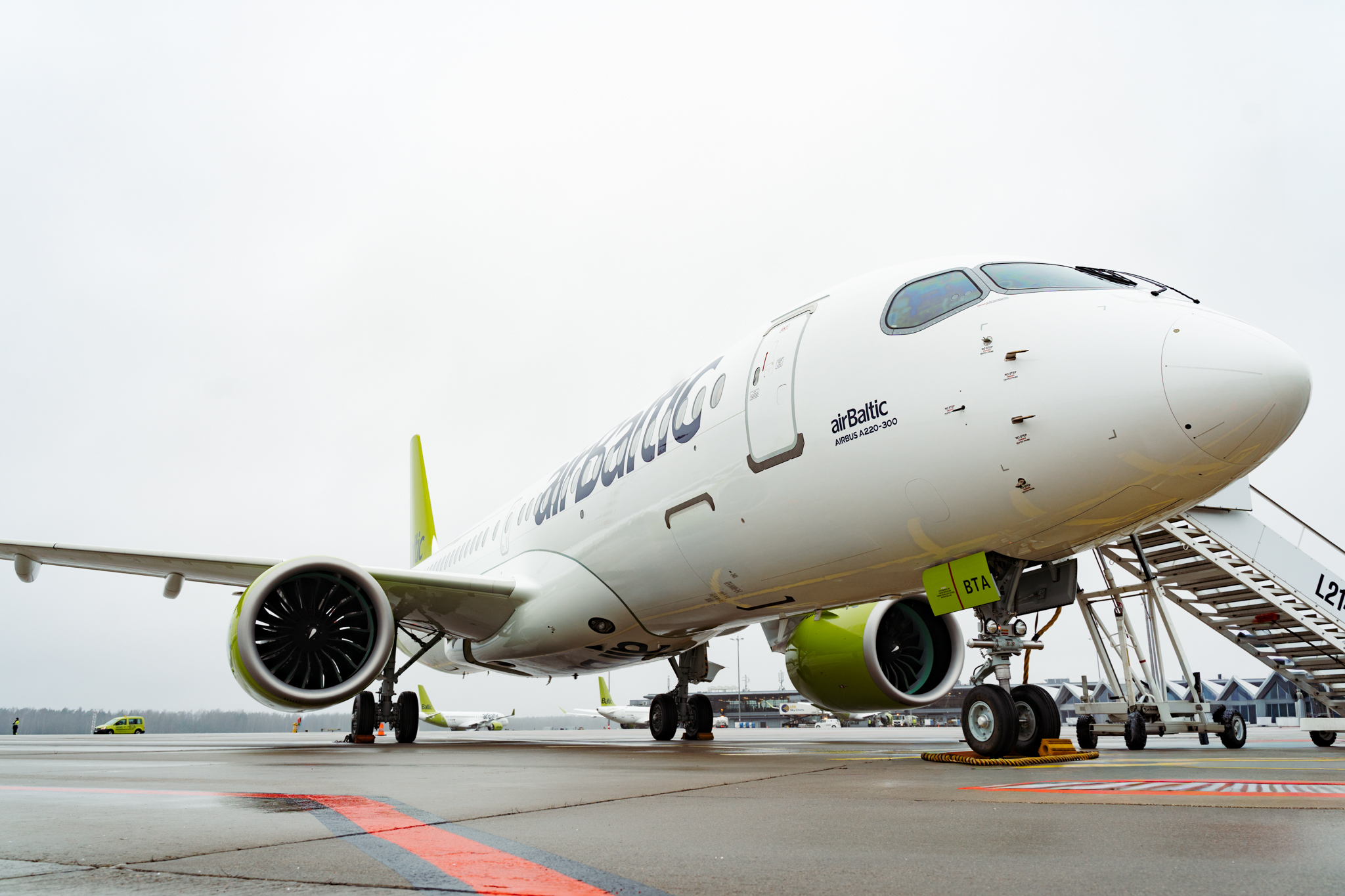
The Latvian carrier airBaltic has appointed Seabury Securities as its strategic and financial adviser, a move that may signal preparations for a capital raise, partial privatisation or a potential strategic reorganisation.
Another possibility is that the airline could shutter unprofitable routes to reduce cash burn and seek to sell surplus aircraft to raise capital.
The airline said Seabury would support a review of its long-term strategy, improve financial performance and help strengthen its capital structure, with an initial focus on evaluating funding options.
The appointment comes as airBaltic is under growing financial strain, highlighted by a recent downgrade from S&P Global Ratings, which cut the carrier’s issuer rating to ‘B-’ from ‘B’ and its standalone credit profile to ‘ccc’, with a negative outlook.
S&P warned that the airline’s liquidity position remains weak and that, absent external funding or a material improvement in conditions, the risk of a debt restructuring over the next 12 months is rising.
airBaltic ended 2025 with €28.3 million of cash, including €17.2 million reserved for bond payment on its 2029 bonds, only marginally above its €25 million minimum liquidity requirement. At the same time, it faces significant fixed obligations, including around €55 million in annual bond coupons, €140 million in estimated annual lease amortisation and roughly €40 million in capital expenditure.
The agency expects EBITDA to remain broadly flat at around €124 million in 2026, while forecasting revenue growth of 5–8% to €815m-€840m, supported by capacity expansion and wet-lease operations. However, these gains are likely to be offset by cost pressures, particularly fuel, emissions and infrastructure charges.
Low fuel hedging
The airline’s exposure to fuel price volatility is heightened by limited hedging, with only about 10% of consumption covered. Rising fuel costs linked to the Middle East conflict are therefore likely to exacerbate the airline’s financial strains.
S&P estimates the airline will require €120 million-€170 million in additional funding this year. With adjusted debt of around €1.3bn and leverage above 10x, the balance sheet leaves limited room for underperformance without further capital support.
Previous funding efforts, including around €100 million raised in 2025 through debt and equity, have helped bridge earlier gaps. However, options such as an initial public offering or refinancing of the airline’s €380 million senior secured notes, which carry a 14.5% coupon, appear more challenging in current market conditions.
Any move towards privatisation, a strategic sale or a broader refinancing is also likely to depend on a stabilisation in airline markets, which remain volatile due to the ongoing Middle East situation and its impact on fuel prices and demand.
airBaltic is majority-owned by the Latvian government, which holds about 88% of the airline and has historically provided financial support. However, S&P noted uncertainty over the timing and structure of any further state backing, partly due to EU state aid rules and the presence of minority shareholder Deutsche Lufthansa with 10% ownership.
The engagement of Seabury suggests the airline is actively exploring options to address its capital needs and reposition its balance sheet as it is forced to navigate a challenging operating environment.