

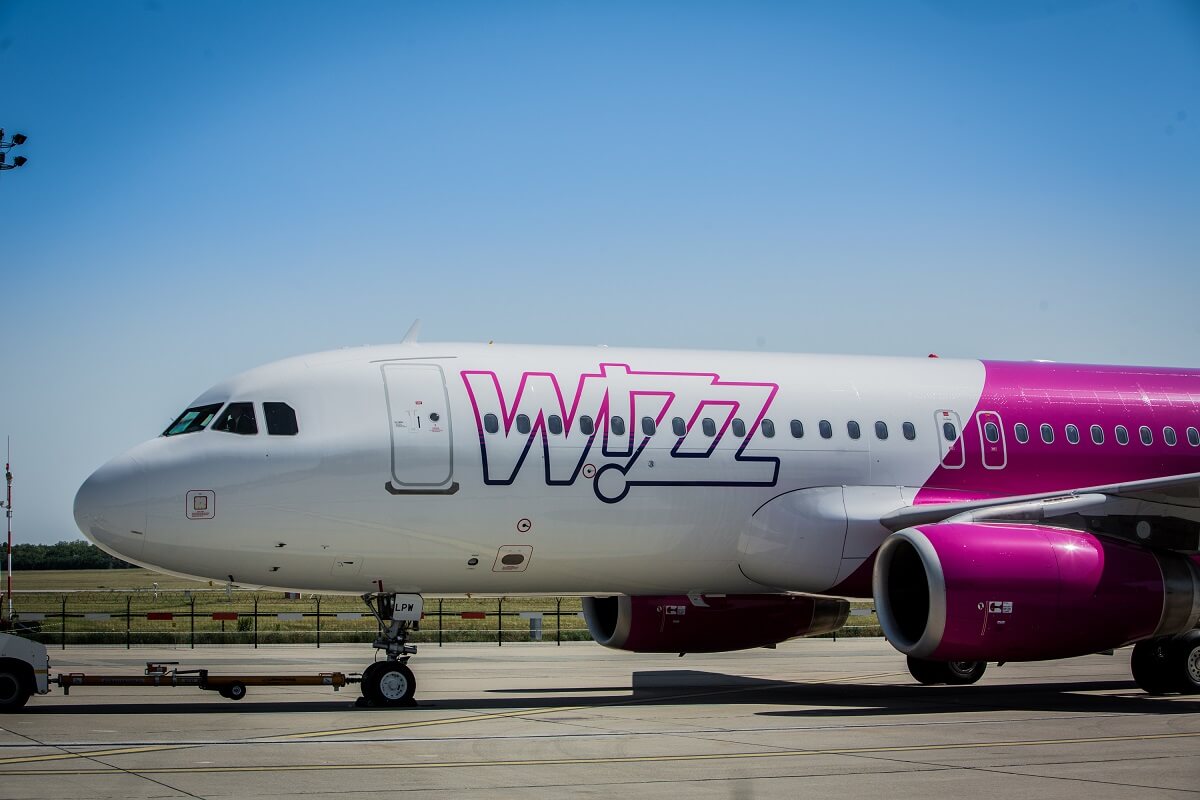
Wizz Air stock climbed more than 17% after the low-cost carrier reported an impressive H1 fiscal year 2025 performance, with double-digit gains in EBITDA and operating profit.
In the six months to September 30, 2025, Wizz Air delivered total revenue of €3.4bn, up 9%, and carried 36.5 million passengers, up 9.8% over the same period last year.
The carrier’s EBITDA for the period rose 18.8% to €981 million, and its operating profit rose 25.8% to €439 million. However, net profit climbed only 2.6% to €323 million.
Load factor was flat at 92.4% and revenue per available seat kilometre was flat at 4.98 cents.
Ex-fuel cost per available seat kilometre (CASK) rose 2.7%, though fuel CASK fell 10.8%. Total CASK fell 1.8% to 4.46 cents.
Total cash grew 14.3% to €1.98bn, while total debt fell 2.5% to €4.83bn.
Capacity as available seat kilometres (ASK) rose 8.9%, which was “slightly lower than planned”, due to cancelled flights to Tel Aviv and the discontinuation of the airline’s Abu Dhabi-based flights from September onwards.
Management said the positive EBITDA performance reflects stable revenue growth, lower fuel and flight disruption charges, and the absence of one-off wet lease costs that impacted H1 during the previous fiscal year.
Taxation was the line item that squeezed the airline’s net profit down to a 2.6% gain, despite a net foreign exchange gain of €176 million (excluding derivative financial instruments), due to the strengthening of the euro against the US dollar.
The Group recorded a H1 income tax charge of €127.1 million, compared to an income tax charge of €47.8 million in the same period last year.
This consisted of a €25.7 million current tax charge and a €101.4 million deferred tax charge.
“The increase in tax charges is attributable to the increased profit before tax for the current period, movements in deferred taxes and the higher effective tax rate,” the company said.
József Váradi, CEO of Wizz Air, said the company’s H1 performance reflects its increased capacity deployed over the summer season, alongside operational and commercial improvements.
In September, in addition to closing its Abu Dhabi base, Wizz Air also initiated the closure of its Vienna base, which will be completed by March 2026.
The CEO said these actions reflect the airline’s “pivot away from high-cost locations” towards new bases at lower-cost airports, including Bratislava, Tuzla, Podgorica, Yerevan and Warsaw (Modlin).
Since the closing of H1, the CEO said the “most important” development at the company has been its optimisation of its aircraft delivery stream.
Going forward, the airline is targeting a “more sustainable” capacity growth of 10% to 12% per annum, and has adjusted its fleet expansion plans accordingly.
Wizz Air has deferred the delivery of 88 Airbus A321 aircraft from this decade to the next, and it has sold three A321neos this month. It has also converted 36 of its A321XLR order commitment to A321neo aircraft.
“Our order book, which now extends to 2033, remains a strategic asset, differentiating Wizz Air by securing stable and competitively-priced capacity growth for years to come,” said Váradi.
“We will see the most significant changes to our delivery profile in around 12 months time (given near-term orders and financing commitments).
“As such, we are actively managing this winter season's capacity to deliver circa mid-teens H2 seat capacity growth YoY.”
In the six months to September 30, 2025, Wizz Air took delivery of 16 new A321neo aircraft, three new A321neo XLRs, and redelivered seven A320ceo aircraft.
It ended the period with a total fleet of 243 aircraft, made up of 30 A320ceo, 41 A321ceo, six A320neo, 163 A321neo, and three A321neo XLRs.
The average age of the fleet is 4.6 years, and it remains the youngest fleet of any major European airline, while the average number of seats per aircraft has climbed to 229 as of September 30, 2025.
The share of new "neo" technology aircraft within Wizz Air's fleet has increased to 71%.
For the next fiscal year, Wizz Air is expecting GTF engine-related aircraft groundings to reduce to 25 to 30 aircraft.
At the end of September 2025, 35 aircraft were grounded due to GTF inspections, down from 41 at the end of June 2025.
Despite today's rebound, Wizz Air stock has fallen 22% year to date.