

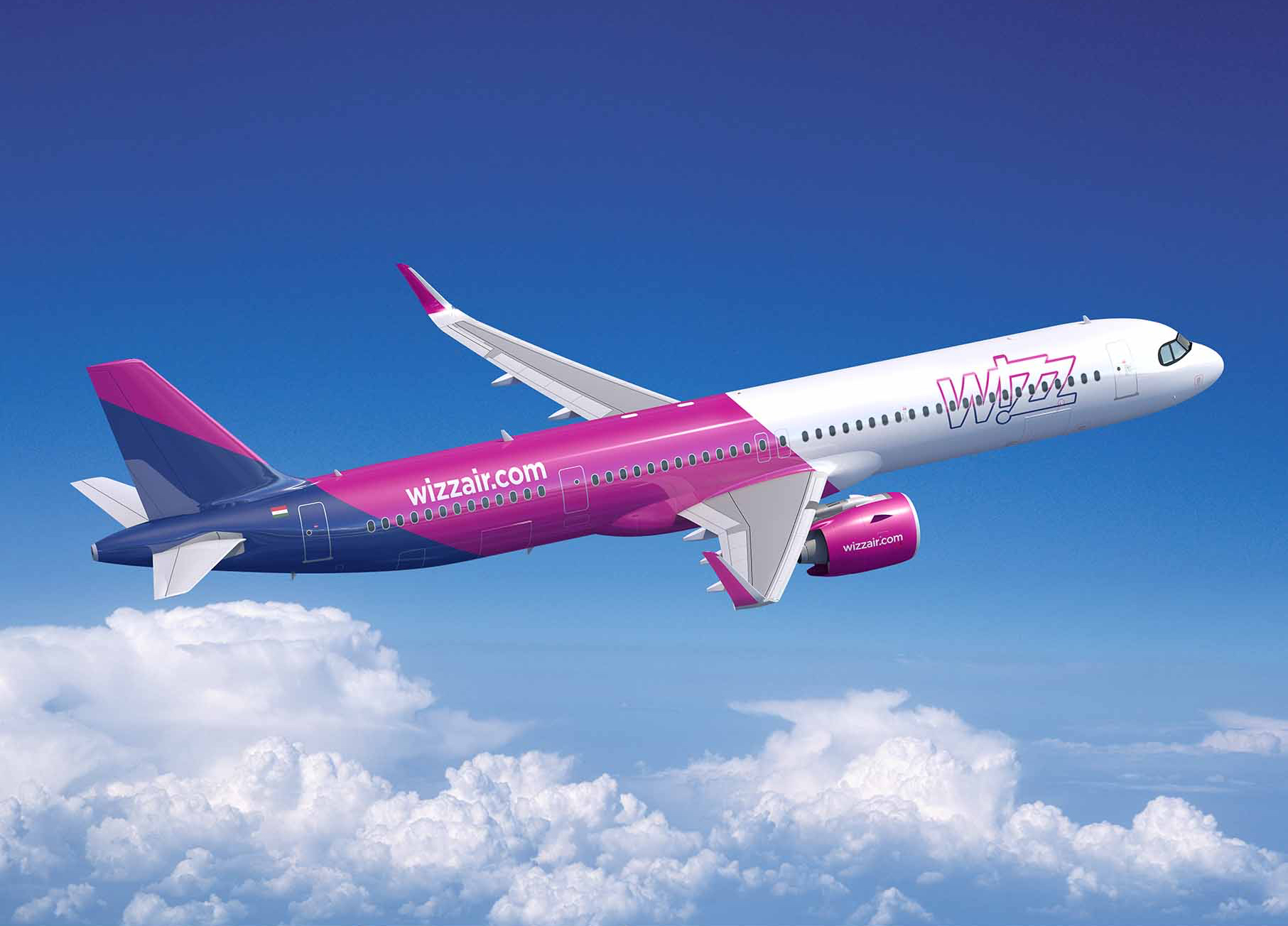
Wizz Air reduced the number of aircraft grounded by Pratt & Whitney GTF engine inspections during the third quarter, while continuing to expand its fleet and rebalance growth towards Central and Eastern Europe.
The airline had 33 aircraft on the ground at 31 December 2025, down from 40 a year earlier. It expects average groundings of 30–35 aircraft through FY26, falling to 20–25 by the end of FY27, based on an estimated 250-day engine turnaround time. Wizz is also building a spare engine pool of around 100 engines to support operations ahead of summer 2026 and continues to receive compensation from Pratt & Whitney related to the disruption.
Chief executive József Váradi said the airline was “steadily recovering from the engine related aircraft grounding”, adding: “In the next fiscal year we are targeting to have an average of 20–25 aircraft on the ground due to powered metal issues.”
On the Q3 earnings call, he said Wizz’s exposure to engine maintenance costs was structurally limited by its contractual arrangements: “We have a flight hour agreement… we put the burden on Pratt & Whitney.”
During the three months to 31 December, Wizz took delivery of 16 A321neo aircraft and three A321neo XLRs, while returning two A320ceos. Three of the A321neos were immediately sold to a lessor and leased onward to a related airline. The fleet stood at 257 aircraft, with 73 per cent now comprising neo-family aircraft.
Deliveries were financed through a mix of sale-and-leaseback transactions and Japanese Operating Lease with Call Option (JOLCO) structures, with average lease terms of around nine years.
Chief financial officer Ian Malin said the airline is gradually rebalancing its financing mix: “Roughly 20 per cent of our deliveries right now are being financed through a form of ownership like JOLCO or finance lease.”
He added that Wizz is assessing a more conventional ownership model over time to smooth earnings, accepting that this would reduce upfront gains from sale-and-leaseback transactions.
The airline’s firm backlog totals 262 aircraft, comprising 257 A321neos and five A321XLRs. Wizz said it is in discussions to transfer five upcoming XLR deliveries to another operator ahead of the 2026 summer season.
Its revised fleet plan shows the progressive exit of A320ceo and A321ceo aircraft, with the group targeting an almost entirely A321neo fleet by the end of the decade.
Wizz continued to concentrate growth in Central and Eastern Europe, where it said its market share reached 26 per cent during the quarter. New routes were launched from Budapest, Debrecen, Vilnius, Kosice, Cluj, Belgrade, Gdansk, Varna, Sofia and Yerevan. The airline also reopened a base in Targu Mures and increased aircraft allocations in Tirana and Warsaw for summer 2026.
Strategic non-CEE bases in London, Rome and Milan are also expected to grow, supported by improving yield performance. Váradi said: “We are focusing on fortifying our key bases and concentrating our efforts on network design across Central & Eastern Europe, Italy and London.”
Wizz reiterated that Ukraine remains outside current plans but said aircraft could return “within weeks” of a ceasefire, security clearance and airspace reopening.
For the quarter ended 31 December 2025, Wizz carried 17.5 million passengers, up 12.5 per cent year-on-year, on capacity of 33.8 billion ASKs, an increase of 11.1 per cent. Load factor edged down 0.5 percentage points to 89.8 per cent.
Total revenue rose 10.2 per cent to €1.30 billion, while EBITDA increased 12.2 per cent to €176.2 million, with margin improving to 13.6 per cent.
The airline reported an operating loss of €123.9 million, compared with a loss of €75.9 million a year earlier, driven mainly by higher depreciation associated with the planned retirement of older A320ceo-family aircraft. Net loss narrowed to €139.3 million from €241.1 million.
Ex-fuel unit costs rose 2.1 per cent, reflecting higher depreciation and airport and en-route charges, while fuel unit costs increased 2.7 per cent due to higher fuel prices, emissions costs and SAF uplift.
Total cash stood at €1.98 billion at the end of December, with net debt of €5.20 billion.
For the full financial year, Wizz expects capacity growth of around 10 per cent, with load factor finishing above 91 per cent and unit revenue broadly flat year-on-year. Net income is expected to fall within a range of plus or minus €25 million.
Váradi said the airline had reset its growth profile to reduce execution risk linked to fleet disruption: “We decided to reduce the growth rate to around 10 to 12 per cent… taking some risks out of the profile of the business.”