

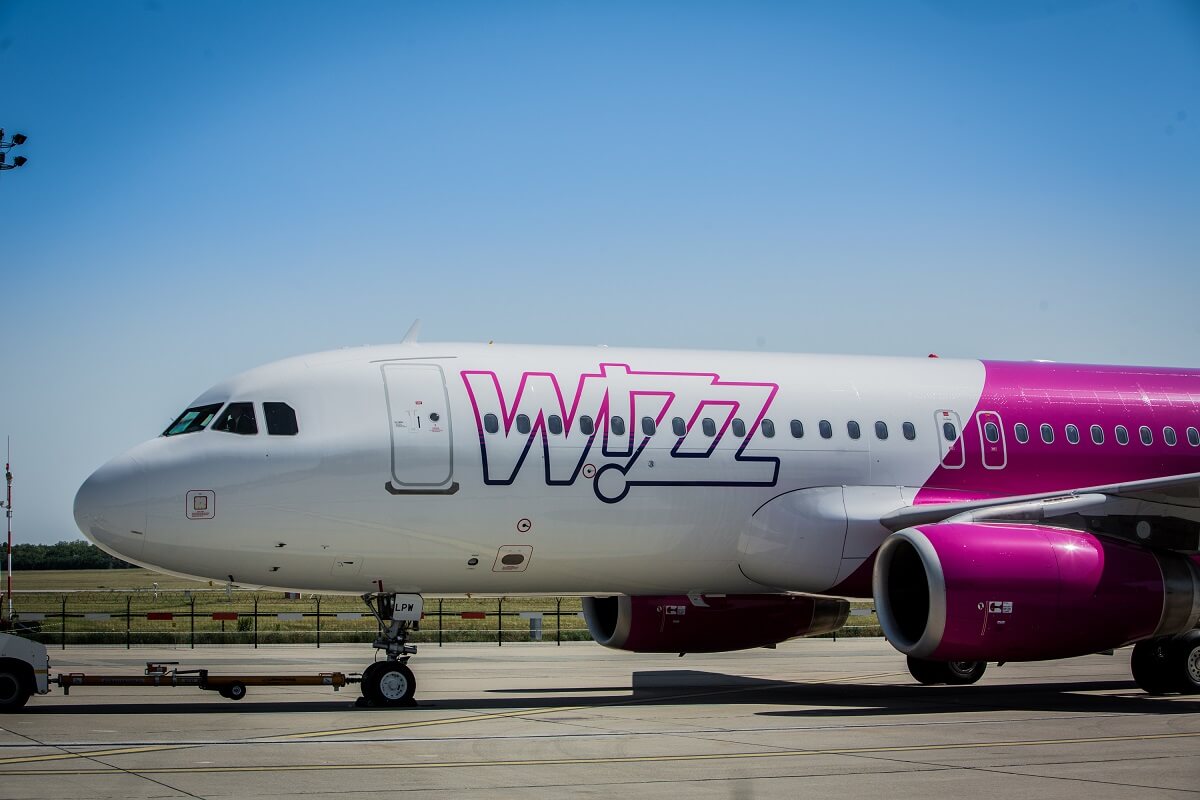
Wizz Air reported €241.1 million net loss in its third quarter results, ending December 31, 2024, widening from €105.4 million in the same period a year prior, the company reported on January 30, 2025.
The result reflects its continued issues with the Pratt & Whitney geared turbofan (GTF) engine inspections, which began in 2023 due to powdered metal contaminations. The airline said a fifth of its fleet were grounded.
“Wizz Air has continued to navigate the complexity imposed on its operations from the ongoing grounding of some 20% of its fleet, due to the well-documented GTF engine issues," said the airline's CEO Jozsef Varadi.
The company said it had reached agreements with Pratt & Whitney at the end of last year, covering a new commercial support agreement over 2025 and 2026. The compensation package covers associated and expected costs with aircraft on ground (AOG), with levels expected to be similar to previous agreements during 2024.
Around 40 aircraft are forecast to be grounded for the fiscal year 2026. However, this “may change” depending on “the current negotiations to select the engine" for 177 incoming A321neos, the company said. These negotiations are expected to conclude by the end of the current quarter. In its earnings call, Varadi said it is evaluating both the GTF and CFM LEAP engine to power the 177 A321neos on order.
Varadi told Airline Economics in both an interview last year as well as to its Growth Frontiers Dublin 2025 conference that the GTF remains a “good engine”. At the conference, he said he expects the engine issue to be a “four to five year issue”.
The company's delivery backlog consists of 307 aircraft, including 260 A321neo and 47 A321XLR aircraft, with 137 A321neos scheduled for delivery over the next three years, after adjustments from Airbus' delivery schedule. The fleet is now forecast to grow from a forecast 230 aircraft at the end of March 2025, to 305 aircraft by the end of March 2028. Previous forecasts from Wizz had estimated 380 aircraft by the end of that period. This means a 75 aircraft reduction for that period, despite a promised ramp up from Airbus. The manufacturer maintained in an earlier press conference it remained confident it would reach a narrowbody production target of 75 per month in 2027.
Furthermore, the airline warned its full fiscal year net income to be around €250-300 million. The company previously forecast around €350-450 million and prior to that, set guidance to €500-600 million. A year prior, it had recorded a net result of €366 million.
Wizz's shares slumped over 10% in the morning of the report, somewhat recovering to down just over 7% at 1,267.86p per share as of 11:45am GMT. Varadi's £100 million bonus is contingent on the company's shares reaching 12,000p per share by 2028.
However, incoming deliveries are expected to “provide a clear pathway for sustained growth”, Varadi said. The airline received four new A321neos in the December quarter, while two A320ceos were returned to their respective lessors, bringing its fleet to 226 aircraft by the end of the year. All wet leased aircraft were returned to lessors by the end of October. For the fourth quarter of the fiscal year, the company expects eight new A321neo deliveries, including its first XLR aircraft, while a further four A320ceo aircraft will exit the fleet.
“Our recently adjusted Airbus delivery schedule underpins this ambition, especially when factoring in the return our grounded fleet to the air over the next two years,” said Varadi. “Annual capacity growth of 15-20% over the next five years will facilitate the densification of Wizz's network."
The airline's revenues totalled €1.2bn in the quarter, up 10.5%. EBITDA was up significantly from €18.7 million in 2023, to €157.1 million in the period. Total operating expenses were up only 1% to €1.3bn. Fuel costs were down 18% to €416.7 million. The company's operating loss for the period had improved at €75.9 million, compared to an operating loss of €180.4 million a year prior.
Capacity was down 1.7%, with passengers up 2.6% to 15.5 million. Load factor improved 2.7 percentage points to 90.3%. Revenue per available seat kilometre (RASK) was up 12.4% to 3.86 cents, while total cost per available seat kilometre (CASK) was up 3.6% to 4.25 cents.
For the full fiscal year, load factor is expected to be 92%, with RASK up mid-single digits. CASK excluding fuel is expected to be up in the high teens, while fuel CASK is expected to be down 3-5%. Capacity is expected to be flat to up 1% on the previous year.
As of the end of the year, Wizz held a total of €1.6bn in cash and its net debt was €5.1bn.