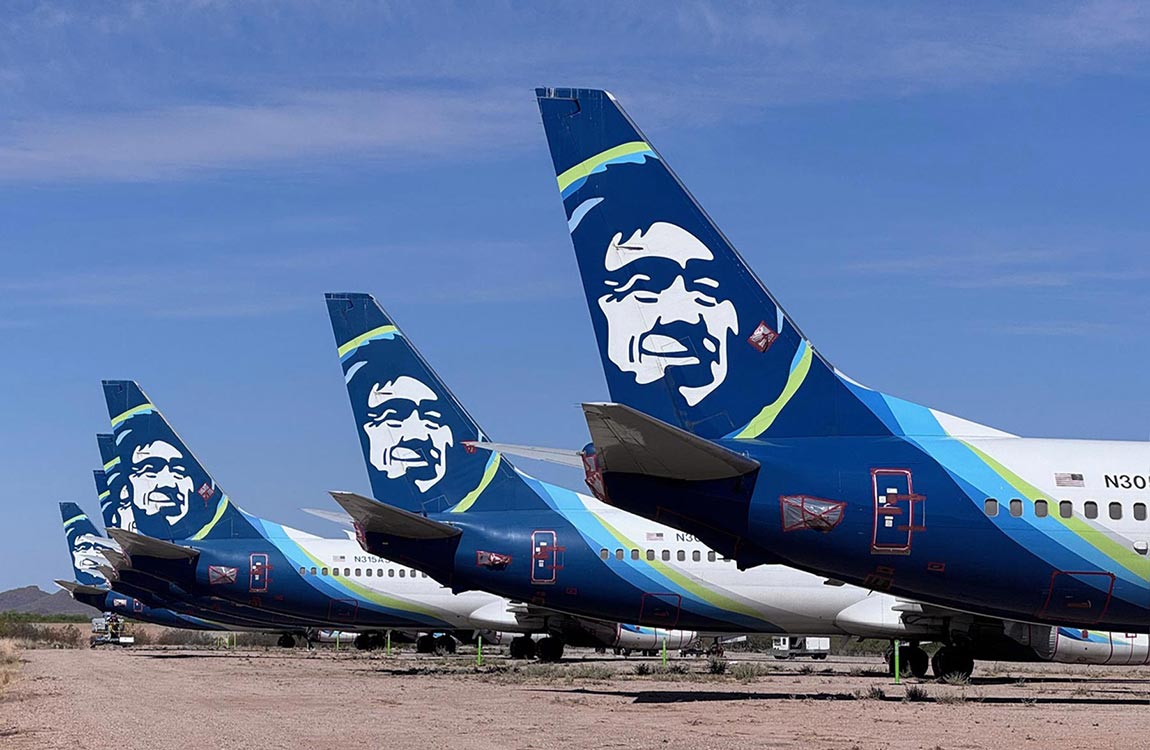
The US National Transportation Safety Board (NTSB) said Boeing's failure to provide “adequate training, guidance and oversight” to its factory workers had led to the blowout of a door plug on Alaska Airlines Flight 1282 in January last year.
The “probable cause” was presented during a hearing on June 24, 2025. The NTSB also found the Federal Aviation Administration was “ineffective” in ensuring the US manufacturer was addressing its repetitive compliance issues with its parts removal process.
The 737 MAX 9 was delivered to Alaska Airlines three month prior to the incident. During the hearing, investigators noted that the door plug in question had been removed to perform additional work on the fuselage. The door plug — a lightweight option commonly used to seal unused emergency exits — requires specific technicians to close the gap and reseal the plug.
“None of the specialised workers were working at the time the door plug was closed,” the NTSB said in a statement. “The absence of proper documentation of the door plug work meant no quality assurance inspection of the plug closure occurred.”
Four bolts needed to secure the plug were missing before the accident occurred. As a result, the door plug blew out six minutes after takeoff from Portland on January 5, 2024. The flight, destined for Ontario, California, returned to the Portland airport with seven passengers and one crew member receiving minor injuries.
“The safety deficiencies that led to this accident should have been evident to Boeing and to the FAA — should have been preventable,” NTSB chairwoman Jennifer Homendy said. “This time, it was missing bolts securing the MED plug. But the same safety deficiencies that led to this accident could just as easily have led to other manufacturing quality escapes and, perhaps, other accidents.”
US Transportation secretary Sean Duffy issued a statement regarding the NTSB hearing, stating: “The last administration and Boeing took their eye off the ball. They were distracted and safety was put at risk. That can never happen again.”
During the hearing, Homendy had commended Boeing's new CEO Kelly Ortberg — appointed August 2024 — for turning around the company's safety and compliance.
The hearing noted that it was “fortunate” that the door plug didn't strike the left horizontal stab or part of the tail section upon the blowout.
NTSB highlighted the need for additional training on flight crew oxygen masks and their communication systems and the need for greater voluntary use of child restraint systems by caregivers.
The board issued new safety recommendations to the FAA and Boeing. Duffy added that the FAA has “fundamentally changed” how it oversees Boeing with strengthened oversight and ensured accountability. He said a number of the NTSB's recommendations have already been implemented with the remaining unincorporated being currently under review.
Duffy said that while Boeing is making progress, the FAA will not lift its 38 per month production cap on the 737 until it is “fully confident” in Boeing's ability to consistently output jets that meet its safety and quality standards.