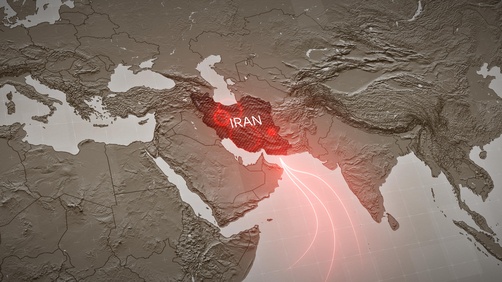
The airline industry is breathing a massive sigh of relief over news that the US has agreed a two week ceasefire with Iran including reopening the Strait of Hormuz to all shipping, as jet fuel supplies were becoming increasingly tight.
Israel says it supports the ceasefire - though not in Lebanon. The two week pause in fighting is to allow the US and Iran to agree to a permanent peace settlement. U.S. President Donald Trump - who had threatened to annihilate Iran’s civil infrastructure if a ceasefire had not been agreed before his 8PM ET deadline on April 7 - said the two sides were “very far along” with a “definitive” peace agreement.
Much to the relief of airline executives, oil prices plummeted over 12% on the news, sending many of the key price benchmarks below $100 per barrel. The re-opening of the Strait of Hormuz by Iran to all traffic should allow vital cargoes of fuel to once again flow out of the Gulf from states such as Qatar and Saudi Arabia to buyers across the world.
Jet fuel prices had more than doubled since the conflict started on Feb 28 with about half of all European jet fuel imports in 2025, for example, coming from the Middle East, according to S&P Global. Many airlines were responding to increasingly scare fuel supplies by hiking air fare prices and paring back capacity and cutting unprofitable routes.
Meanwhile, airline stocks across Asia rallied with Qantas up over 8% and Indigo hitting 10% on the announcement. In Europe, IAG opened up over 9%, Lufthansa up 11% and budget airline Wizz soared over 14% at the open. Airline shares are expected to rise in the US as well with Delta Airlines due to report earnings later on April 8 with investors looking for any comment from management on the impact of fuel prices on the carrier’s business and the likely effect of the ceasefire.
Should a long-term peace agreement materialise it will come as a particularly big relief for the Gulf carriers who can look to return to business as usual. Many will likely pursue aggressive pricing strategies to attract passengers back.
Not out of the woods yet
Even if the ceasefire morphs into a permanent peace settlement with a normalisation of petrochemical flows, airline executives still face the reality that jet fuel supplies are likely to remain tight with prices above pre-war levels for potentially many months.
Firstly, cargoes that were stuck in the Gulf will take weeks to reach their destinations and secondly many of the region’s petrochemical plants have been shut down to make them less flammable in the event of an Iranian attack. They could take weeks if not months to return to full output. Thirdly, some oil and gas fields were shut due to lack of storage and could take many months to spin up again.
Indeed, the International Air Transport Association (IATA) warned that it would take months for jet fuel supplies to normalise even in the event of a peace deal.
Prior to the ceasefire, the US and Iran were using increasingly bellicose language suggesting the conflict could have escalated into a full blown Middle Eastern war which could have left many of the region’s oil fields and petrochemical facilities in flames and permanently damaged.
In particular Iran was threatening attacks beyond the region potentially targeting countries such as Turkey, which would have the right to invoke article 5 of NATO - potentially drawing in European states into the conflict. Meanwhile, nuclear armed Pakistan has a defence agreement with Saudi Arabia, which the latter could have called upon.
Airline executives will watch carefully whether the ceasefire holds and the pace at which jet fuel cargoes start moving out of the Gulf into global markets. They will also be hoping that the two sides can come to a permanent ceasefire.