
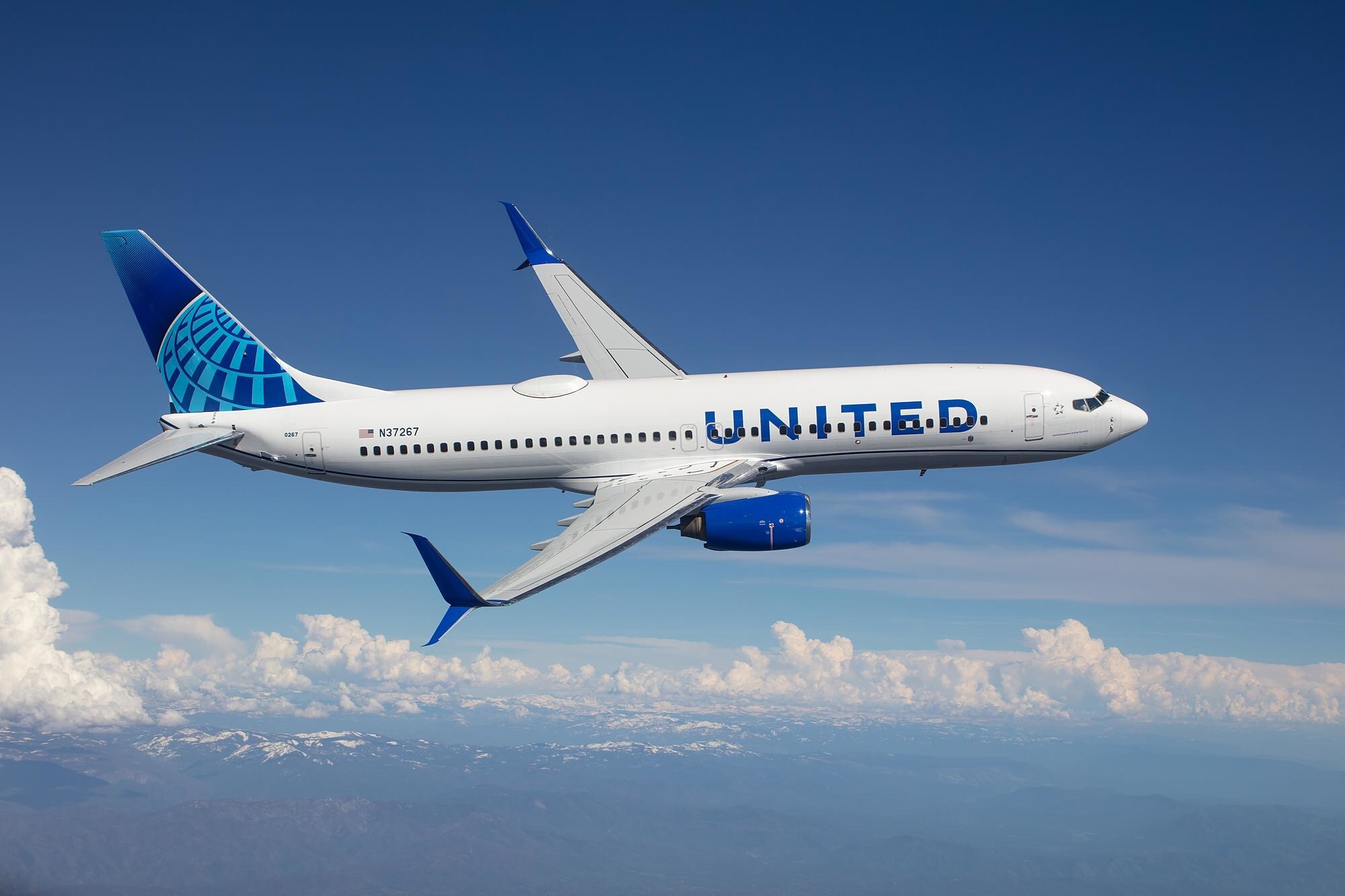
United Airlines reported total operating revenues of $15.2bn for the second quarter of the year, marking a 1.7% increase. This comes after the company had forecast a drop in revenue for the period during its first quarter results, amid ongoing economic uncertainties driven by the US-led tariff policy conflict.
The airline also reported a sequential six point acceleration in demand for July, as well as double digit demand growth in business demand versus the second quarter. United said this was driven by “less geopolitical and macroeconomic uncertainty”.
As a result, the airline has updated its full year guidance for adjusted earnings per share (EPS) to between $9 and $11, reflecting the growing confidence.
United said its diverse sources of revenues had contributed to its revenue increase despite the more turbulent demand period. Premium cabin revenues increased 5.6% in the quarter, while basic economy was up 1.7%. Cargo and loyalty increased 3.8% and 8.7%, respectively.
However, the company’s total operating expenses outpaced revenue growth, climbing 6.5% to $13.9bn. Additionally, operating income slipped 31.3% in the quarter to $1.3bn.
Net income for the second quarter was down 26.4% to $973 million.
United said in its report that the results lay the foundation for its “overall success”, with the airline’s CEO Scott Kirby stating that it is proof that its strategy “continues to work” despite “both a volatile macro period and the short-term issues at Newark”.
The company said its team at Newark faced a “perfect storm” with a “string of FAA technology outages” combined with its ongoing runway construction and staffing shortages driving cancellations delays. The company said “negative news coverage” had also driven away bookings at its hub airport. The challenges resulted in a $218 million impact for the company in the second quarter and is expected to linger into the third quarter, leading to a negative impact on revenue by around one point.
However, during the company’s earnings call, Kirby repeated this more optimistic tone, stating its “déjà vu all over again”.
He stated: “This is almost the exact same setup that we had a year ago at this time: with weak RASM results across the industry, leading to supply cuts starting in mid-August, leading to better margin results, which then led to strong stock price.”
He said demand appears to be “inflected upward” and is “returning toward the normal trend line” that it expected at the start of the year.
“The geopolitical situation in the Middle East appears to have stabilised and while tariffs are not yet certain, the market has a much better read on how to manage,” said Kirby. “That higher level of certainty has translated into a meaningful inflection point in demand.”
The company said that with these Middle East geopolitical tensions softening, United aims to return to Tel Aviv.
“We plan to resume our Tel Aviv service – initially just from Newark – on July 21, and hope to include other gateways later this year,” the company said.
Management during the earnings call said it expects low cost carriers (LCC) without brand loyalty and diversified revenue streams to cut unprofitable flying, with August and September expected to have less capacity compared to the same period last year.
For the second quarter, the company’s capacity increased 5.9%, with passenger numbers also up 4.1% to 46.2 million. Load factor averaged at 83.1%, down 1.1 percentage points. This was driven by a 2.3 percentage point drop in domestic load factor, down to 84.1%, while international load factor was a positive 0.3 percentage points to 81.9%.
“We believe this is always an inevitable outcome and one we expect to be uniquely beneficial to brand loyal airline with much higher margins and well diversified networks and products,” said management.
Kirby added: “The only successful LCC around the globe – in my view – is Ryanair. And guess what? That’s because they’re the only LCC that stayed true to their founding principles and don’t fly to high cost airports like London, Heathrow, or Charles de Gaulle.”
The more positive outlook follows Delta’s own, with it restoring third quarter guidance, citing stabilising demand.
Kirby spoke highly of Delta during the earnings call. “My focus is entirely on returning United Airlines to solid double digit margins and higher absolute margins, as opposed to what we do relative to Delta,” he said. “I think we are the only two airlines that have a shot. We were the only two brand loyal, revenue diverse airlines. I think that is structural. It is permanent.”
As part of its debt strategy, the airline added that it had repaid the remaining debt from a July 2020 transaction secured financing of $6.8bn against its MileagePlus assets. This repaid using solely cash.
“This now leaves one of the most valuable loyalty programmes in the world unencumbered,” said United in a statement. As of the end of the second quarter, the company’s net leverage was 2.0x.
Management added that during the call it was “very pleased” with 737 MAX deliveries and were arriving ahead of schedule. “All evidence suggests that Boeing is going to maintain that trajectory,” management said. “On the widebody front, they haven't got to plan yet, but we're hearing good things. There's also some engine constraint on the widebodies.” The company said there is still delays with A321 deliveries, but that the supply chain overall is “healing itself”, but engines will remain constrained for “some time to come”.
As of the end of the quarter, the company had an available liquidity of $18.6bn and a total debt, finance lease obligations and other financial liabilities of $27.1bn.