

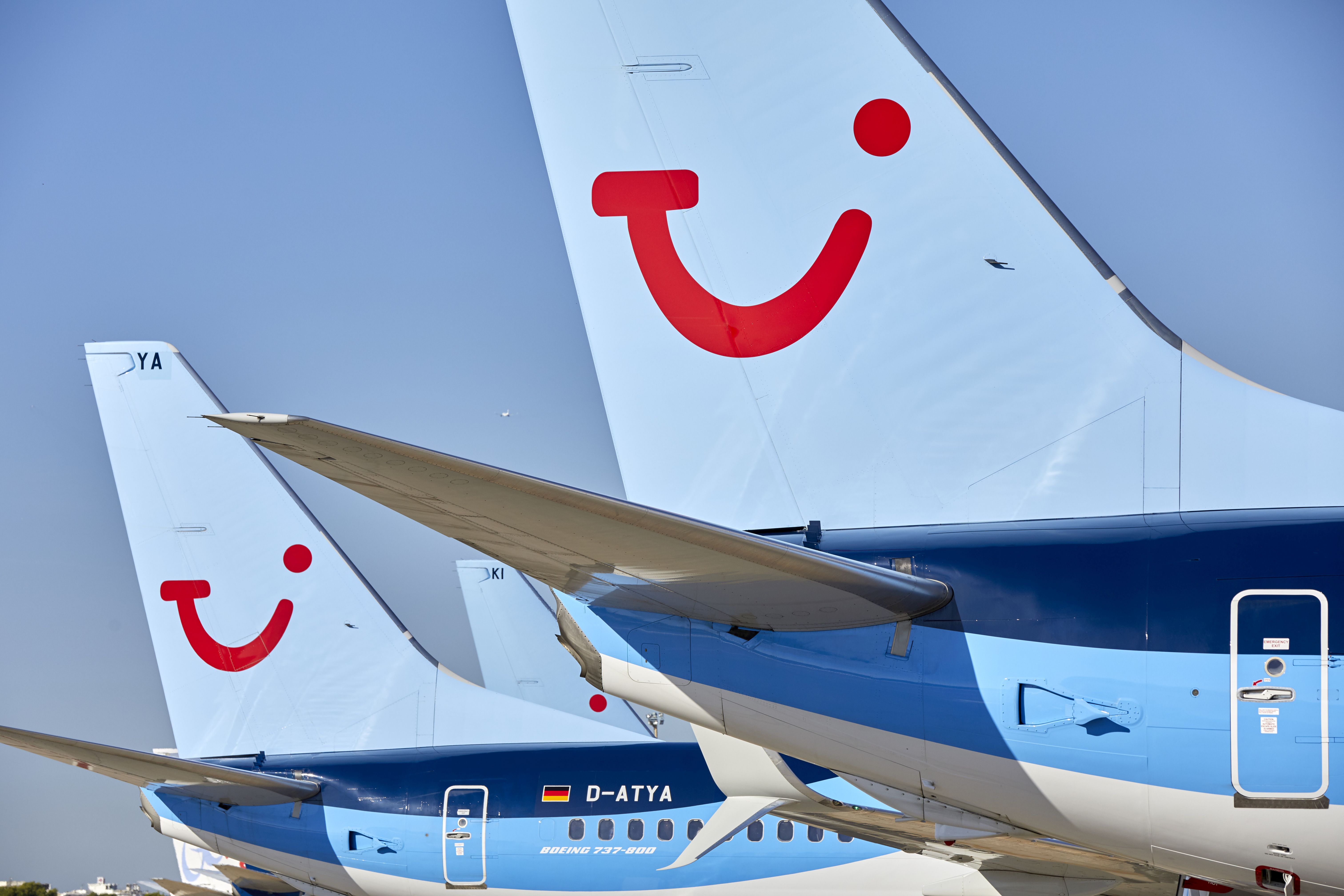
TUI Group's airline segment reported a dip in earnings for its second quarter ending March 31, 2025, after the impact of the Easter holiday timing, which fell into the following quarter as opposed to last year.
The segment's underlying EBIT dropped €39 million to €365 million in the financial period. The company's overall underlying EBIT dropped €18 million to a negative €207 million, while as reported EBIT was down €22 million to €217 million. Earnings before tax was down €16 million to €316 million.
Revenue was up €55 million to €3.7bn for the group, while the markets and airlines segment was up only 1% to €3.1bn.
The company said, however, that the result was “as expected” given the holiday shifting into the next quarter with a phasing effect of €31 million. In addition, the result was impacted by higher seasonal costs and increases costs for the emission trading scheme (ETS). Customer volumes in the period declined 5% as a result of the Easter break timing. However, load factor remained high at 90%, down only three percentage points compared to last year.
During the quarter, TUI noted that Thailand and the UAE in particular had seen “significant growth”.
For the first two quarters of its financial year, the company reported a total underlying EBIT was up €27 million to a negative €156 million. Revenues were up €624 million to €8.6bn for the first two quarters. The markets and airline segment's first half underlying EBIT was down €69 million to €490 million.
For its annual results, the company reaffirmed its guidance, with revenues expected to be up 5-10% on the previous year's €23.2bn and an underlying EBIT increase of 7-10%, compared to €1.3bn in the previous year. The latter is driven by its summer expectations and the €32 million phasing effect from Easter.
The company ended the quarter with a net debt of €3bn.