

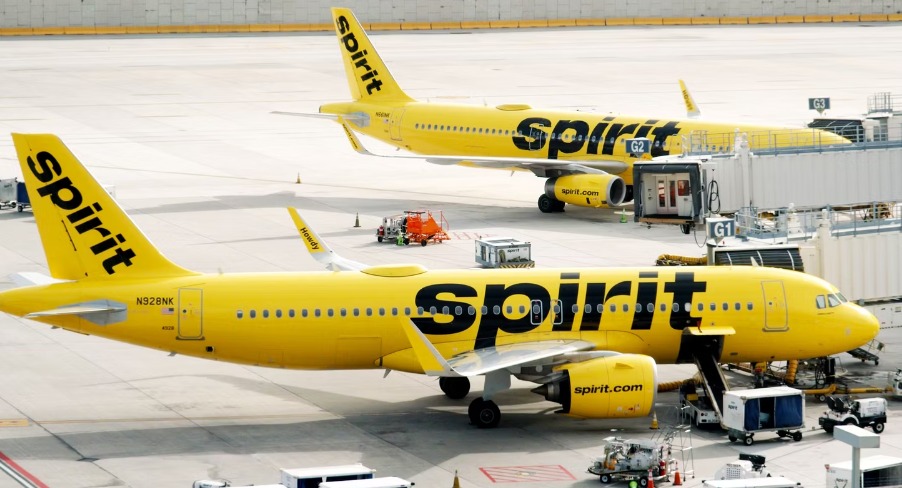
After signalling liquidity woes and a “going concern” last week, Spirit Airlines said it fully borrowed the entire amount of its $275 million from its revolving credit facility (RCF) on August 21, 2025. Borrowings under the RCF will mature on March 12, 2028. A previous filing had said the borrowings would mature on September 30, 2026, but was later amended.
Spirt had entered into an amended and restated senior secured revolving credit facility with Citibank acting as the administrative agent, and Wilmington Trust, National Association, acting as the collateral agent.
The company also reached an agreement with US Bank (USB), executing two amendments to its credit card processing agreements, effective August 15, 2025, and August 20, 2025.
On August 15, Spirit agreed to make an additional transfer of $50 million in cash to a pledged account in favour of USB.
On August 20, Spirit agreed to allow USB to hold back up to $3 million per day until USB's exposure is fully collateralised and to remain fully collateralised as USB's exposure increases or decreases. In exchange, the bank has extended the card processing agreement by two years, from December 31, 2025, to December 31, 2027. The agreement includes two automatic one-year extensions unless either party opts out with at least 90 days' notice, and removing prior minimum liquidity requirement for holdbacks under the card processing agreement.
Spirit said these actions will enhance its liquidity, as well as support general corporate purposes. The credit card agreement will allow the company to avoid disruption to card payments.
“Spirit plans to continue advancing other liquidity enhancing initiatives,” the airline said in its SEC filing.
The company flagged a “going concern” in its second quarter results filing on August 11, 2025.
“Management has concluded there is substantial doubt as to the company's ability to continue as a going concern within 12 months [from the filing date]," Spirit said.
Spirit said it continues to be affected by these “adverse market conditions” including the domestic leisure demand weakness and higher competition. This comes amid mounting economic uncertainties in the industry, which has particularly impacted domestic travel demand in the US. Other carriers, despite demand slip, have been buoyed by international and premium sales, with loyalty programmes providing substantial revenue streams.
Following the flagged concern, Fitch Ratings downgraded Spirit from CCC+ to CCC-. Fitch said the downgrade reflected its views that Spirit may be unable to avoid a near-term default unless it sees a significant and swift turnaround in operating performance or secures additional liquidity. The airline reported $473 million in negative cash flow from operations in the first half of 2025, and Fitch expects further cash burn through year-end.
For the second quarter of the year, Spirit reported a net loss of $245.8 million, widening from $192.9 million in the second quarter of 2024, pre-restructuring.
Spirit exited from Chapter 11 restructuring in March this year. As part of this, Spirit had restructured certain of its debt obligations, reducing its debt by around $795 million. In addition, the company launched its premium rebrand plan, supported by a $350 million equity investment from existing investors. The company’s reorganisation plan was confirmed by a US bankruptcy court in February 2025, with “overwhelming support from a supermajority of the company’s loyalty and convertible noteholders”.