

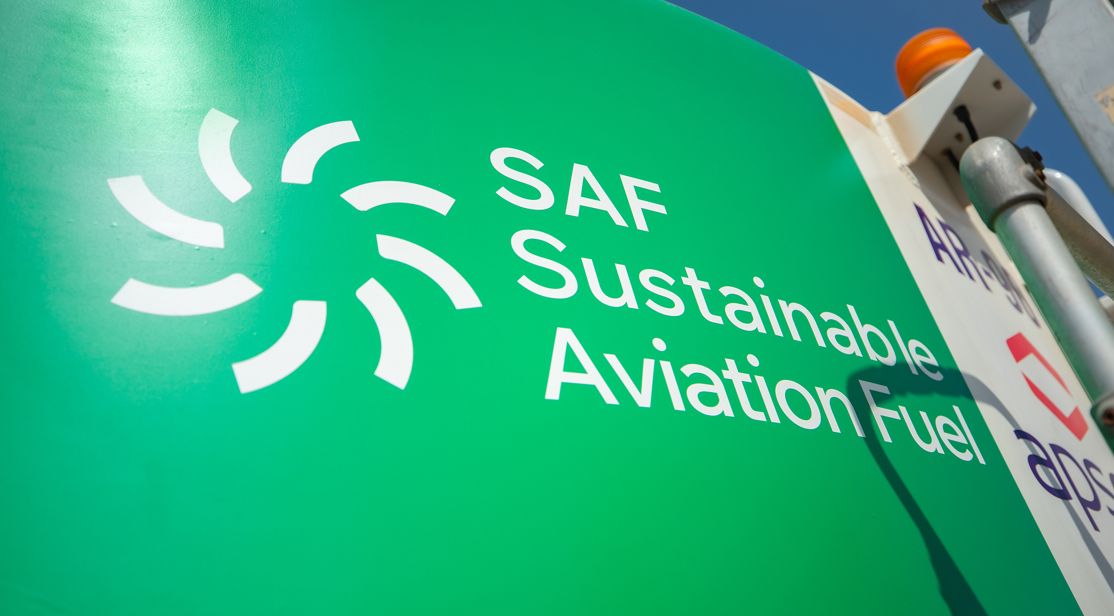
Singapore has postponed the introduction of its sustainable aviation fuel (SAF) levy, highlighting growing global pressure on policymakers to balance decarbonisation goals with airline competitiveness.
The Civil Aviation Authority of Singapore (CAAS) said on 25 March it would defer the levy, originally due to be applied to tickets sold from April for travel later this year, citing the impact of the ongoing Middle East conflict on airlines and passengers. The levy will now apply to tickets sold from October 2026 for flights departing from January 2027.
The delay reflects a more cautious approach as geopolitical tensions add volatility to fuel markets and airline economics. CAAS said the levy itself would remain unchanged when implemented, with charges varying by route and cabin class. For example, economy passengers travelling within Southeast Asia would pay S$1, rising to S$10.40 for flights to the United States, while premium passengers would face higher charges.
Alongside the deferral, Singapore has also pushed back its target to achieve a 1% SAF uplift by a year, although it reiterated its longer-term ambition of reaching 3–5% by 2030, subject to global supply and adoption of sustainable fuels.
Officials stressed that the pause was pragmatic rather than a shift in policy direction. The country will continue with a voluntary SAF procurement trial this year, involving airlines, airport operators, financial institutions and consultants, aimed at testing the operational and commercial frameworks needed to scale SAF use.
European pushback
Singapore’s move comes as airlines in Europe intensify calls for relief from rising environmental compliance costs, particularly around carbon pricing and SAF mandates.
The International Air Transport Association (IATA) has urged the European Union to review its Emissions Trading System (EU ETS), warning that current policies risk undermining the competitiveness of European aviation. The group argues that overlapping regional and global carbon schemes are adding unnecessary cost and complexity without delivering additional environmental benefits.
IATA is pushing for full alignment with the Carbon Offsetting and Reduction Scheme for International Aviation (CORSIA), a global framework agreed through the International Civil Aviation Organization, as well as reforms to allow more flexible SAF accounting mechanisms. It has also called for a greater share of carbon market revenues to be reinvested into decarbonisation technologies, including SAF production.
At the same time, industry body Airlines for Europe (A4E) has warned that regulatory costs are escalating rapidly. It estimates that such costs for its members have more than tripled since 2014 and could rise sharply again by the end of the decade as free carbon allowances are phased out.
European carriers argue that the current framework risks putting them at a disadvantage compared with non-European competitors, particularly on long-haul routes. A4E has called for measures to reduce the cost burden, including aligning EU carbon pricing more closely with global mechanisms and postponing elements of the bloc’s SAF mandate that it considers unachievable in the near term.
SAF is expensive
The debate also reflects concerns about fuel availability and pricing. While airlines broadly support SAF as a key pathway to decarbonisation, they warn that supply remains limited and costs significantly higher than conventional jet fuel, raising the risk that additional regulatory pressure could translate into higher fares for passengers.
Singapore’s decision to delay its levy suggests policymakers are increasingly sensitive to these pressures. By postponing implementation while maintaining its long-term targets, the city-state appears to be signalling a willingness to adapt timelines in response to market conditions.
Higher fuel prices risk delaying the widespread introduction of SAF, which in its current form is expensive and does not yet enjoy scaled up supply chains. How the EU reacts to the demands of carriers based there will be closely watched across the world.