

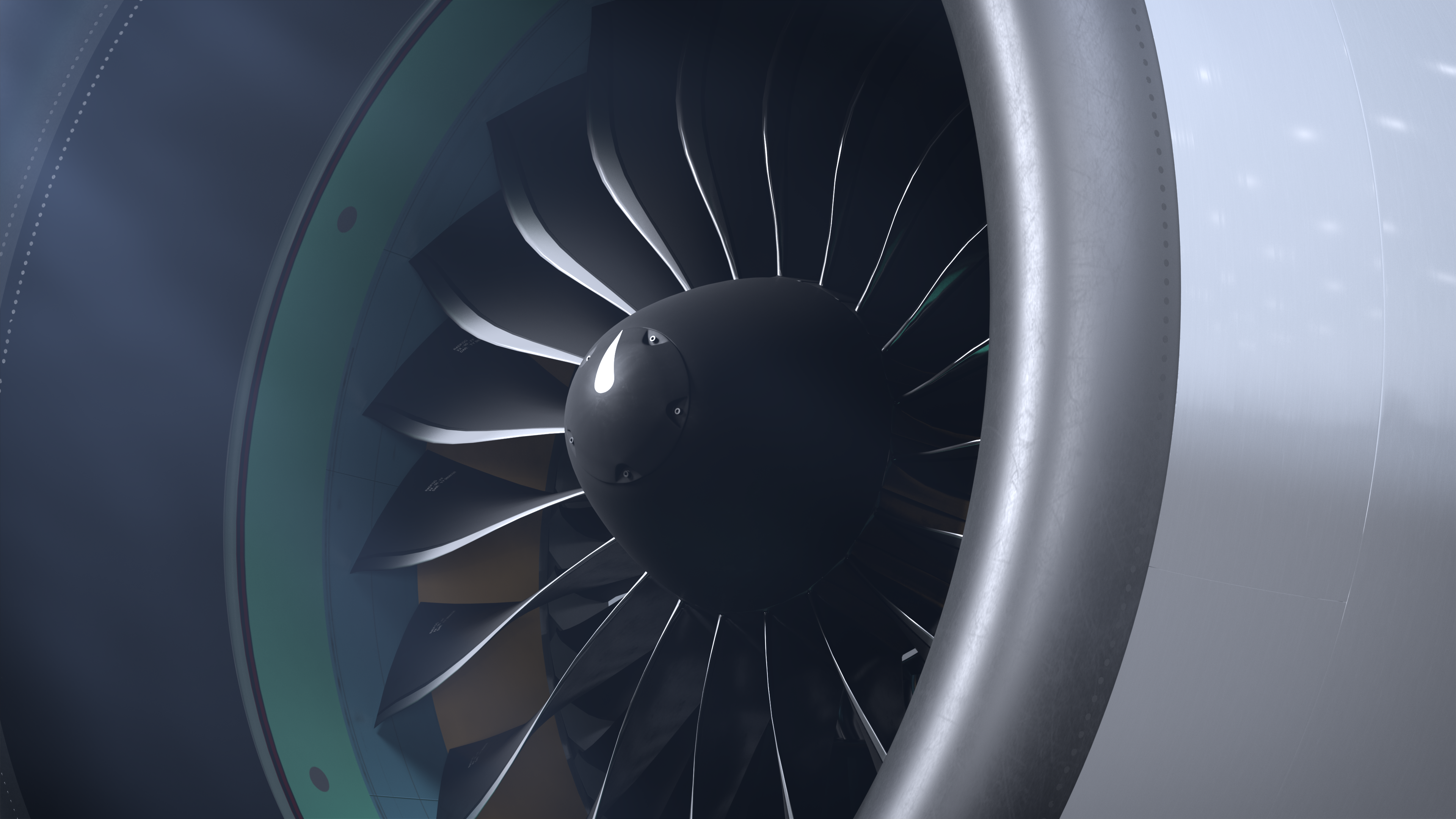
Pratt & Whitney reported $7.6bn in sales in the second quarter of the year, up 12% compared to the same period last year.
The company’s parent RTX said this was driven by a 19% increase in commercial aftermarket and 15% increase in commercial original equipment (OE). Aftermarket was driven by higher volume in large commercial engines as well as a “favourable mix” in Pratt Canada, while the OE growth was attributed to large commercial engine mix and higher volume in Pratt Canada.
However, the company’s second quarter as reported operating profit dropped 9% to $492 million as a result of an approximate $100 million charge related to an airline bankruptcy.
Brazilian carrier Azul filed for bankruptcy in late May. The airline uses the geared turbofan (GTF) engine for its E2 jets.
“We did have an airline customer that filed for bankruptcy unfortunately,” RTX management said during its earnings call. “We are continuing to work with that customer. Over time, we believe they will continue to utilise our assets and that, in the long term, we will likely realise some recovery there.”
Pratt & Whitney’s adjusted operating profit was up 13% to $608 million.
Management said that AOGs (aircraft on ground) are expected to “come down meaningfully” in the second half of 2025, which is being driven by continued growth in its maintenance, repair, and overhaul (MRO) output.
The company’s GTF MRO output was up 22% in the second quarter, despite a four week work stoppage from strike action.
Collins Aerospace – another RTX business – reported sales of $7.6bn, up 9%. Operating profit was up 5% to $1.2bn. This increase was driven by growth in commercial air traffic. The company said lower commercial OE volume on the 737 MAX programme was “more than offset” by higher commercial OE volume on other platforms, including the 787.
RTX recorded overall sales of $21.6bn, up 9% compared to the same period last year. The company’s earnings per share (EPS) was $1.22, or adjusted EPS of $1.56, which was up 11%. Operating cash flow was $0.5bn and free cash flow was $0.1bn.
Following a strong first half, RTX updated its full year 2025 outlook, though incorporates the expected impact of tariffs and changes associated with tax legislation. The company said it intends to "continue to aggressively mitigate" the tariff headwinds.
Adjusted sales are expected to be $84.75bn - $85.5bn, up from previous estimate of $83bn to $84bn.
Adjusted EPS is expected to be $5.80 - $5.95, down from $6 to $6.15. The company confirmed free cash flow estimate of $7-7.5bn.
“We’re confident in our [free cash flow estimate] for the year,” management said in its earnings call. “There’s a few things that are going to drive that. We’ll see a recovery from the Pratt strike, which impacted us in the second quarter by about a billion dollars. We expect most of that to recover in the third quarter.”
As of the end of the quarter, the company’s backlog was $236bn, including $144bn of commercial and $92bn of defence.