
Icelandic airline PLAY reported a net loss of $26.8 million for the first quarter of 2025, remaining relatively flat compared to $27.2 million a year prior.
Total revenues for the period totalled $46.4 million, down from $54.4 million last year. The company said this drop reflects a reduction in its capacity and schedule changes. Furthermore, the timing of Easter holidays falling into the second quarter this year, instead of first quarter last year, also had an impact. Passenger unit revenues were down from 4.24 US cents to 4.10 cents. Average yield per passenger was up from $152 to $153.
Operating costs were down from $66 million to $58 million in the quarter. Unit costs were up slightly from 5.91 cents to 6.06 cents. Excluding fuel and emissions trading scheme (ETS), unit costs was 4.43 cents, up from 4.36 cents. The company's CEO Einar Orn Olafsson said that unit costs would have been down in the quarter excluding ETS impact.
“We see the biggest contributor there is the ETS units point 23 cents per available seat kilometres,” said Olafsson. “Had been not at that factor, obviously we would have been down.”
The company's load factor was down from 81.8% to 77.2% in the quarter. Passengers were down from 359,000 to 286,000 in the period, reflecting PLAY's focus on expanding its leisure operations and ACMI projects.
The company's EBIT was a negative $21.7 million in the quarter, relatively flat to its negative $21.3 million a year prior.
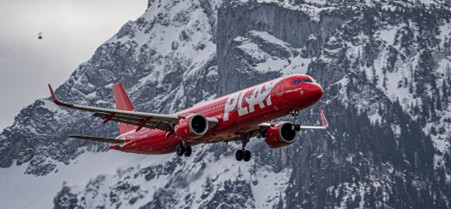
The airline has 10 aircraft in its fleet, but one was on lease and one was undergoing maintenance during the quarter, resulting in eight aircraft operated by the airline during the period.
The airline's leisure capacity is expected to increase 7% in 2025, compared to last year. PLAY will operate a fleet of seven aircraft during the peak summer months, including one additional leased short-term to support the schedule. Four of the airline's 10 aircraft will be deployed for ACMI damp leasing with SkyUp Malta Airlines from spring and summer this year. The agreement extends through the end of 2027.
“We rest our future on this business of operating our aircraft for other operators,” said Olafsson during the company's earnings presentation.
The first aircraft will be deployed in about two weeks on May 12 and then the beginning of July.
“This part of the business will provide us with a stable, predictable profitable income,” he added. The contract with SkyUp said it expects around $1 million profit per year for each of the four aircraft with SkyUp Malta Airlines.