

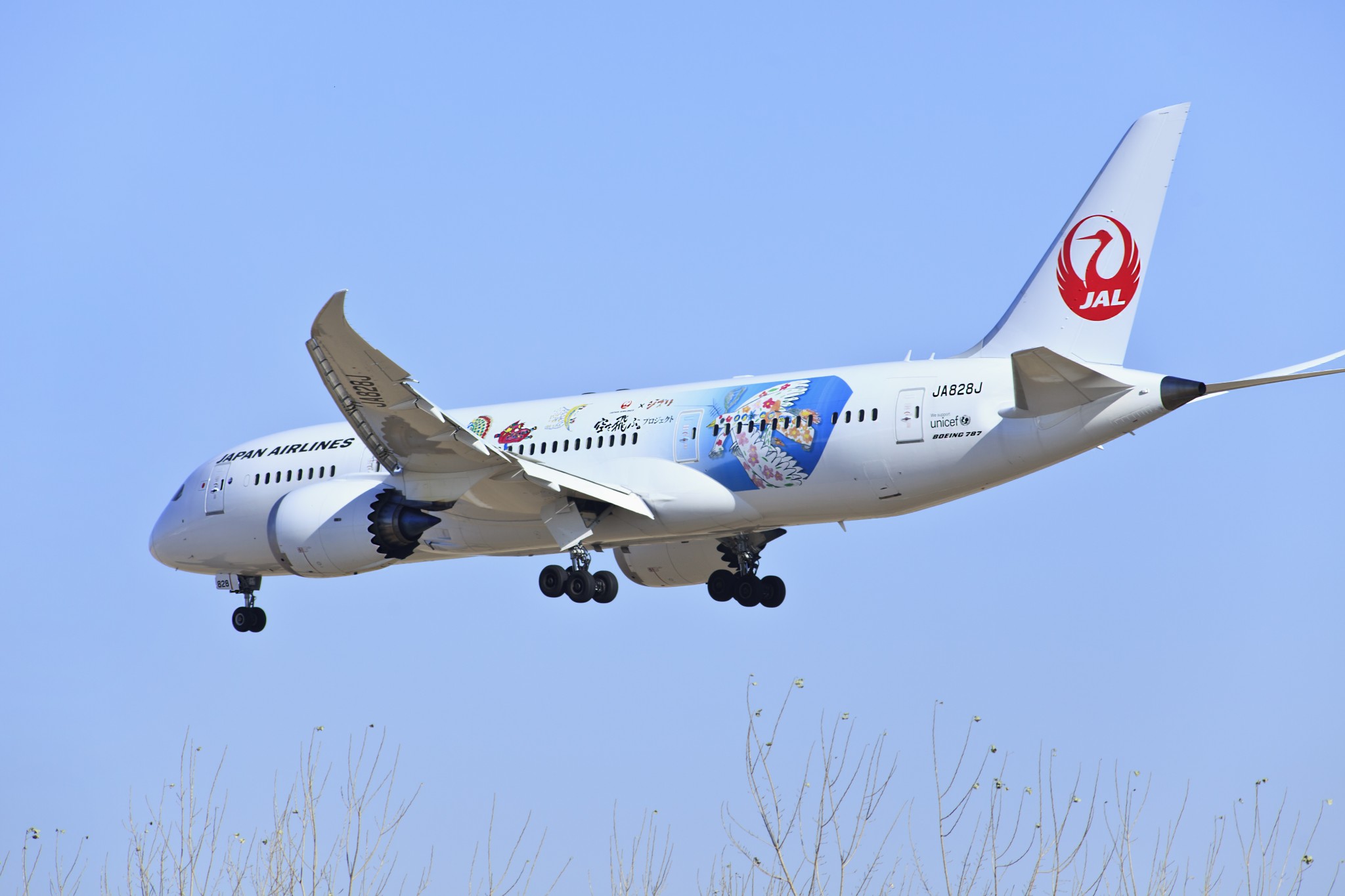
Japan Airlines (JAL) Group has disclosed that it is seeking “successor aircraft types” for its regional fleet, as the carrier looks to modernise and expand ahead of 2030.
In its 2025 annual report, published last week, JAL said it will soon decide on replacement aircraft types for its “domestic regional jet fleet”, while “keeping an eye on future demand trends”.
The company has four regional subsidiaries, which collectively operate five regional jet and turboprop types. The group may choose to simplify its regional fleet, trimming down its number of regional aircraft families.
Japan's ANA had finalised a firm order for 15 of Embraer's E2 regional jet at the Paris Air Show in June 2025. The aircraft type has proven popular for regional routes.
The plans were revealed as part of a significant modernisation and expansion push across the group’s wider fleet.
JAL said it will introduce 20 Airbus A350-900s and 10 Boeing 787-9s on international routes, and 11 Airbus A321neos and 38 Boeing 737-8s on domestic routes.
On full-service carrier (FSC) international routes, JAL will introduce the A350-900 alongside the 787-9. It will also phase out its smaller aircraft on these routes, while expanding its number of large and mid-size aircraft.
At present, 7% of JAL’s FSC international routes are operated by small aircraft, but by 2030, this percentage will be reduced to zero.
By 2030, the share of large aircraft operating FSC international routes at JAL will increase from 26% to 39%, while the share of mid-size aircraft on these routes will be reduced from 67% to 61%.
For FSC domestic routes, JAL has ordered 17 additional 737-8 aircraft, which will be introduced in 2026. In 2028, it will also introduce the A321neo.
The changes will increase the share of small aircraft on these routes from 58 percent to 63 percent.
Finally, JAL aims to approximately double the number of aircraft operated by ZIPAIR, its low-cost subsidiary, by 2030, from its current level of eight.
ZIPAIR currently operates the 787-8, and will begin operating the 787-9 in 2027 at the earliest, following the delivery of 10 aircraft that were ordered in March this year.
JAL said the fleet planning changes are designed to reflect its evolving business needs, which include the “future decline” of Japan’s working-age population, particularly in rural areas.
Nonetheless, JAL expects to see future growth in its international business, and will be expanding its North America and Asia network accordingly.
By 2030, the Japanese carrier said it aims to grow its combined FSC and LCC business by approximately 1.5 times.