
With the first day of Airline Economics’ Growth Frontiers Tokyo 2025 starting today, April 9, discussions surrounding tariffs cropped up in almost every panel. With US President Donald Trump introducing reciprocal tariffs only last week, the points were mostly speculative. However, the general consensus is that the impact and development of the tariff conflict largely remains to be seen.
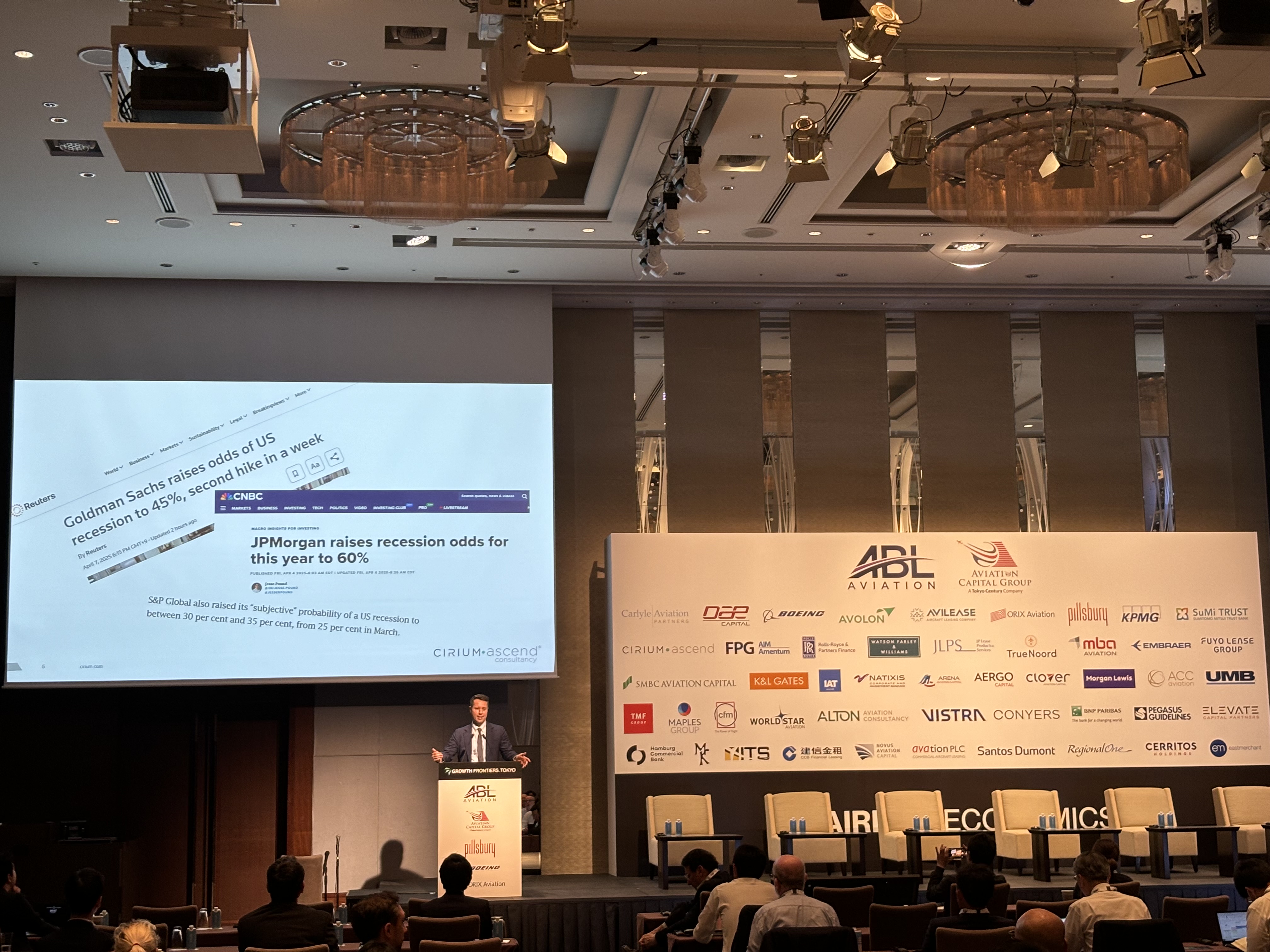
“Things are changing every day, and there is more that we don’t know than what we do know,” said Cirium head of valuations George Dimitroff. He added that tariffs could potentially result in another disruption to the supply chain – already still recovering from the pandemic – and comes as major OEMs such as Airbus and Boeing have promised ramp ups for this year.
There has been growing fears of a potential recession ahead, which could see a dip in travel demand.
“The bigger concern is, if the market volatility causes consumer confidence to fall, travel budgets could be cut,” continued Dimitroff. “It doesn’t matter where you move the capacity to if people don’t want to spend time to travel.” He pointed to business travel also potentially being hit if a recession were to materialise.
“Longer term, the tariffs could affect the supply chain,” he continued. “It means production rates can’t go up – supply could come down as well as demand, but that could actually have a balancing effect on the market.”
Airbus VP head of north Asia commercial Eric Anderson said during its update and market discussion panel that the current economic uncertainties will “inevitably have some short-term and immediate impact on demand”. He added: “We see this with any cycle – either part of a normal economic cycle or one influenced by an external factor such as a pandemic or geopolitical shifts. The narrative is still encouraging going forward in terms of where the evolution is for demand as well as the need for capacity.”
While lease rates and market values could soften in the event of a recession, Dimitroff said this would come when these values are at a “record high” and, thus, there is, “still room for those values to cool off before they even get to base or balanced market level”.
ABL Aviation CEO Ali Ben Lmadani said during the lessor panel that tariff impact could “shake up the structures of who are the players in the market today” but could also present “amazing opportunities”.
In a similar vein during a fireside discussion panel, LR AirFinance SVP, origination Neal McElvaney said there could be “volatility and dislocation” as well as materialise opportunities for players in the industry. “There can be opportunities, but we just need to be ready to move quickly,” he said. Also on the panel, PK AirFinance president Eelco van de Stadt concurred with McElvaney.
Panellists brought a more reserved view of the tariffs, reinforcing the need for greater knowledge on the impact – whilst lessors and asset managers highlighted a silver lining of the impact with the potential to uncover opportunities with swift action.
Growth Frontiers Tokyo 2025 will continue until April 10, and will be followed by Growth Frontiers Saudi Arabia from April 29 to 30.