

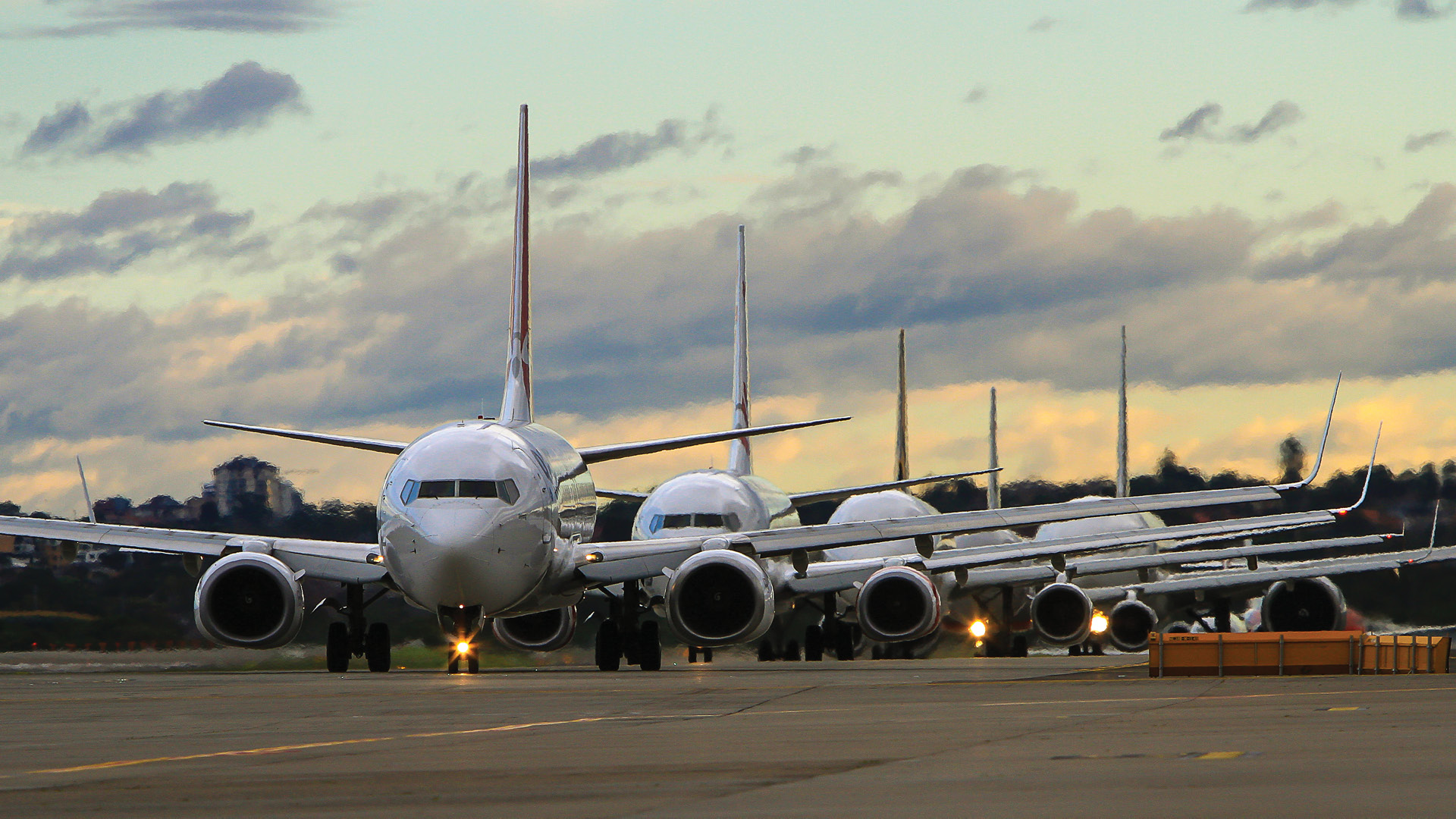
The Federal Aviation Administration (FAA) has announced plans to reduce capacity by 10% across 40 “high-traffic” airports, as the US government shutdown continues to exacerbate the country’s air traffic control (ATC) crisis.
On Wednesday (November 5), Transportation Secretary Sean Duffy unveiled the plans during a joint press conference with Bryan Bedford, FAA administrator, who described the measures as “data-based” and “proactive”.
“For the most part, the system is running as safely today as before the lapse,” said Bedford. “But as we dig deeper into the data, we find issues of fatigue among controllers, which we see through voluntary safety reports from commercial pilots.
“As we analyse more granularly, we’re seeing pressures build that, if left unchecked, could compromise our ability to maintain the safest airspace in the world.”
Bedford said the FAA would meet with its commercial airline partners on Wednesday night to implement the measures, and that over the next 48 hours, roughly 3,500 to 4,000 flights would be cancelled.
He said the FAA would work with each airline to “balance” the reduction in services while avoiding “excessive disruption” to specific routes.
The DOT and FAA have not yet confirmed which locations will be affected, but on Wednesday night CBS reported that the list of airports is likely to include:
- 24 hubs used by the big 3 (United, Delta, American) plus Alaska Airlines
- 4 leisure markets: LAS, MCO, FLL, TPA
- 4 Southwest focus cities: DAL, HOU, BWI, MDW
- 7 cargo hubs: MEM, SDF, ANC, CVG, IND, OAK, ONT
- 1 airport for private jet traffic: TEB
The restrictions will stay in place “until the data shows improvement”, and if metrics worsen, the FAA will further reduce capacity.
“The system is extremely safe today and will remain so,” said Bedford. “If pressures continue, we’ll take further measures. This plan is prescriptive and targeted — we won’t compromise safety.”
Tom Fitzgerald, airline analyst at TD Cowen, said the firm believes that the impact of the service reductions will be “more manageable than headlines imply", and will create an attractive buying opportunity across United, Delta, American, and Alaska.
United CEO Scott Kirby has already confirmed that hub-to-hub flying and international flying will not be impacted, for example, and that cuts will be focused on non-hub domestic mainline and regional flights.
In an update on staffing shortages, Duffy said the US is now short of 2,000 air traffic controllers. Having “surged” the numbers of applicants being put through the academy earlier this year, the US has produced 20% more air traffic controllers so far this year compared to last year.
As recently as last week, however, the National Air Traffic Controllers Association (NACTA) continues to put the shortage at 3,800 air traffic controllers, relative to the FAA’s staffing target.
To keep current air traffic controllers in the job, Duffy said that those at retirement age having been offered a 20% upfront cash bonus to keep working.
“All of that has been reducing the pressure on the staffing side of air traffic control,” he said. “It’s working, but it takes years to bring more well-trained, certified controllers into the airspace.”
Air traffic controllers received a partial payment in early October, but did not receive the remainder of their paycheck for the month.
They are also set to miss their next paycheck for the first half of November, by which point they will have worked a full month without pay.
“We’ve seen staffing pressures throughout our airspace,” said Duffy. “We don’t want disruptions at the FAA or DOT, but our number-one priority is ensuring safe travel,”
On Wednesday, the US government shutdown entered its 36th day, making it the longest shutdown in US history.