

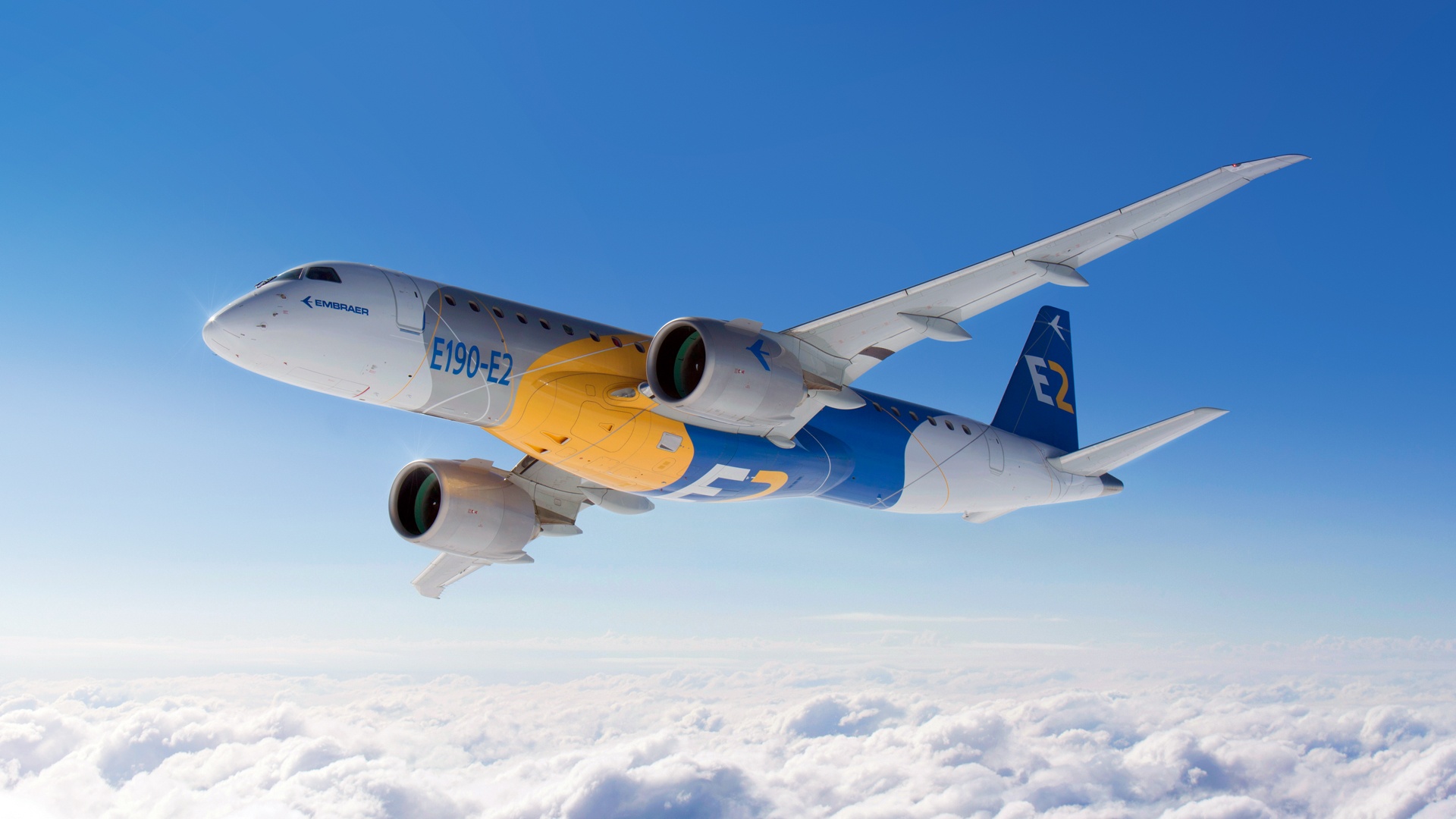
Embraer China has published a new report on potential paths to profitability for Chinese carriers, who continue to face intense competition both from rival airlines and high-speed rail.
The report characterises China as a “red ocean” market where carriers compete fiercely on pricing, leading to shrinking margins and diminishing returns.
Embraer’s solution is for Chinese carriers to focus on “blue ocean” markets where new demand can be created, pricing power achieved, and margins strengthened.
The aircraft manufacturer believes that “significant” opportunities exist outside of China’s so-called “trunk” routes between Tier 1 cities.
In China, the majority of passenger traffic is concentrated in just 6% of airports in these Tier 1 cities, while 84% of airports handle relatively low traffic.
However, passenger traffic in Tier 3 and Tier 4 cities is growing faster than in their Tier 1 rivals, representing “latent demand” waiting to be unlocked.
“Strategic deployment of right-sized aircraft and tailored schedules can tap into these growth corridors while avoiding the fare wars of major hubs,” the report suggests.
“There are more than 900 underserved city pairs that can have more flights, generating more traffic opportunities with a smaller-gauge aircraft.”
The report contrasts Chinese carriers with airlines in North America and Europe, who have built robust and profitable hubs by “mastering the art of the multi-gauge network”.
These airlines add destinations and frequencies, using a flexible mix of aircraft to balance supply and demand.
“This hub-and-spoke model is a proven high-yield connecting traffic generator, which is far more profitable than relying solely on price-sensitive, point-to-point (P2P) passengers,” the report notes.
“The small narrowbody, despite generating less total revenue, is more profitable due to its significantly lower trip cost and its ability to protect fare integrity.”
In contrast, Chinese carriers currently suffer from a “structural imbalance" in fleet composition.
Over 80% of China’s single-aisle aircraft are large jets, which are optimised for high-capacity, short- to medium-haul operations.
“This fleet profile limits flexibility and forces carriers to deploy oversized aircraft into markets that may not justify such capacity,” says the report.
“The consequence is a network imbalance: despite having the higher average aircraft gauge, China serves fewer city pairs than the US and Europe. In essence, China flies bigger planes on fewer routes.”
The other “blue ocean” markets that Chinese carriers could pivot to, according to Embraer, are short-haul international routes and city pairs that are not served by high-speed rail.
The report identifies 72 new potential international destinations from Chengdu, 53 from Kunming, 46 from Wuhan, and 21 from Nanning, all with an average of three weekly flights.
A final “blue ocean” recommendation suggests that full-service carriers could act as spoke-hub feeders timed to bank waves.
“Together, these blue ocean strategies offer a roadmap out of the profitability paradox,” says Embraer.
“By shifting focus from saturated trunk routes to diversified, demand-rich markets, airlines can rebuild pricing power, reduce cost pressure, and lay the foundation for sustainable growth.”
The report was released by Embraer China on Thursday (November 13) during the Embraer Airline Business Seminar China in Huizhou.
On the same day, Embraer’s Brazilian unit announced that it will be taking part in three panels at COP 30 in Belem, where it will be discussing aviation decarbonisation and sustainable development through education.