

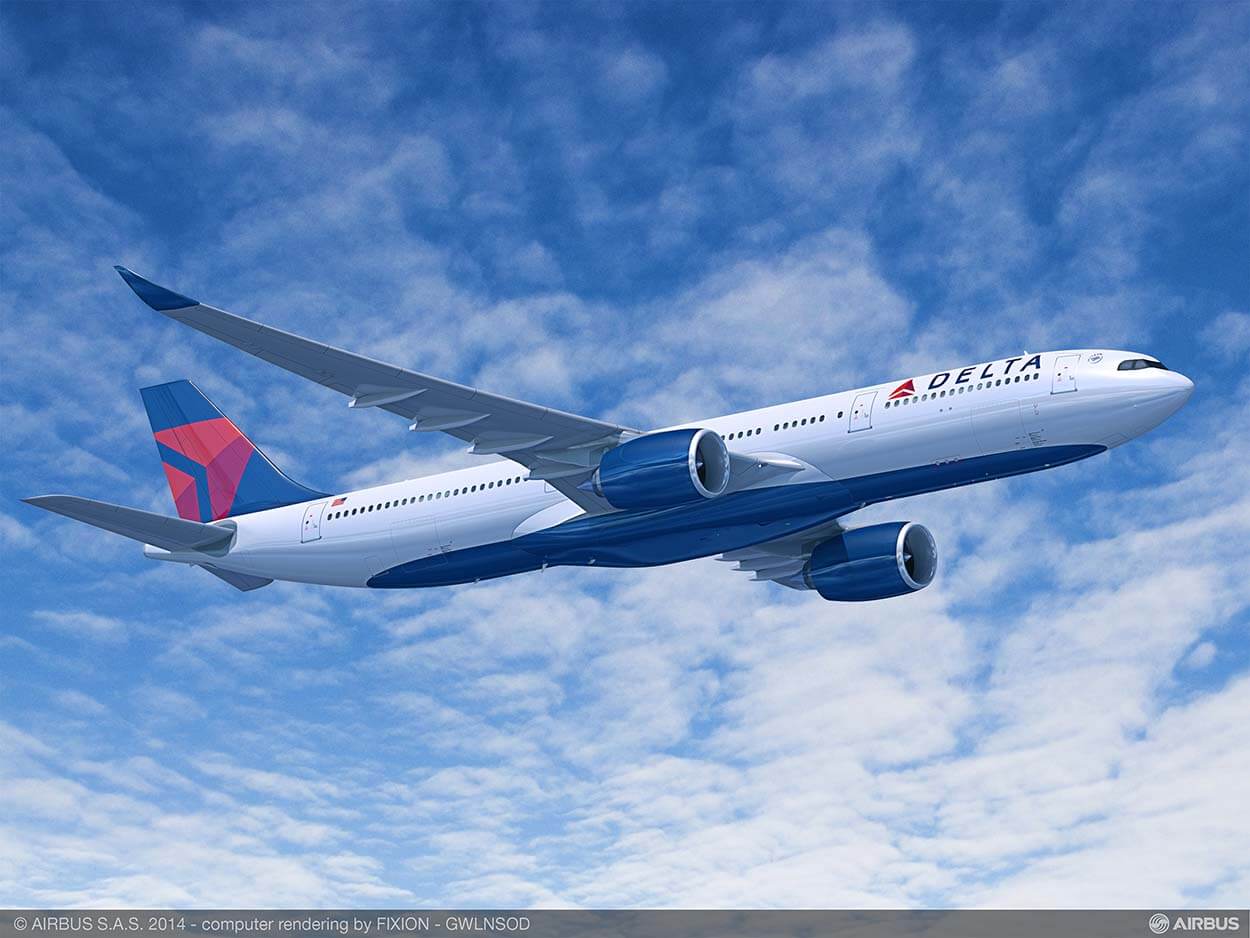
Delta Air Lines has taken delivery of a second Airbus aircraft in an apparent effort to avoid tariffs, according to Airline Economics research. The A330-900 aircraft departed on its delivery flight from Toulouse on May 11, but rather than flying to the US, it landed at Tokyo’s Narita airport the following day. The aircraft bears MSN 2089 and registration N434DX.
The delivery follows shortly after Delta took delivery of an A350, bearing MSN 722 and registration N528DN, routing it to Tokyo in late April. Both aircraft are currently located there, according to Airline Economics research.
The strategy was used by the airline to avoid tariffs on the aircraft, a person familiar with the matter confirmed. The person added that the loophole requires aircraft to only fly international routes into and out of the US, and was a strategy used during the previous Trump administration.
According to Delta’s 10K filing dated February 11, 2025, the company has seven A330-900neos scheduled for delivery this year and will mark the final year for these deliveries. The aircraft will replace its aging 767 fleet. Airline Economics research indicates at least three of these aircraft are already completed or in their final stages of completion.
During the company's first quarter earnings call, Delta CEO Ed Bastian said: “In this environment, we are going to work very closely with Airbus, which is the only manufacturer we've got deliveries coming from for the balance of this year… We'll do our very best to see what we have to do to minimise tariffs. We will not be paying tariffs on any aircraft deliveries we take. These times are pretty uncertain and if you start to put a 20% incremental cost on top of an aircraft, it gets very difficult to make that math work. We've been clear with Airbus on that and we'll work through and see what happens from that."
The company is scheduled to receive five A350-900s this year and four next year before completion. Additionally, Delta will begin the intake of its A350-1000s from next year with four scheduled for delivery as well as another four in 2027 and 12 deliveries thereafter.
“The issue that Delta faces is that Airbus operates final assembly lines in the US, but which only assemble single aisle A220 and A320 family aircraft,” commented Airline Economics SVP — appraisals Gary Crichlow.
All Airbus widebodies are built in Toulouse.
Crichlow continued: “Delta’s entire widebody backlog consists of Airbus aircraft, which is in stark contrast to its US peers at American and United, both of which are major Boeing widebody customers. This puts Delta in the unique position of being wholly reliant on foreign-assembled widebodies: the exact aircraft it needs to capitalise on the international premium traffic that has bolstered its financial position in the face of softening domestic demand.”
Both widebodies delivered to Narita have been FAA-registered to Bank of Utah as a trustee, which occurs in the event that the beneficial owner of a US-registered aircraft is a non-US entity. It remains unclear whether this non-US entity is a Delta-controlled entity or a third party one.
However, the person familiar said it would be safe to assume that the aircraft in question are in the hands of Delta, given its high proportion of owned aircraft. According to the 10K report, Delta had a total fleet of 975 aircraft with 810 of those being owned. The remaining comprise of 53 jets under finance lease and 110 under operating leases.
“Delta clearly will have done its compliance homework and come to the conclusion that the benefits of access to the aircraft outweigh the complications,” continued Crichlow. “It will be interesting to see how it handles single aisle aircraft in its backlog that have been assembled outside the US – Delta in this regard is not alone, with A321neos destined for Delta, American, United and JetBlue in various stages of completion at Airbus’ European facilities.”
Bastian added in the earnings call: "Every time we've had any level of economic dislocation, Delta has been advantaged. Delta has done the right things a step forward and has been opportunistic.” He added later in the call that Delta is reducing capacity and “finding other ways to save cash” and bolster its margins.
Airline Economics has contacted Delta Air Lines for a statement, while Airbus declined to comment on the matter.