
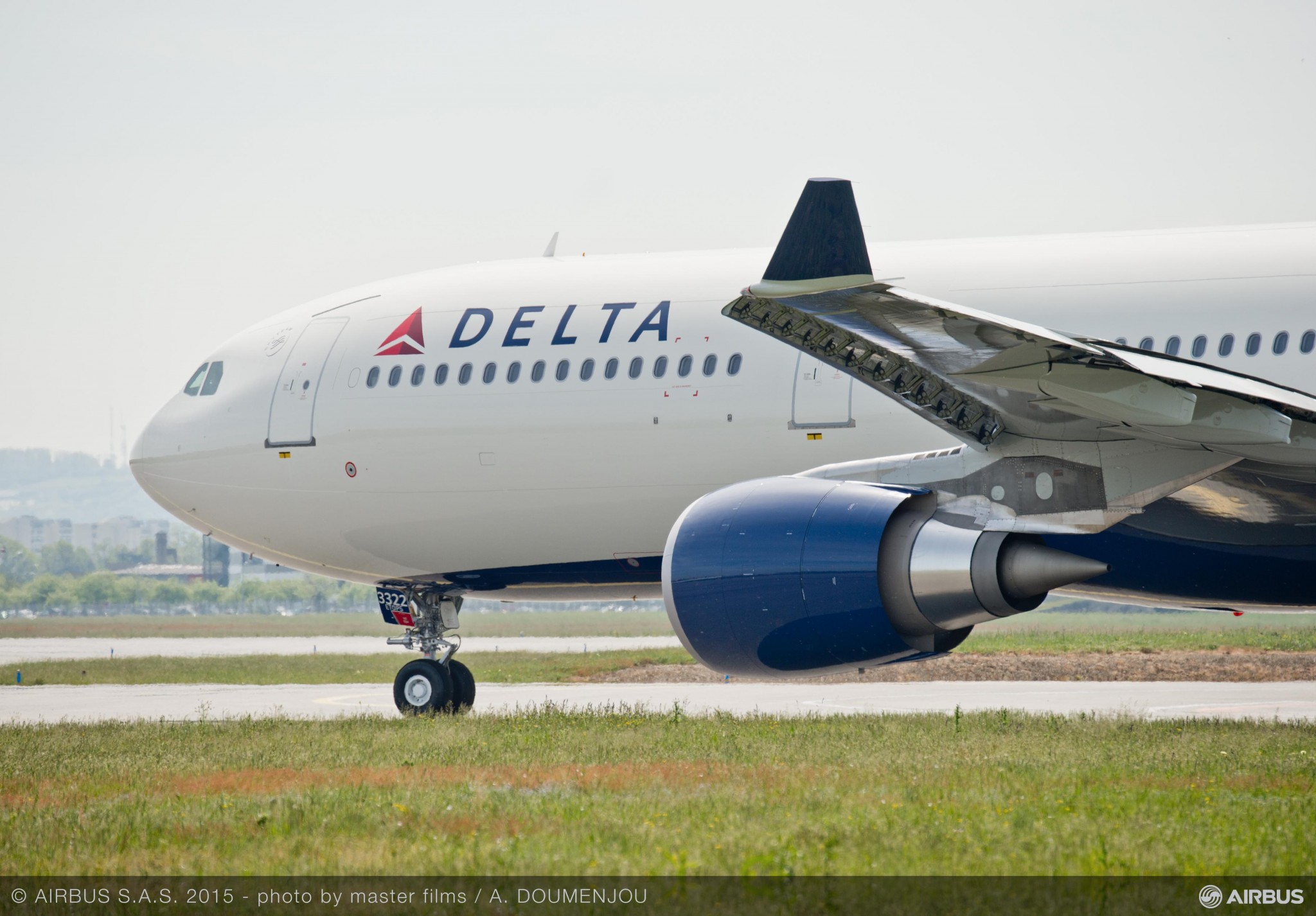
Delta Air Lines has been permitted by a Georgia state judge to pursue a lawsuit against cybersecurity company CrowdStrike after the IT outage, disrupting Microsoft's operating systems in July last year. The outage had resulted in over 7,000 flights cancelled with the airline citing an impact of around $500 million.
Fulton County Superior Court judge Kelly Lee Ellerbe ruled that the airline can sue CrowdStrike for “gross negligence” and “computer trespass”. She added that this has had led to significant losses.
CrowdStrike had rejected Delta's claims of damages. The company's representative Quinn Emanuel sent a letter to Delta, seen by Airline Economics at the time, stating that it had offered assistance to the airline, but had “received no response”.
At the time, Quinn Emanuel's Michael Carlinsky said CrowdStrike, “reiterates its apology to Delta” and that it is “highly disappointed by Delta's suggestion CrowdStrike acted inappropriately and strongly rejects any allegations that it was grossly negligent or committed wilful misconduct”. Microsoft's lawyer Mark Cheffo of Decher had also claimed the company had offered assistance to Delta “at no extra charge”, but claimed the airline had repeatedly turned down the offer.
However, Delta's lawyer David Boies of Boies Schiller Flexner, responded to Carlinsky, refuting the claim of multiple offers of assistance. Boies claimed that Kurtz made only a “single offer of support to [Delta CEO] Ed Bastian” four days after the outage on July 22, which he said was “unhelpful and untimely”. The scathing letter said CrowdStrike's apology was marred by "misstatements and attempts to shift blame" onto Delta, as well as trying to "minimise the international damage" the outage had caused. “Rather than continuing to try to evade responsibility, I would hope that CrowdStrike would immediately share everything it knows,” Boies said in his letter last year. "It will all come out in litigation anyway." He concluded that the cybersecurity company “must accept real responsibility” and compensate the airline if it “genuinely seeks to avoid a lawsuit”.
Delta read in a stock filing from August last year that the direct revenue impact of incident was around $380 million. This was primarily driven by refunding customers for cancelled flights and providing customer compensation in the form of cash and SkyMiles. The damages consisted of the direct impact as well as the $170 million impact related to non-fuel expenses, largely due to customer expense reimbursements and crew-related costs. In addition, it estimated fuel costs to be $50 million lower as a result 7,000 flight cancellations, thus totalling $500 million in damages.
"An operational disruption of this length and magnitude is unacceptable, and our customers and employees deserve better,"" said Bastian.
Delta had also recently evaded tariffs on an A330, according to Airline Economics research, delivering the aircraft into Narita Airport in Tokyo. This followed a similar use of a loophole by the airline to take delivery of an A350 earlier this month. The A350 is now scheduled to fly to Seoul Incheon later today before performing its first revenue flight from Seoul to Atlanta, according to further research from Airline Economics.
Furthermore, a third aircraft — an A330-900 (N436DX) — is undergoing acceptance flights in Toulouse, followed by at least three more widebodies in Toulouse at various stages of completion. A person familiar with the matter noted that the tariff loophole strategy requires aircraft that perform international flights. The strategy was similarly deployed during US President Donald Trump's previous administration.
During the company's first quarter earnings call, Delta CEO Ed Bastian said: “In this environment, we are going to work very closely with Airbus, which is the only manufacturer we've got deliveries coming from for the balance of this year… We'll do our very best to see what we have to do to minimise tariffs. We will not be paying tariffs on any aircraft deliveries we take. These times are pretty uncertain and if you start to put a 20% incremental cost on top of an aircraft, it gets very difficult to make that math work. We've been clear with Airbus on that and we'll work through and see what happens from that."