

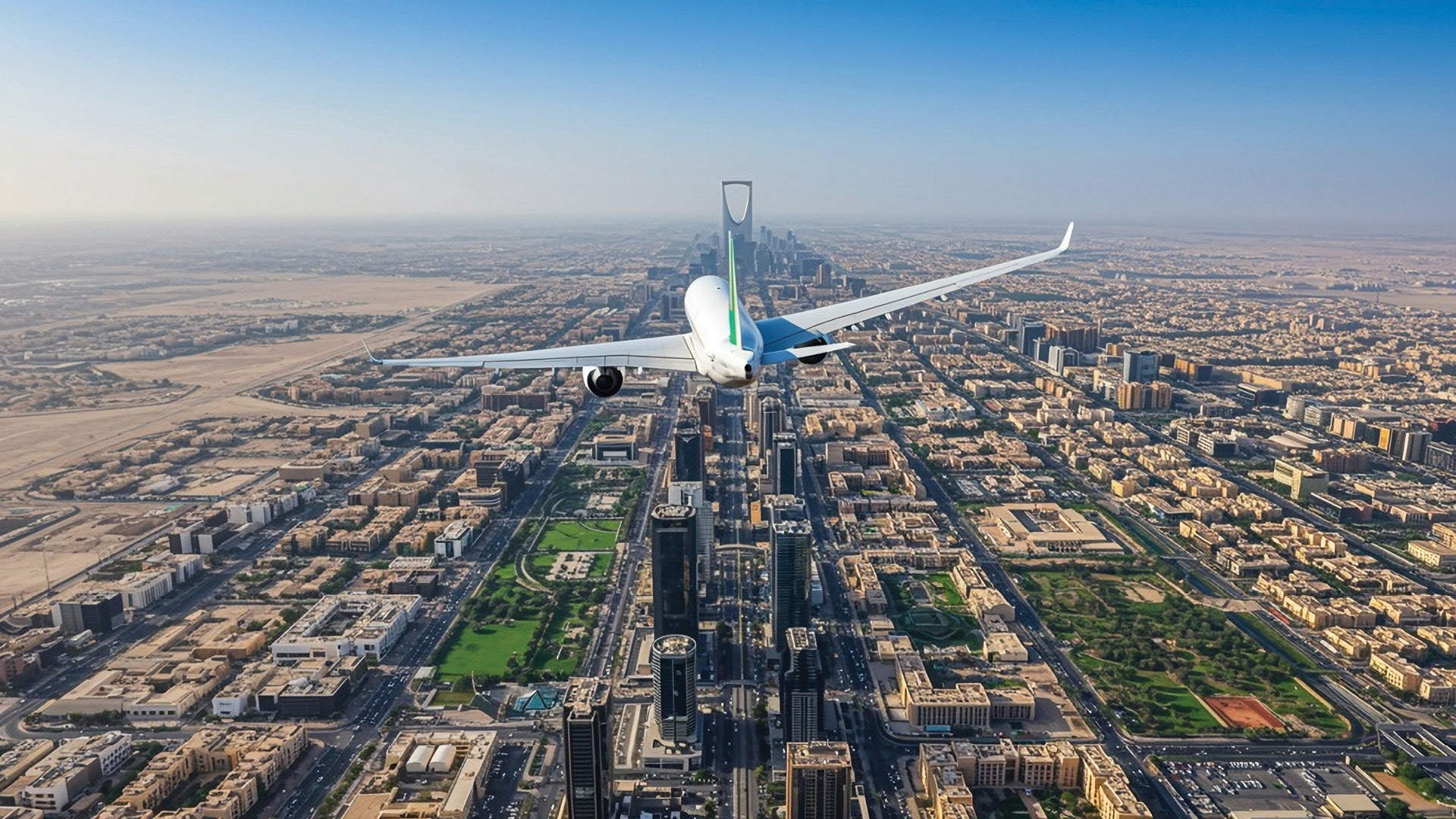
Despite geopolitical tensions and conflict leading to airspace closures in the region, the Middle East has demonstrated a proclivity for securing headline aircraft orders this year as travel demand in the region continues to grow.
US President Donald Trump had scored a number of strong deals with Middle East airlines and Boeing during his lucrative tour of the Gulf in May 2025, signalling the region’s heavy investment in aviation.
The following month, Boeing published its commercial market outlook for 2025-2044. The company projected that out of the 7,815 widebody aircraft deliveries required globally over that 20-year period, majority will go to the Middle East & Africa, Northeast Asia & Oceania, and China.
“As we look to the widebody fleet in 20 years, we’ll see 70% of the fleet flown by airlines that are based in the rest of the world – not North America, not Eurasia markets,” commented Boeing vice president commercial marketing Darren Hulst during its outlook presentation on June 10, 2025. “Around 30% of the widebody fleet will be based in those two advanced market economies.”
Boeing’s forecast underscored the Middle East’s rapid growth and its geographical position as a key transit hub, both of which are driving strong demand for aircraft – particularly widebodies.
“[The Middle East’s] location is a strong competitive advantage for the region’s airlines: the Middle East accounts for only 3.7% of global GDP, while its airlines provide about 10% of global capacity,” the report read. Boeing added that the Middle East is expected to have the highest share of widebody aircraft in its future fleet compared to all other regions. The region’s expected 2,950 deliveries over the two decade period is split between 49% narrowbodies and 46% widebodies, with the remainder accounting for freighter aircraft and regional jets. The Middle East’s widebody fleet is expected to grow from 700 aircraft to 1,455. Additionally, of the 1,430 narrowbodies expected to be delivered over the period, around 67% will be needed for growth purposes.
Trump’s series of aviation deals in the Middle East began during his visit to Riyadh, where Public Investment Fund (PIF)-owned lessor AviLease placed an order for 20 firm 737 MAX 8 jets with 10 options on May 13, 2025. This marked the lessor’s first direct order with an original equipment manufacturer (OEM).
The following day, AviLease CEO Ted O’Byrne remarked to Airline Economics on the surreal nature of being in the presence of President Trump and other executives from various other companies during the deal signing. O’Byrne confirmed the delivery dates for the MAX 8 aircraft would be early into the next decade and noted that this aircraft order was part of the company’s broader investment strategy.
“AviLease is investing in next generation – either new or young – aircraft,” explained O’Byrne. “The majority of that is narrowbodies – around 90% of the balance sheet is narrowbodies. We will continue to have a predominantly narrowbody investment strategy.
“However, we will increase our widebody content in the next few months and years and that will become evident as time passes.”
When pressed for details about a potential widebody order, O’Byrne remained tight-lipped but hinted at possible announcements to come during the upcoming Paris Air Show. That hint materialised as Airbus kicked off the event by securing its first deal: a major order from AviLease for up to 77 aircraft. The order included an initial purchase for 10 A350 freighters and 12 options, as well as 30 A320neo aircraft plus 25 options. Deliveries will commence early next decade. With the lessor’s first direct order with the French OEM, AviLease has secured direct orders with both major OEMs within a one-month period.
Headline orders aside, the second quarter of 2025 marked a significant boost to the company’s financial position. AviLease secured investment grade at the end of April this year. The lessor was rated Baa2 by Moody’s and BBB by Fitch Ratings. Founded only in 2022, O’Byrne said in a statement that the company was established with “investment grade profile in mind” from day one.
“Our investment grade rating was really driven by the acquisition of Standard Chartered, which gave us both scale and a very mature platform,” explained O’Byrne.
AviLease completed its acquisition of Standard Chartered’s aircraft leasing business in late 2023, closing a landmark $3.6bn deal. At the time, the combined business owned and managed 167 latest technology aircraft. Both Moody’s and Fitch noted the high quality portfolio of aircraft in AviLease’s fleet.
“That maturity was an important element for both rating agencies, both from a control and process management standpoint, and then scalability – the ability to demonstrate that we can handle much higher volume through the existing platform was a key element,” explained O’Byrne.
Both rating agencies highlighted the lessor’s “inherent Saudi concentration” as a PIF-owned company. O’Byrne noted that since the country aims to double passenger traffic and quadruple cargo container throughput as part of its Vision 2030 development initiative, the company naturally has a hand in supporting these ambitions.
“We are really active on the passenger side, but also really working with the local actors on the cargo and logistics side,” explained O’Byrne, prior to its A350F order at the air show.
“The cargo opportunity in Saudi Arabia is pretty unique in scale and nature,” he continued. “It’s also unique from a credit standpoint because the counterparties are effectively all directly or indirectly government-owned and therefore the credit story is very strong. In addition, we are well positioned as a Saudi-based company – we're not trying to capture the entire business – but we are a very easy and credible counterparty for local and regional airlines. As a result, we have quite a good deal flow; frankly, the biggest issue we have is how to manage that deal flow and maintain the concentration limits we have set forth in our risk appetite statement.
“We have defined a risk appetite statement that defines asset, age, and regional concentrations. Rating agencies are looking at that from a risk analysis standpoint. The strategy that we were deploying there is very simple. We have our main AviLease balance sheet, which is 100% owned by the PIF.”
AviLease began developing its sidecar investment vehicle strategy to build scale in order to secure its investment grade strategy, deploying around $2-$3bn annually.
“Around that balance sheet, we're creating sidecar vehicles,” said O’Byrne. “We've got one that is already active, which owns 25 aircraft and soon more. We have already started to purchase aircraft within that structure and we are creating a second one with local equity investors to manage the overflow of what doesn't fit into our balance sheet. That structure is in the works right now. It will allow us to do more business with local and regional airlines and find local investors to come and coinvest with us.”
With AviLease’s investment grade status secured, O’Byrne is confident it will “open up a lot of options” for financing, particularly for financing its direct orders with Airbus and Boeing. The reduced interest expense line and derisking of its capital structure afforded by the investment grade gives AviLease the option to go to the US bond market. He added that a second option for financing its new aircraft orders lies in the local Sukuk market.
“We will explore all avenues and make a decision with the aim of having a first print in the second half of the year,” he said. “The probability really depends on the state of the capital markets. We want to make sure that our inaugural issuances are very successful. We want to make sure that it’s well underwritten. We will make sure we do this in a good and supportive market.”
The Sukuk market is a key component of financing in the Middle East. Similar to a bond, Sukuk are structured to comply with Shariah law, which prohibits interest payments; instead, investors receive a share of the profits generated by the underlying asset.
However, the Accounting and Auditing Organisation for Islamic Financial Institutions (AAOIFI) has proposed Shariah Standard 62, which is likely to be approved this year – though the full timeline of its implementation is still unclear – and aims to better align the Sukuk market with Sharia principles. Under Standard 62, the Sukuk would be more akin to equity rather than fixed income, which may diminish investor appeal to the market.
“A move towards quasi-equity structures where the repayment of the face value is subject to market risk could also render the Sukuk unratable,” Fitch said in a report in March 2025.
While Fitch said the draft Standard 62 has had no impact on Islamic banks’ ratings as of March, the agency said, “there remains a lack of clarity around the standard’s final scope and implementation”.
The agency added: “Many Islamic banks are active Sukuk issuers. If the adoption of Standard 62 disrupted Sukuk issuance, it may affect some Islamic banks’ overall funding and liquidity profiles.”
These changes are something AviLease are looking into and will ultimately inform its issuance decision later in the year. O’Byrne shared the sentiment that the changes and their potential impact still remain opaque.
“We want to keep our balance sheet as unsecured as possible and these changes may impact the way we think about this market, but as the details remain unclear, we will be keeping an eye on it,” he said.
Meanwhile, Qatar Airways, which placed its own mega order during Trump’s landmark tour – the second of his Middle East aviation deals – is mulling over a bond issuance, the airline’s CFO Duncan Naysmith told Bloomberg. The airline is reportedly working to secure a credit rating to facilitate the issuance, which would support its $96bn Boeing order.
Additionally, in early June, Qatar Airways had signed an agreement with Qatari banks to provide 4.5bn Qatari riyal denominated financing – worth approximately $1.23bn. Under the deal – fully underwritten and led by Qatari National Bank (QNB) Group – the banks involved will lend in the local currency through both conventional and Islamic tranches. Al Meer said the facility will support the company in reaching milestones in the Qatar National Vision 2030 – another development programme similar to Saudi Arabia’s Vision 2030 ambitions.
Qatar’s mega deal was the largest aircraft order in its history and marked Boeing’s largest ever widebody order. The company ordered up to 210 Boeing widebody jets, powered by GE Aerospace engines. The deal consisted of 130 firm orders for the 787 Dreamliner and 30 777-8s, with options for up to 50 additional 787 and 777X jets.
Shortly after, the airline’s CEO Badr Mohammed Al Meer said in an interview with Bloomberg TV that it had cancelled its 2022 order for 737 MAX 10s, instead focussing on the A321neo for its narrowbody fleet.
“We had nine 737 MAX 8s that we are basically leasing to Indigo for them to fly to Doha,” said Al Meer. “On the longer term, we have an order for 25 737 MAX 10s… We agreed with Boeing to replace them with additional 787-9s.”
These additions were reworked into the widebody deal. Qatar is set to receive 50 A321neo aircraft commencing 2026, and continues to receives the A350-1000 aircraft.
The Middle East carrier widebody focus continued with Etihad signing a $14.5bn deal for 28 widebody jets, including both 777X and 787 aircraft, powered by GE Aerospace engines – marking the third and final aviation deal of Trump’s tour of the region.
The flurry of second quarter widebody orders from Middle East carriers would end with Airbus clinching an order from Saudi startup airline Riyadh Air at the Paris Air Show for 25 firm A350-1000s and options for an additional 25 jets, powered by the Rolls-Royce XWB-97 engine type.
These aircraft form part of the airline’s strategy to support the Saudi Vision 2030 initiative. Riyadh Air is also awaiting its first operational 787 Dreamliner, which will enable the commencement of its operations.
Local outlets have reported that Saudi Arabia’s flag carrier Saudia will focus its operations out of Jeddah to make way for Riyadh Air to become the primary carrier based in the capital. Although Saudia is not fully owned by PIF, reports have suggested the fund is in negotiations to acquire the airline, potentially this year.
This could tie in with Riyadh Air’s planned launch this year after it received its air operators certificate (AOC) in April. Although, with 787 delivery delays, the airline has pushed its maiden flight to late this year after initially planning to launch mid-2025.
While AviLease has invested in 787s in the past and O’Byrne noted it would like to invest further, it is unlikely the lessor will be supporting the airline’s launch with leasing agreements. While both AviLease and Riyadh Air share the same owners and are both controlled by PIF, O’Byrne noted that they are completely separate entities with “very different governance processes”, and that Riyadh Air has its own ordering strategy with 182 aircraft on order.
However, the two companies’ CEOs did share a stage during a fireside chat at Airline Economics’ Growth Frontiers Aviation Finance and Leasing 2025 conference in Riyadh in April ahead of their respective splashes at the Paris Air Show.
Riyadh Air CEO Tony Douglas said the airline would open up ticket sales after it announced its next widebody order – later revealed at the air show.
He added: “Within a two year period, we will have placed fleet orders that get us right up there with the heavyweights that occupy such a great marketplace within the Middle East.”
Beyond aircraft orders, the airline’s several partnerships with global airlines will play a key role in securing its network coverage. Douglas has repeatedly stressed that the company does not intend to join any airline alliance. He said the airline partnerships are “50/50 between SkyTeam or Star Alliance members”, providing the necessary connectivity. He added that the airline aims to secure two or three more alliances before the airline is “where it needs to be”.
O’Byrne described the strategy of remaining outside established alliances while forging partnerships as “groundbreaking” during the fireside chat. Support from PIF has allowed Riyadh Air flexibility in terms of financing its large orders.
“We have a common shareholder in PIF and it’s been absolutely fantastic for Riyadh Air – as it has been for AviLease – to have that clarity in terms of what total shareholder value needs to look like in the future,” said Douglas. “As a startup we were able to build in all the assumptions from day one… We want to optimise the balance sheet to give the best total shareholder return for PIF.
“The way we’ll do that is having a mix between the assets that we elect to keep on our balance sheet, but there will be a significant percentage of value of those assets that we will look for alternative sources of funding, be that conventional debt structures, through the leasing community or alternative products.”
Also speaking at the Growth Frontiers conference in Riyadh and a smaller player in the Kingdom was low-cost carrier flyadeal – a part of the Saudia group – which has been growing in line with demand. The airline made its first order for widebodies earlier this year, opting for 10 A330neos and options for 10 more, with deliveries commencing from 2027.
“As a low-cost carrier, we would always try to focus on one type of narrowbody aircraft,” said flyadeal CFO Abdulrahman Ajabnoor during the CFO panel at the conference in Riyadh. “Before going to the widebody, we already have an order for 51 aircraft with deliveries starting from next year.”
The airline confirmed its order for 51 Airbus narrowbodies last year. Ajabnoor confirmed that the airline will be receiving one to two aircraft per month from next year – representing a “huge investment”. He pointed to certain markets such as Europe, Southeast Asia, and India where widebodies can operate more efficiently with higher demand and yields. “The A330 will provide us better economics even on the unit costs,” he said.
Saudi low-cost carrier flynas CFO Mohanna Almohanna also commented during the conference that its widebody aircraft order would “unlock larger religious traffic” with the airline being a key supporter in transporting pilgrims for the Hajj religious season. The airline ordered up to 30 A330 widebodies at the Farnborough Air Show last year.
Almohanna said that the additional aircraft will allow it to create more bases in the Kingdom, with it currently operating four, facilitating the realisation of the Vision 2030 goal.
While a new airline and rapidly expanding networks may signal concerns surrounding overcapacity or heightened competition in other jurisdictions, players in the Kingdom view these factors as a positive development. Ajabnoor said during the panel that the Kingdom's airlines are all united in propelling the Vision 2030 national strategy into reality, leveraging their individual growth towards a single goal.
With Saudi and Qatar’s respective 2030 ambitions, the Middle East is set to grow at tremendous speed and scale. The primary factor transforming the region’s cities into major transit hubs is the growing deployment of widebody aircraft. As already witnessed this year, the region has satiated its long-haul appetite with a score of high-profile widebody jet orders. However, one risk remains that may hinder or at least delay these growth ambitions: geopolitical headwinds. The Middle East’s long-haul travel emphasis puts it at more risk with airspace closures and escalating conflicts in the region. Qatar was forced to close its airspace due to the imminent threat of a missile attack and Qatar Airways diverted 90 flights to other airports in the region and beyond. Although the airspace was closed for less than 24 hours, the disruption to Qatar Airways was significant and forced Group CEO Badr Mohammed Al-Meer to pen an open apology to customers.
“The longer haul you travel, the more potential risks there are in the marker – whether its geopolitical, overflight, or other things,” said Hulst in Boeing’s outlook. “These things ultimately have an impact on widebody jets. Widebody demand is still a growth market – long-haul traffic is going to nearly double in the next 20 years. But we have adjusted our fleet demand by around 3% compared to last year.”
While a pressing issue for the region, these geopolitical headwinds may prove a blip in the Middle East’s ambitious growth plans for the next several years. With a flow of widebody orders secured and the anticipation for this momentum to continue, coupled with the introduction of a new premier airline, the region may prove a fundamental stage for the global aviation network.