
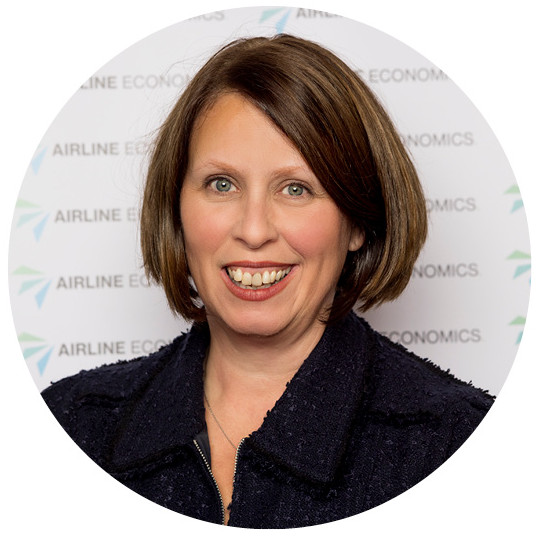
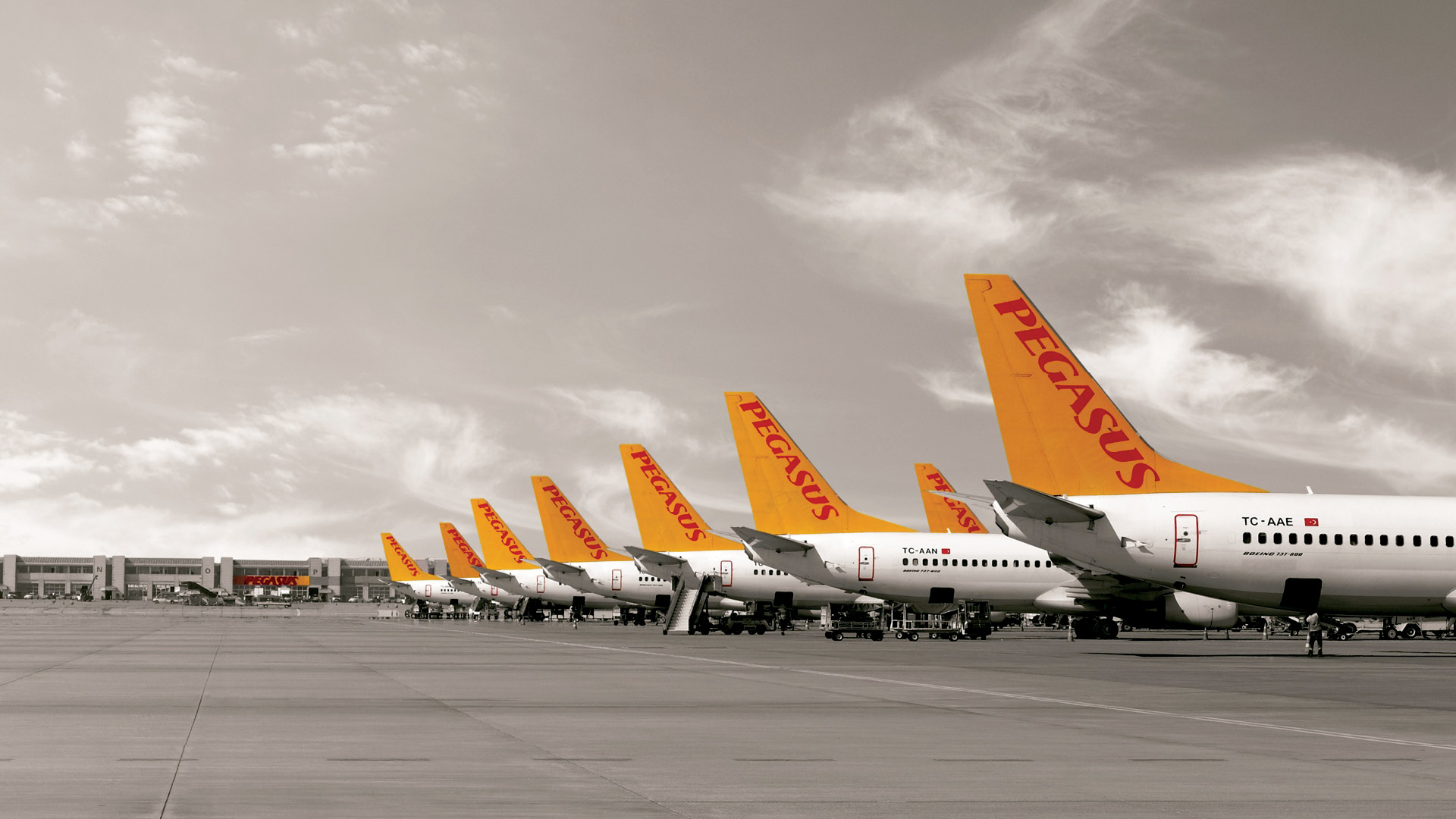
Güliz Öztürk began her aviation career in 1990 at Turkish Airlines where she was responsible for international relations. Two decades later, she made history as the first woman chief executive officer of an airline in Türkiye, joining a growing cohort of women taking the helm of an international airline. Öztürk is leading Pegasus Airlines through a period of significant growth. In 2024, passenger numbers grew by more than 17% to 37.5 million fuelled by domestic and international travel demand. With growth expected to continue (the first quarter showed a continued 18% growth in passenger numbers) Pegasus is expanding its fleet with more fuel efficient aircraft to help bring operating costs down as well as continuing to expand its network. In December 2024, Pegasus placed an order for 100 Boeing 737-10s with 100 options, with deliveries starting in 2028. The new aircraft are earmarked for use on existing routes, but Öztürk shared with Airline Economics that they will also be deployed to newly opened destinations in line with the airline’s growth strategy. “This includes expanding into new markets and enhancing our service on current routes with a focus on destinations in Europe, the Middle East, Central Asia and Africa,” she says.
The opening of the second terminal at Pegasus Airlines’ main hub, Istanbul Sabiha Gökçen Airport, in the coming years is also planned to fuel the airline’s growth plans and enable it to increase our capacity. “We’re also growing our operations in airports beyond Istanbul in Türkiye, such as Antalya, Ankara and Izmir, where in 2024 we launched a number of international routes such as Ankara to Dubai, Dublin and Lisbon, and Izmir to Lisbon and Krakow among others,” adds Öztürk.
With pressures on cost management, Pegasus is focused on sustaining long-term growth via revenue-generating initiatives and cost-control strategies. Despite the building headwinds, Öztürk is confident that this year will continue to be positive for the airline. “At Pegasus Airlines, we maintain an optimistic outlook on the general economic environment following a successful 2024,” said Öztürk, speaking to Airline Economics in the Spring. “Our robust financial performance in FY2024, with a sales revenue of €3.01 billion and net profit of €361 million, is further underscored by our strategic initiatives, such as our historic order of 200 Boeing 737 MAX 10 jets in December 2024, reflecting our confidence and commitment to sustainable growth.” She also thanked the more favourable fuel environment for reducing the pressure on operating profitability, noting that “such achievements position us well to navigate and thrive amidst the dynamic economic landscape”.
Geopolitical issues aside, the airline industry continues to grapple with operational challenges, which in recent years, particularly during the busy summer season, have included disruptions from issues such as staffing shortages in airport terminals and ground handling services. Öztürk says that with investments in digitalisation and operational efficiency, Pegasus is proactively mitigating such challenges. She adds that this includes supply chain disruption, which has resulted in minimal impact on the airline’s operations. “The delivery delays from aircraft manufacturers appears to be a global issue and unfortunately continues to persist,” says Öztürk. “However, we are mitigating the impact of these delays through risk management and contingency planning. We are continuing with aircraft deliveries under our order with Airbus and have been managing the minor delays related to supply chain issues. Despite these challenges, we continue to take our precautions and continue our plans for profitable growth.”
Pegasus Airlines has operated a dual fleet of Boeing and Airbus aircraft since 2013. Pegasus operated 118 aircraft at end-2024 with an average age of 4.5 years, most of which were A320/A321neos powered by CFM engines and so Pegasus's fleet was not affected by Pratt & Whitney engine issues. Öztürk praises this strategy for enabling the airline to achieve a low cost per available seat kilometre (CASK) for the past three years. For the first quarter of 2025, Pegasus reported a 6% year-on-year increase in CASK to €4.20, with a 16% increase in non-fuel CASK to €2.98. In previous years, CASK came under pressure from higher staff costs and inflation, although this has been tempered by the lower fuel costs. The induction of more fuel-efficient aircraft into the fleet will assist further in lower operating costs. The airline expects delivery in 2025-2029 of 52 new A321neos, which are more fuel-efficient and have larger capacity (by more than 50 seats) than A320neos. And, as mentioned, Pegasus has ordered 100 new 737-10 aircraft from Boeing, for delivery between 2028 and 2034.
“Our mixed fleet strategy allows us to optimise our operational and growth objectives by leveraging the strengths of both manufacturers,” says Öztürk. “We are currently receiving deliveries from our Airbus A320 family order, totalling 150 aircraft by 2029, while also strengthening our collaboration with Boeing through our recent order of 200 Boeing aircraft.”
“While our Boeing 737-10 order supports our mid- and long-term expansion, our strong relationship with Airbus remains strong, allowing us to maintain a competitive, flexible, cost-effective, and scalable fleet for the future,” she adds.
Such a solid delivery stream requires a sizeable capital outlay. In a recent ratings commentary, S&P is forecasting an increase in capex to an average of €500 million in 2025-2028, driven by advance payments, and longer term financing will be used by increasing its lease debt. Öztürk confirmed: “We plan to finance this purchase through various methods, including covered and non-covered bank loans with possible tax leverage structures, finance leases as well as operating lease options.”
Financing growth
More than 80% of Pegasus’ fleet consists of owned or financed aircraft, which Öztürk notes is “testimony to Pegasus’ strong presence in the financing market”. She adds that the airline has remained a key credit throughout the pandemic period, where she says the airline had “continuous access” to the aviation debt market. “We are continuing this strategy as we believe the residual value of the new generation aircraft will be sustainable for a foreseeable future,” she adds.
Although the commercial banking market remains strong and accessible for key credits, Öztürk notes that even though the market can “no longer offer as favourable economic conditions as before due to regulatory pressures such as Basel III and Basel IV and rising interest rates, as Pegasus, we can still access attractive financing terms with traditional financial instruments, including ECA and insurance covered structures, thanks to our market recognition and credibility”.
Alternative lenders have risen in popularity and Pegasus has seen increased appetite from private credit funds, institutional investors or specialty finance companies. Öztürk says that even though “the liquidity and flexibility supplied from the alternative lending space supports the financing market overall”, the higher margins being offered means the airline’s “interest for such products is very limited”.
For Pegasus, although the unsecured bond market is able to offer flexible solutions, Öztürk notes that investors tend to be limited to certain geographies due to macroeconomic conditions, on top of increased interest rates, which she says: “overall results in a cautious environment and selective access”, adding: “We believe the debt market is still robust overall, offering various financing instruments. However, in line with economic and regulatory developments, it has become more selective towards good quality borrowers.”
Pegasus has made frequent use of the Japanese Operating Leases with Call Option (JOLCO), which Öztürk recognises as an increasingly important instrument for aviation finance with its role to diversify funding resources and attractive cost structure. “Although JOLCO financing is not a flexible structure compared to traditional financing solutions, the cost and LTV benefit compensates this inflexibility,” she says. She adds that JOLCO is “a very special and important tool for Pegasus Airlines and says that the airline is “preparing to utilise the Purchase Option in 2026 of our very first JOLCO transaction. We have been present in the JOLCO market since 2016 and have been working with very high quality JOLCO investors since then.”
Öztürk notes that there has been higher volatility in the JOLCO market in recent years, in line with the fluctuation of JPY vs USD and increased interest rates, but adds that “equity investors are still able to offer attractive terms, with a tightened interest for good quality credits”.
Pegasus will continue to seek to finance its own aircraft rather than lease aircraft due to rising rates. Öztürk says: “Due to delivery delays from aircraft manufacturers and the growing demand from airlines for additional aircraft to meet capacity requirements, market lease rates have increased. As a result, we are not currently leasing aircraft for the medium term, as the rising lease rates negatively impact our profitability. To address this situation, we have been extending the lease terms of aircraft already in our fleet and retaining owned aircraft for a longer duration before phasing them out. Even with these measures, with our continued investment in next generation aircraft, we are proud to say that we have been recently recognised as having the second youngest fleet in the world in fleets over 100 aircraft in size (ch-aviation 2025), with an average age of 4.5 years as of 31 December 2024.”
Sustainability and DEI
The global aviation industry is struggling with the impact of sustainability and other ESG initiatives both from an internal drive and a compliance perspective. Pegasus is no exception. “Aviation is a global business. Naturally, we follow regulatory developments at a global level as our international flight operations are directly and indirectly impacted by regulatory developments in many different parts of the world. In many domains, the fragmented and conflicting approach between different national and regional rules create significant hurdles for us and for our operations,” shared Öztürk. “On ESG, the challenge is greater first and foremost because of the difficulty in identifying the scope itself. There are quite different rulemaking approaches on environmental impact (emissions, and waste management, for example), on social matters including DE&I, and on governance. Across these large and vague domains, the “one-size fits all” and “extra-territorial” approach to rulemaking creates huge uncertainty for airlines and air travel services. That is why it is very important that state actors consider the unique nature of international civil aviation in order not to harm the cross-border nature of services provided.”
Diversity and inclusion are not just buzzwords at Pegasus; Öztürk maintains that they are integral to its corporate strategy. “We firmly believe that fostering an inclusive workplace is a force for corporate good, driving financial performance, innovation, and employee engagement,” she says. “According to TÜİK data, with women making up only 35.8% of the workforce in Türkiye as of 2023—significantly lower than the OECD and EU averages—we recognise the urgency of breaking down structural barriers such as the glass ceiling. Our commitment to gender balance is reflected in initiatives like our Harmony programme, which ensures equitable promotion opportunities and leadership development. Our scholarship and internship programmes provide young women with access to career pathways in aviation, demonstrating that diversity efforts are about expanding opportunities rather than tokenism.”
Despite that drive, challenges remain. “Aviation, like many industries, has historically been male-dominated with leadership positions often filled through informal networks that favour men,” says Öztürk. “One of the biggest hurdles is the need for intentional action in recognising and promoting female talent. At Pegasus, we tackle this by implementing merit-based hiring practices and actively removing systemic barriers that disproportionately affect women. We offer initiatives such as hybrid working models and favourable maternity leave to support this effort. We also invest in young talent through initiatives like our GoYoung programme, which allows students to gain early work experience in the aviation industry. This helps bridge the gap between education and employment, exposing young women to career opportunities they may not have considered. We also recognise the critical role of male executives in advancing gender equality through mentorship, advocacy for parental leave, and pay equity.”
Öztürk emphasizes that fostering a genuinely inclusive culture and ensuring diverse leadership are not just steps toward a fairer workplace—they are strategic imperatives for achieving long-term success in an increasingly dynamic global economy.
As Pegasus Airlines continues to navigate the complexities of a rapidly evolving aviation landscape, Güliz Öztürk’s leadership stands out not only for its strategic foresight but also for its commitment to resilience, innovation, and inclusivity. With a young, efficient fleet, a robust financial foundation, and a clear growth trajectory, Pegasus is well-positioned to thrive amid industry challenges. Öztürk’s vision—grounded in operational excellence and a forward-looking approach to sustainability and diversity—ensures that Pegasus remains not just competitive, but a leader in shaping the future of air travel.