

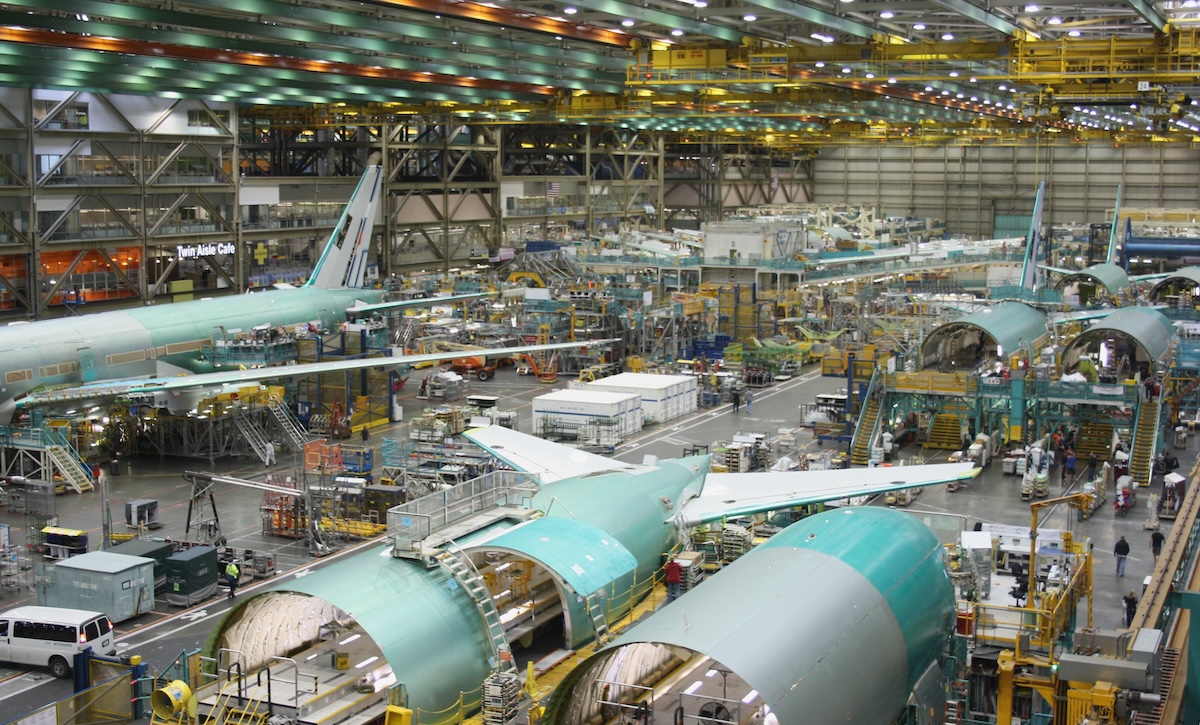
Boeing said the ongoing conflict involving Iran has not disrupted its commercial aircraft deliveries, even as uncertainty persists around global supply chains and key energy routes.
Speaking at the company’s annual shareholder meeting, chief executive Kelly Ortberg said airline customers continue to take delivery of aircraft on schedule, signalling resilience in the commercial aviation sector despite geopolitical tensions.
He added that Boeing remains on track to increase monthly production of the Boeing 737 MAX to 47 aircraft this year, up from the current rate of 42, as it works to stabilise output following recent operational challenges.
At the same time, Ortberg pointed to potential upside in Boeing’s defence business, with rising geopolitical tensions expected to drive demand for maintenance services, support contracts and munitions.
The comments come as aerospace firms assess whether heightened tension in regions such as the Middle East could translate into increased government spending and faster procurement cycles.
However, industry observers caution that risks remain. Gary Crichlow, SVP – appraisals & asset risk advisory at AE+, said that while manufacturers have not publicly indicated immediate disruption, both Boeing and Airbus remain exposed to fragile global supply chains. He noted that an ongoing energy crisis in Asia could impact component suppliers, while any renewed disruption to the Strait of Hormuz or regional airspace closures could affect the movement of parts and materials.
The situation remains fluid. On April 17, Iran said it would allow commercial shipping through the Strait of Hormuz during a ceasefire period, although the US continues to maintain a blockade of Iranian ports at the time of reporting, leaving uncertainty over the longer-term outlook for global energy flows and logistics.
Crichlow said that while it is “business as usual at present,” manufacturers are likely hoping for de-escalation to avoid further strain on already stretched supply chains.