

Boeing reported a net loss of $5.3bn for the third quarter of 2025, narrowing from $6.2bn a year prior. Losses from operations totalled $4.8bn, narrowing from $5.8bn a year prior. Consolidated revenues climbed 30% during the third quarter to $23.3bn.
The company said earnings were impacted by a pre-tax $4.9bn charge as a result of 777X certification delays. The first delivery of the programme is now expected to take place in 2027, versus the company's prior expectation of 2026.
“While we are disappointed in the 777X schedule delay, the airplane continues to perform well in flight testing, and we remain focused on the work ahead to complete our development programmes and stabilise our operations,” said Kelly Ortberg, president and CEO of Boeing.
During the company’s earnings call, Boeing EVP and CFO Jay Malave said: “We received approval to begin the second phase of certification flight testing in early 2025 and had anticipated authorisation to start the next major phase of certification flight testing in the third quarter.
“However, this authorisation has been delayed as Boeing and the FAA work through the supporting analysis that enables the next phase of certification flight testing.
"Given this delay and our assessment of the timeline to enter certification phases, we have shifted our flight test and production schedules to reflect these learnings. We now expect the next major phase start later this year or early 2026.”
Management said the delays largely stem from “getting the certification work complete”, with type inspection authorisation (TIA) approvals taking longer than expected.
“This is the first airplane that we’ve gone through this incremental TIA process with, and there was learning in what analysis and data we had to have completed and submitted to get the TIA approval,” Ortberg said during the earnings call.
“It’s taken longer, as well, for the FAA to go through those submittals and get the approval. I’m certainly not throwing the FAA under the bus with this – this has been a learning experience for both of us in terms of what it takes to get through this new process.”
Management clarified there were “no new issues” with the 777X or the engines. “Ironically, we have more test hours and the maturity of this airplane is probably higher than any other airplane we’ve been through the test programme with,” they said.
The 777X programme’s timeline was revised to incorporate the learnings from the approval processes.
“We now have a solid financial estimate and a high level of confidence that we can get the certification work done,” management said.
Cash usage on the 777X programme in 2026 will be “about similar or maybe a little higher” compared to this year. Boeing expects the programme to be closer to neutral cash use in 2028, before the programme moves to a positive free cash flow in 2029.
The company’s commercial airplanes segment generated $11.1bn in revenues, soaring 49%. Commercial aircraft deliveries for the quarter totalled 160 jets, up from 116 in the third quarter of 2024. These higher deliveries supported the revenue increase.
The 737 programme stabilised production at 38 per month in the quarter, which was the cap imposed on the company by the FAA following the Alaska Airlines door plug blowout incident in January 2024.
With the production stabilised, the FAA and Boeing agreed to increase the cap to 42 per month, which will support higher deliveries, future revenue generation, and stabilised cash flow.
During the call, management said that while the gap between subsequent cap increases would not exceed six months, the company would ensure that safety and quality were maintained prior to any cap increase.
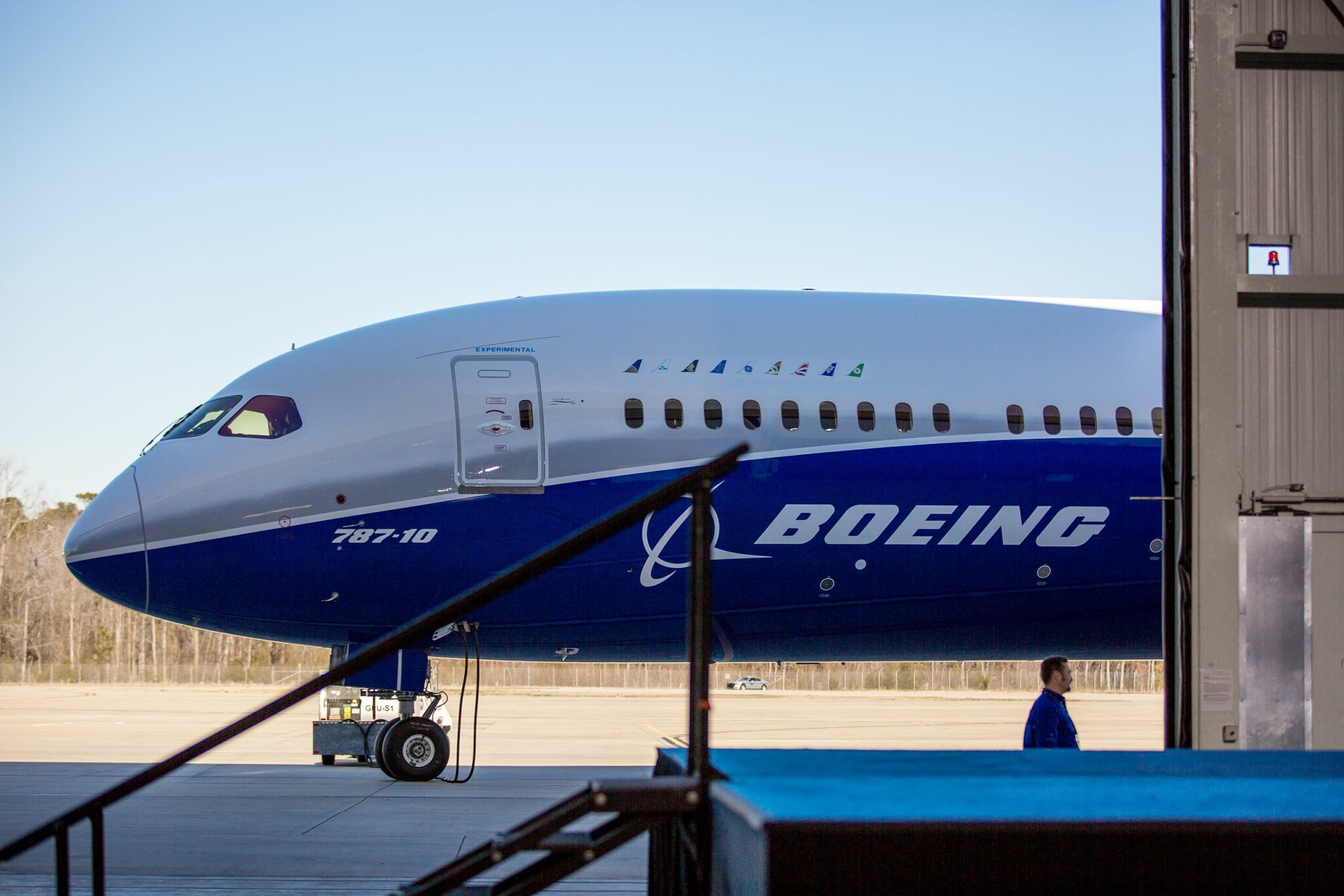
The 787 programme stabilised production at seven per month, targeting 10 per month next year.
“On the 787, the move to 10 per month will be more challenging for us with the supply chain – particularly seats,” management said.
“We’re continuing to struggle with seat certifications and that’s going to be with us for a little longer. We’re making progress on that, but seats will continue to be a constraining item for us, as well as the general supply chain on the 787.”
Management noted during the call that it was already “making steps” for higher 787 rates with investments in expanding its Charleston facility.
“If we thought capping at 10 was as far as we’d go, we wouldn’t be investing in expanding Charleston,” management said. “We’re going to have a formal groundbreaking – essentially, we’re going to double the manufacturing footprint. We don’t need double, but it also gives us a lot more flexibility for some storage space as well.
“So, a major expansion of the Charleston facility, and it’s all around getting us to rates higher than 10. The market demand will allow us to get to rates in the teens and that’s what we’re focussed on, putting the capital in place and getting the facilities in place.
"We’re looking at 2028 before we really utilise that expanded facility.”
The commercial segment’s loss from operations widened to $5.4bn, compared with $4bn last year.
As of the end of the third quarter, the company’s consolidated debt was $53.4bn. Cash and investments in marketable securities totalled $23bn. The company’s backlog totalled $636bn as of the end of the quarter.