

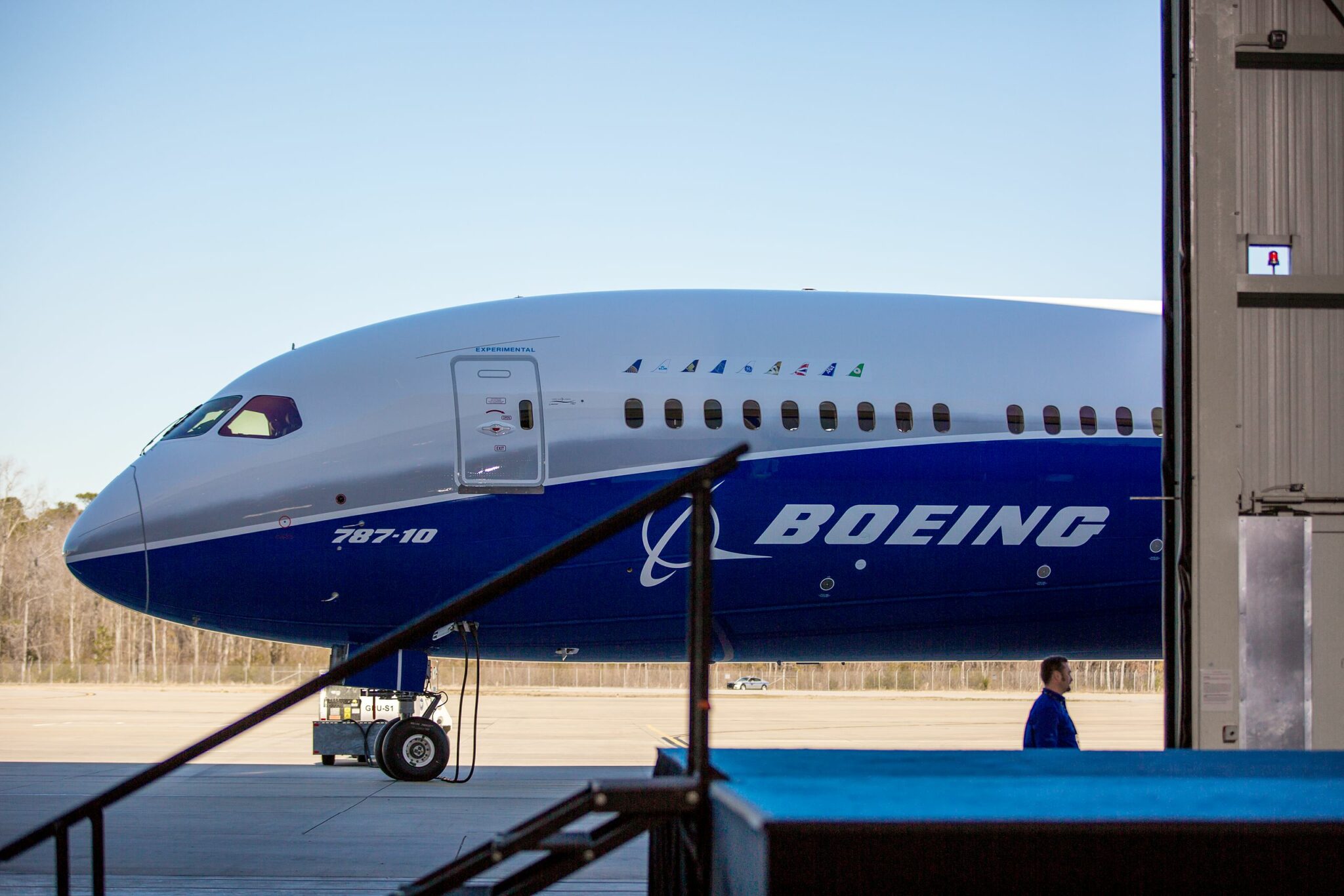
Boeing said it expects around 7,815 new widebody deliveries will be needed over the next 20 years through 2044, the company shared in its 2025 commercial outlook. This marks a drop from its prediction last year of around 8,065 new widebodies needed over 20 years.
“It is 3% lower and that’s not necessarily a lot, but it does reflect a couple of things,” Boeing vice president commercial marketing Darren Hulst told reporters last week. “Long haul had absolutely been slower to recover from the pandemic shutdowns.
“We’ve evaluated the long-term demand for widebody jets to be slightly lower than we did last year. And also, there are all the risks involved with long haul travel, which is more sensitive to external factors than short haul travel. But from a big picture standpoint, it’s a relatively minor reduction.”
Hulst later clarified that these risks associated with long-haul travel stem from the impact of geopolitical tensions or other events such as the pandemic, with travel restrictions often imposed on long-haul travel while domestic travel being largely being insulated from these events.
Interestingly, the share of widebody delivery needs is mostly from Middle East & Africa, Northeast Asia & Oceania, and China.
“As we look forward, the widebody fleet in 20 years, we’ll see 70% of the fleet flown by airlines that are based in the rest of the world – not North America, not Eurasia markets,” continued Hulst. “30% of the widebody fleet will be based in those two advanced market economies. You can see both the optimisation and the globalisation of the passenger widebody fleet as we look over the next 20 years.”
Already this year the Middle East has made strides in widebody order with Qatar Airways ordering up to 210 Boeing widebody jets, consisting of 130 787 Dreamliners and 30 777-9s.
With Boeing CEO Kelly Ortberg and its commercial aircraft arm CEO Stephanie Pope both pulling out of the Paris Air Show following the fatal crash of Air India Flight 182, Boeing’s presence at the airshow will be more subdued. After a relatively positive year so far in comparison to last, the company has been pushed back into crisis mode.
The show, which opens today June 16, 2025, will likely be a strong platform for orders for Airbus aircraft.
Saudi startup Riyadh Air CEO Tony Douglas confirmed in November last year that the airline was seeking an additional widebody order – either A350s-1000s or 777X jets – following its order for 39 787s. Reuters recently reported the airline is set to place a firm order for 25 A350-1000s at the Paris Air Show after much speculation. The airline hinted on LinkedIn that it would be “unveiling the next chapter” of its journey at the show.
Furthermore, AviLease inked its first direct order with Boeing for up to 30 737 MAX 8 jets on May 13, 2025. In an interview with AviLease CEO Ted O’Byrne a day after the narrowbody order, the executive told Airline Economics that the Saudi lessor would be increasing its widebody content “in the next few months and years”. While he kept tight-lipped on the specifics, he did hint at a possible Paris Air Show announcement. Rumours have circulated that the company is looking to place an order with Airbus during the Paris Air Show for A320neo family aircraft, as well as potentially A350 freighter aircraft.
Overall aircraft needed over the next two decades, according to Boeing, amounts to 43,600 aircraft with narrowbodies expected to make up three quarters of that share at 33,285 jets. This is down slightly from last year’s market outlook, which predicted 43,975 jets needed from 2024 through 2043, including 33,380 narrowbodies.
“Indirectly, the supply chain probably had a small role in our slight reduction in deliveries only because we haven’t been able to deliver in 2023 through 2025 the number of aircraft that the industry or our customers have needed,” added Hulst. “Between now and 2030, our goal is working with our supply chain and focusing on stability as we move towards production rate increases, which is really important to help us regain that balance between supply and demand as we as we move through the rest of this decade. And then ultimately being able to provide that stability, predictability, but also execute on production rate increases to match the market, which enables us to grow with the market as we move through the next decade and a half.”
Boeing’s outlook for the next 20 years expects the fleet to be split almost 50/50 replacement and growth, with replacements totalling 21,100 aircraft and growth around 22,500 jets. The “healthy mix” of demand for growth and replacement aircraft is being driven by the continued air travel demand, facilitated by developing economies and the growing global middle classes.
In addition, he pointed to a 2% increased delivery demand from China for the next twenty years, when compared to Boeing’s previous outlook. This is being driven by the country’s growing economy and middle class.
Hulst added: “Over the last 25 years, the size of China’s fleet has essentially grown by seven or eight times. A fleet at the beginning of this century had 500-600 aircraft, now has over 4,000 jets. And within that remarkable growth – double digit fleet growth on a consistent basis for 20 years has not been seen before – those aircraft need replacement now as we look into the next 20 years.”
The positive note on China comes despite the ever-changing US-led tariff conflict with the country. Boeing had resumed deliveries to China earlier this month after halting imports from the manufacturer in mid-April. However, this two month stall may be a blip on the country’s 20 year growth path. Hulst did not mention tariffs in the outlook and whether this informed the outlook. He did state, though, that the company evaluated China “like any other market”, looking at the fundamentals driving air travel demand such as GDP growth, as well as the size and growth of the middle class.
Similarly, Airbus predicted strong passenger traffic and new delivery growth over the next two decades in its own forecast published on June 12, 2025.
In its latest global market forecast (GMF) for the 2025-2044 period, Airbus predicted an annual 3.6% growth in revenue passenger kilometres (RPK) over the period, driven by GDP growth of around 2.5% and other growth in economies, including a 1.5bn addition to the global middle classes.
The French OEM’s outlook for new aircraft deliveries was lifted by around 1,000 from last year to 43,420 planes. This comprises 34,250 narrowbodies and 9,170 widebodies, including around 970 freighters. Nearly half of these deliveries will replace the predicted 18,930 aircraft retirements over the period. Retirements are up from last year’s prediction by around 470 aircraft.