
Boeing reported a sharp improvement in fourth quarter and full-year 2025 performance, driven by higher Commercial Airplanes deliveries and steadier execution, while signalling a cautious production ramp tied to certification progress and supply-chain readiness.
Group revenue rose to $23.9bn in Q4 and $89.5bn for the full year, supported by 160 commercial deliveries in the quarter and 600 for 2025, Boeing’s highest annual total since 2018. The company reported Q4 operating cash flow of $1.3bn and free cash flow of $0.4bn, while full-year free cash flow remained negative at $1.9bn, reflecting earlier delivery disruption and programme timing.
Results were materially influenced by a $9.6bn gain from the sale of Digital Aviation Solutions, which also inflated reported Global Services margins.
Boeing Commercial Airplanes (BCA) delivered 160 aircraft in Q4 and 600 in 2025, lifting segment revenue to $11.4bn in Q4 and $41.5bn for the year. Operating performance improved but remained loss-making, with a Q4 operating loss of $632m and full-year loss of $7.1bn. CFO Jay Malave said results reflected “better operational performance and higher deliveries,” with margins also affected by the Spirit AeroSystems acquisition.
BCA booked 336 net orders in Q4 and 1,173 net orders for the year, with backlog reaching a record over 6,100 aircraft valued at $567bn.
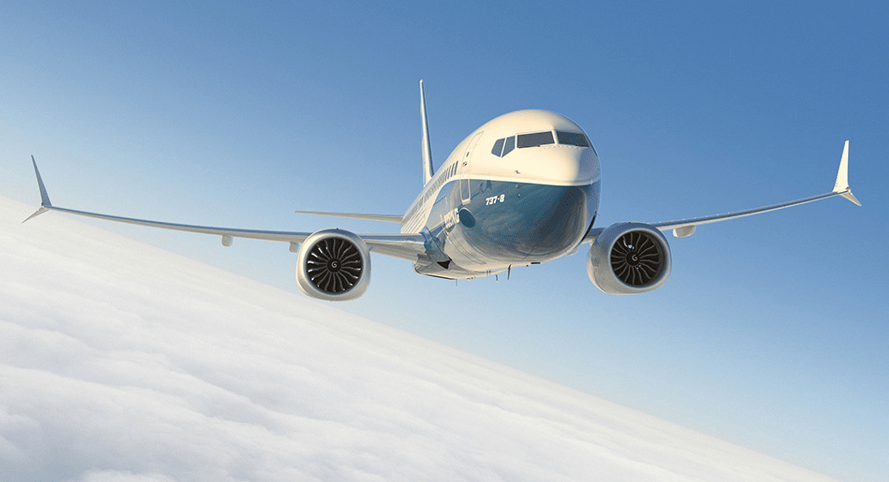
Boeing said the 737 programme increased to 42 aircraft per month during the quarter. CEO Kelly Ortberg said the move from 38 to 42 had gone “really well,” with factory health metrics holding steady. He said the company plans to apply the same approach for the next increase to 47 per month, subject to FAA review.
Ortberg cautioned that the step from 47 to 52 would be more demanding, requiring stronger supply-chain performance as excess inventory is worked down. Spirit AeroSystems was positioned as a key enabler of the ramp. Ortberg said Boeing acquired Spirit in December to reduce production risk and to “guide that ramp,” noting that capacity investment at Spirit will be required as rates rise.
For rates above 47, Boeing plans to rely on the new North Line in Everett, with tooling in place and a phased staffing plan under way.
On the 787, Boeing said the programme is stabilising at eight aircraft per month, with the next increase to 10 per month targeted for later 2026. Ortberg said factory metrics had improved, including a near 30% reduction in average rework hours during 2025.
He added that seating and cabin certification remains a delivery constraint for some customers: seat issues are “less of a constraint to our production output, but more of an issue with deliveries,” particularly where airlines introduce new configurations requiring additional certification.
Boeing said the FAA approved entry into the final phase of 737-10 certification flight testing, while a final design fix for the engine anti-ice issue on the 737-7 and -10 is in place. Ortberg said Boeing still expects certification of both variants in 2026.
On the 777X, Boeing said the 777-9 entered TIA3 certification testing. Ortberg disclosed a potential engine durability issue identified during inspection and said Boeing is working with GE on corrective action, but does not expect this to affect first delivery in 2027.
Malave said Boeing expects around 500 737 deliveries in 2026, with about 30 737-10s built but not delivered pending certification, and 90–100 787 deliveries, depending on production roll-out.
Boeing guided to $1bn–$3bn of free cash flow in 2026, noting a roughly $1bn headwind from incorporating Spirit and continued cash impacts from 777X timing and prior 737 and 787 delivery delays. Capital expenditure is expected to rise to around $4bn in 2026, including Spirit integration.