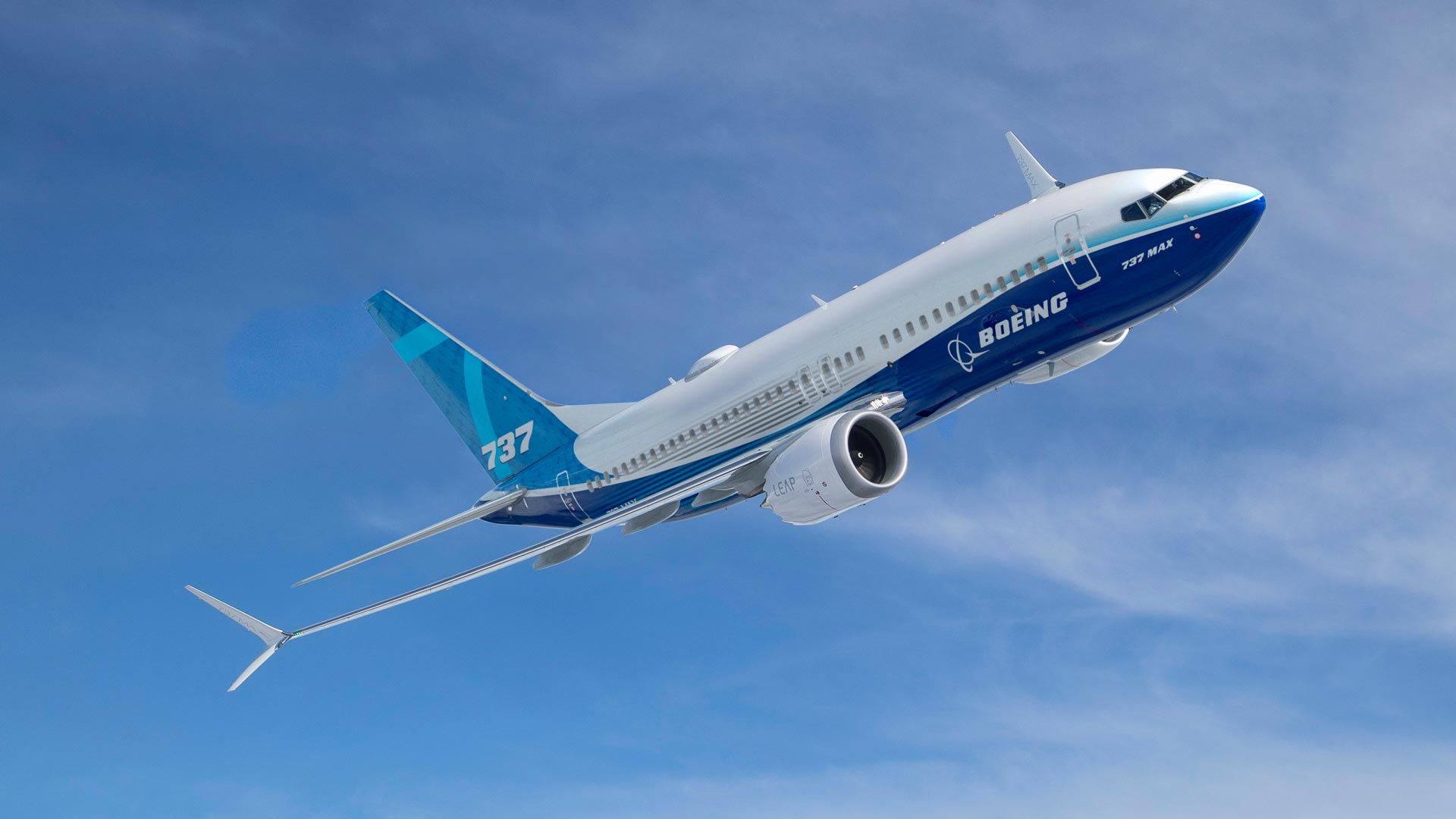
Boeing has managed to avoid prosecution over the 737 MAX fatal crashes in 2018 and 2019 after reaching a deal with the US Department of Justice (DOJ), the company said in a filing on June 4, 2025. The two crashes resulted in the deaths of 346 people.
“The [DOJ] agreed that it will not further criminally prosecute the company… provided that the company performs all of its obligations under the [agreement],” Boeing read in the filing.
The deal was signed on May 29, 2025. The non-prosecution agreement included the $487.2 million overall criminal penalty, of which $243.6 million was paid in 2021 as part of its deferred prosecution agreement and the remaining $243.6 million was included in amounts expenses by the company in 2024 in regards to the proposed plea agreement.
The new deal requires Boeing to pay $444.5 million in additional compensation to the families of those who died in the Lion Air Flight 610 and Ethiopian Airlines Flight 302 crashes in 2018 and 2019, respectively.
Furthermore, the company is required to invest $455 million in its compliance, safety, and quality programmes. An independent compliance consultant to ensure the company implements these measures. The consultant will be retained for two years.
Thus, with the compensation, required investment and the remaining criminal penalty to pay, Boeing will pay $1.1bn in accordance with the non-prosecution deal.
“Boeing is committed to complying with its obligations under this resolution, which include a substantial additional fine and commitments to further institutional improvements and investments,” a Boeing spokesperson said.
The deal is required to be approved by a federal judge.
A lawyer for 16 of the families of the Lion Air Flight, Sanjiv Singh, called the deal “morally repugnant”, speaking to BBC News.
All 189 people onboard Lion Air Flight 610 died in October 2018 after the aircraft crashed into the Java Sea just over 10 minutes after takeoff from Jakarta. All 157 people onboard Ethiopian Airlines Flight 302 died in March 2019 after the jet crashed shortly after takeoff from Addis Ababa. Both of the 737 MAX 8 crashes were linked to faulty aircraft design, amongst other factors.
“We are deeply sorry for their losses, and remain committed to honouring their loved ones' memories by pressing forward with the broad and deep changes to our company that we have made to strengthen our safety system and culture,” the spokesperson continued.
The 737 MAX fleet was grounded in March following the Flight 302 crash. The grounding was lifted in 2020.
The 737 MAX fleet would be grounded again, however, in 2024 after the well-documented Flight 1282 incident in January last year. The event saw a door plug blow out shortly after takeoff on an Alaska Airlines 737 MAX 9. The incident was linked to four missing key bolts. Alongside this, a 38 per month production cap on the 737 MAX jets was imposed on Boeing. The fleet mostly returned to service in February after inspections and maintenance processes were completed.
The production cap still lingers to this day, though as Boeing continues to improve its safety and quality, along with ramping up production, the manufacturer is aiming for the cap to be raised to 42 per month.
FAA administrator Chris Rocheleau told reporters on June 4 that it was “not at this time” considering lifting the production cap, according to a report from Reuters. Boeing has maintained that it would only seek a production cap lift after it secured production stability.
Ortberg said the company is “getting very close” to its 38 per month production target for the 737 MAX ramp up during the Bernstein Strategic Decisions conference at the end of May.
“Once we get through that stability and the performance indicators look good, which they do right now, then we'll review with the FAA and move to 42 a month from that production,” Ortberg continued.
He said that increase could come mid-year 2025. During the talk, Ortberg initially said there was potential for a further increase to 47 per month by the end of the year, but later clarified in the call that Boeing would look to secure this subsequent increase six months after the increase to 42 per month. Given that it is now June, and with no cap lift has been introduced yet, it may be more prudent to assume that the 47 per month cap will not be achieved this year.
A person familiar with the matter said that once Boeing secures its first cap lift, it is expected the subsequent cap lifts will follow in quick succession.
After a turbulent 2024, Boeing has made a bit of a return to form since Ortberg stepped in as its new leader in August last year. The growing confidence in Boeing and its new leader was reflected in Bank of America recently upgrading the company to buy in early June. In addition, Boeing was saved from junk status after S&P Ratings removing its credit watch negative status on the company at the end of April.