

Brazilian airline Azul reported a strong first quarter after it concluded its restructuring in January.
The company's total operating revenues were up 15.3% to 5.3bn Brazilian reals ($932.7 million) in the period. This consisted of passenger revenues climbing 15.2% to 5bn reals ($879.9 million), and cargo revenues up 17.3% to 377 million reals ($66.3 million). This was driven by a “healthy demand environment”, as well as “robust” ancillary revenues. The airline's average fare was up 4.9% to 633.8 reals ($111.51).
Despite a softening demand for US carriers during the first quarter, the airline's president Abhi Shah said it hadn't been significantly impacted by this. “Nothing compared to what you're anecdotally hearing in the US,” said Shah. “Ex-Brazil point of sale demand has been strong. Even with the noise in the US we didn't see any oscillations in our US business. Our international network is a high-end leisure network and we more insulated in that sense.”
He added that on corporate demand has been “very, very steady” during the first quarter.
Azul CEO John Rodgerson noted that the company had eight widebody engine removals in the last six weeks of last year. “That had a significant impact to our customers,” he said, adding that the company was “unable to sell close in revenue because we were just re-accommodating customers.”
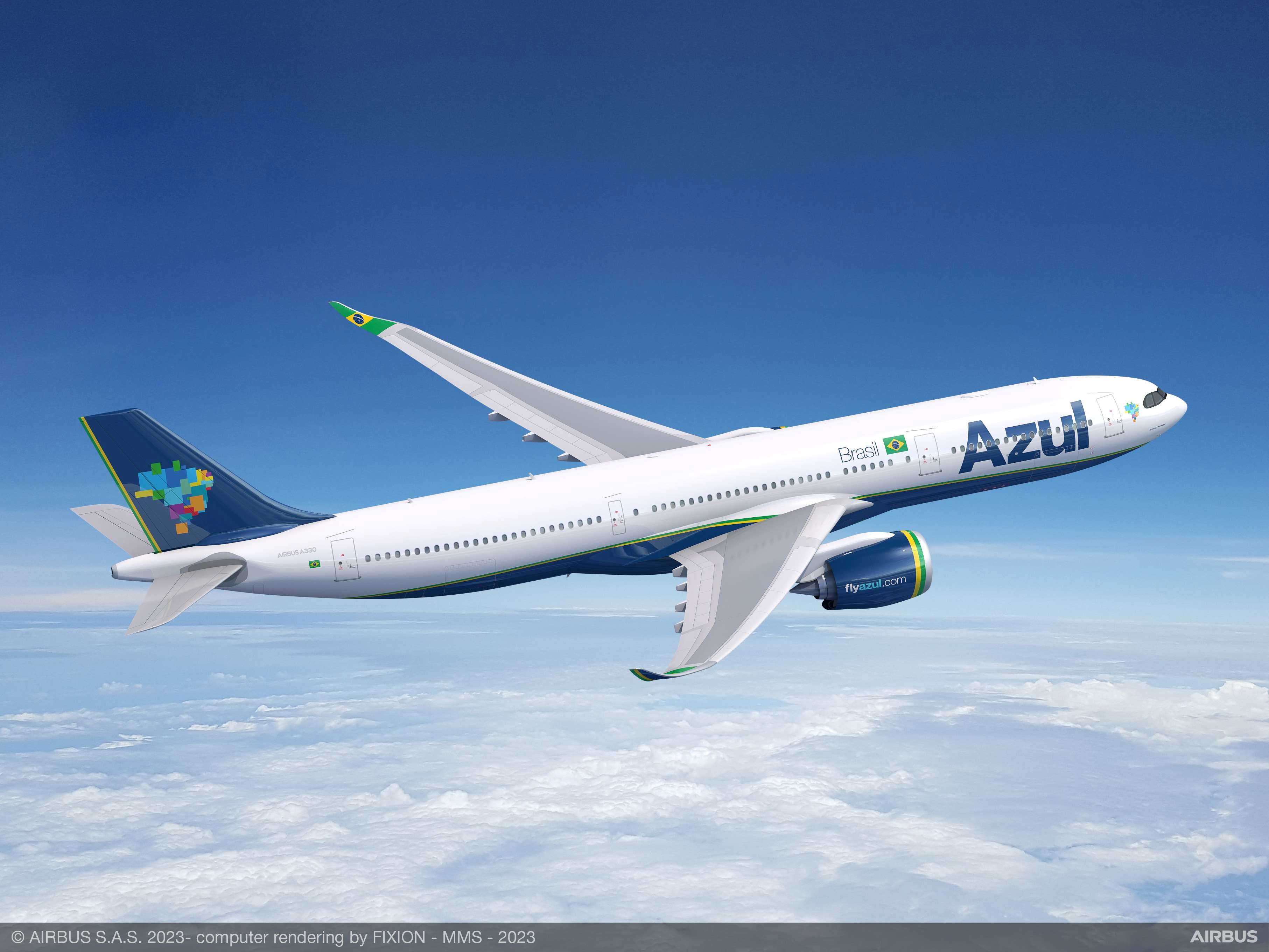
The company operates the A330 widebody aircraft, powered by the Rolls-Royce Trent 7000 engines.
“There is claims out there to the OEMs and we're seeking compensations similar to what you've seen with other airlines,” added Rodgerson. “There's been significant improvement in the last 60 days alone. We've had more spare aircraft available to us, more spare engines, and more engines leaving the shop. We expect a significant improvement going forward.”
The company said in the call that it may need to send some more engines for overhaul this year.
Azul noted in its earnings that it completed a sale and leaseback for one engine during the quarter.
Total operating expenses, while outpacing revenues at a 24.4% increase, were below total revenues at 4.8bn reals ($844.7 million). This was largely driven by the company's 15.6% capacity increase, as well as the depreciation of the Brazilian real against the US dollar. During its earnings call, Azul CFO Alex Malfitani said the increased costs were “worse than we expected” in the first quarter, but has also seen “significant improvement” going forward. Additionally, the company noted a 3% increase in fuel prices. Higher productivity and cost-reduction initiatives had offset these cost pressures.
The company's net result swung to a profit of 783.1 million reals ($137.8 million), compared to a net loss of 1.1bn reals ($193.6 million) a year prior. However, Azul's operating result was down 28.7% to 570.6 million reals ($100.4 million). Operating margin was down 6.5 percentage points to 10.6%.
The company said its “sustainable competitive advantages” of its business model helped sustained a “robust” RASK and PRASK, which were relatively flat at 42.14 real cents and 39.19 real cents, respectively. CASK was up 7.6% to 37.68 real cents.
“Azul remains focused on stimulating demand in markets that have never been served before,” said Rodgerson in a statement. “Our two main competitors, on the other hand, focus their operations mainly in three cities in Brazil, resulting in high overlap with each other.”
He added that the airline is, “well-positioned to capitalise on emerging opportunities in both domestic and international markets”.
As of the end of the quarter, the company had a total liquidity of 6.7bn reals ($1.2bn).