

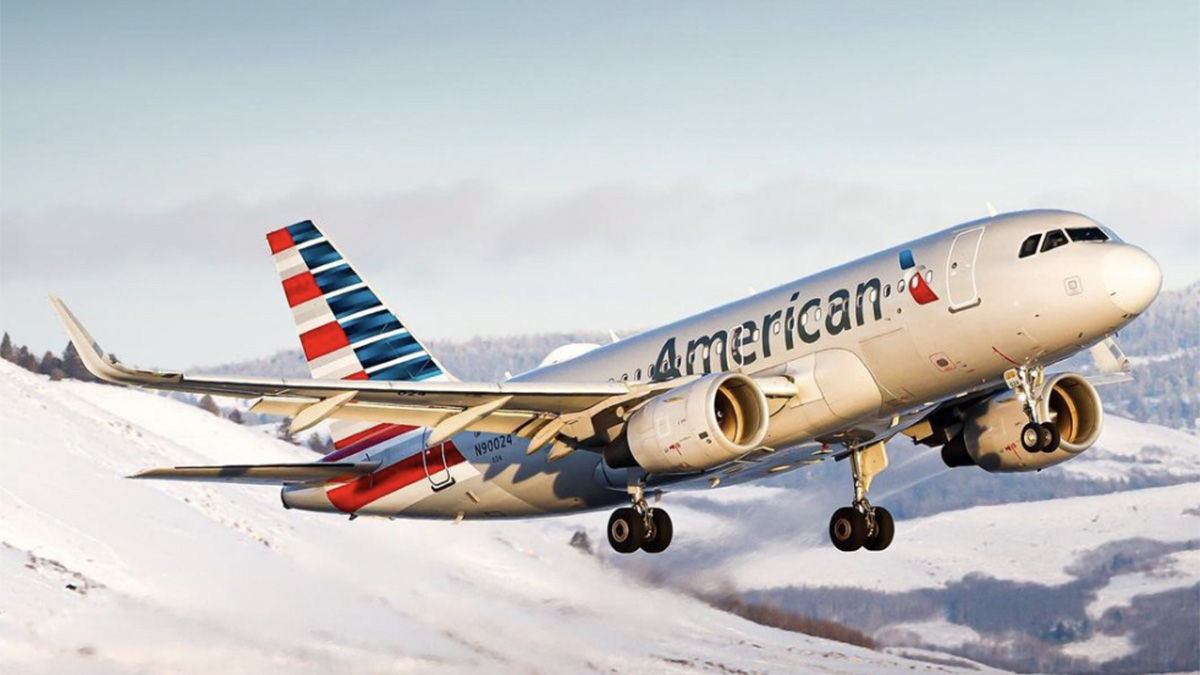
American Airlines has launched a new enhanced equipment trust certificate (EETC) transaction – returning to the market for the first time since 2021. United Airlines has been the only other public issuer for new delivery aircraft during that time, with its UAL 2024-1AA issuance.
American plans to raise a total of $1.1bn through the issuance, secured against a portfolio of 25 aircraft.
The portfolio consists of all new delivery aircraft, including 12 737 MAX 8, two A321XLR, three 787-9, and eight Embraer E175 aircraft. No aircraft will exit the collateral pool before the EETC tranches mature.
The XLRs and 787-9s are scheduled for delivery during the fourth quarter, while the 737 MAX jets are scheduled for delivery between October and January 2026. The Embraer jets are scheduled for delivery from October through March next year.
The transaction's substitution rights mirror United's market standard, offering flexibility for American to replace aircraft with one or more under certain conditions, provided a rating agency confirmation is obtained.
The issuance offers two tranches: class A and class B notes. The class A notes total $883.6 million, due May 2038, were rated A- by Fitch and A+ by S&P Global.
Fitch and S&P gave the $220.9 million B tranche, due November 2034, a BBB- and BBB rating, respectively.
An American spokesperson said to Airline Economics that there was “strong investor interest”, with over 100 investors participating during a one-day marketing exercise, which generated shadow interest over $2.25bn on the A tranche and $300 million on the B tranche — well above the target size.
“During execution, orderbooks peaked at around $8.2bn with a robust oversubscription of 7.0x on the A tranche and 9.3x on the B tranche, allowing the syndicate to skip guidance and proceed straight to launch at 35 basis points and around 40 basis points inside price talk for the As and Bs, respectively,” the spokesperson said.
“On a relative basis, this transaction priced in line with all time tights for historical structure premium versus generic A-rated corporate credits with a premium of around 35 basis points; the transaction priced with no visible premium versus the outstanding UAL 2024-1AA, despite the United transaction's higher ratings."
The A tranche has a weighted average life (WAL) of 8.7 years, and final balloon payment equal to 37% of the initial principal balance. The initial loan to value (LTV) ratio for the tranche is 58%.
The B notes have a WAL of six years, and a final balloon payment equal to 29% of the initial principal balance. The initial LTV ratio for this tranche is 72.5%. American said it is keeping the option to issue class B at the same time as the class A notes or in the future. Additionally, the airline said it has the option to issue additional subordinated notes “at any time in the future”.
Fitch noted the class B tranche was rated one notch below the class B tranches in American’s 2021 and 2017 EETC B tranches – each of which were rated BBB.
“Each certificate will be fully cross-collateralised, and all indentures will be fully cross-defaulted from day one,” the ratings agency said. “Fitch believes this will limit American's ability to 'cherry-pick' aircraft in a hypothetical restructuring.”
Both tranches benefit from 18-month liquidity facilities provided by Natixis, which has three-semi annual interest payments.
JP Morgan and Deutsche Bank will act as joint structuring agents, as well as the two banks along with BNP Paribas acting as lead bookrunners.
SMBC will act as depositary through its New York branch.
Other banks active in the deal are Barclays, BofA Securities, Credit Agricole, Goldman Sachs, Morgan Stanley, MUFG, Loop Capital Markets, ICBC Standard Bank, Mizuho, NatWest, US Bancorp, and BOK Financial Securities.
As of the end of third quarter, American had $10.3bn in total available liquidity and generated a record $13.7bn in revenues during the quarter. As of the end of the quarter, the company had a total debt of $36.8bn after reducing its by $1.2bn during the quarter, with the airline targeting under $35bn by the end of 2027.