

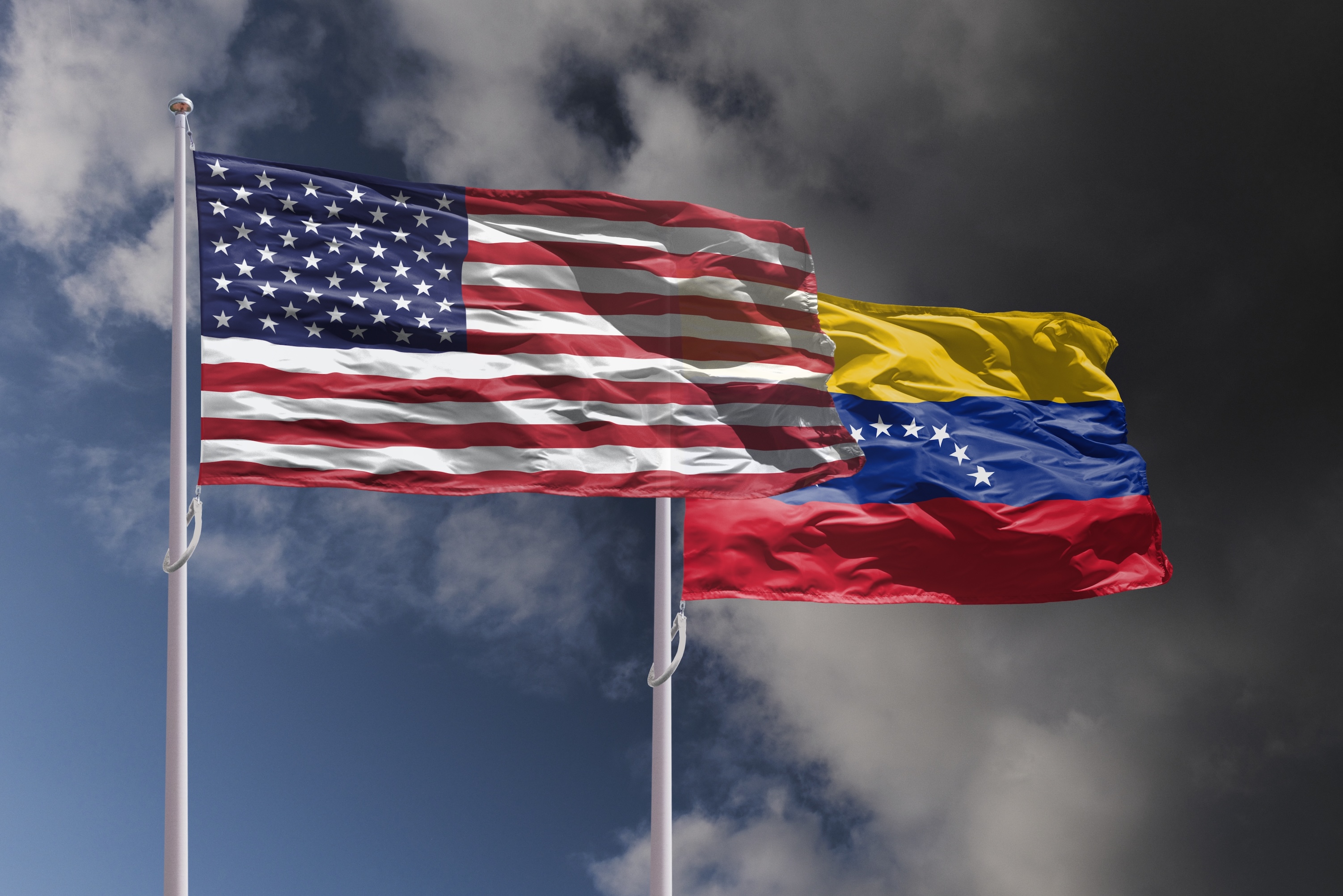
According to analysis by Airline Economics+, most carriers had already rerouted around Venezuela’s Maiquetía FIR before the FAA’s January 3 escalation, limiting operational disruption. However, traffic data reveals an unexplained surge in flights around December 11, likely linked to temporary resumptions and staggered advisory expirations.
On Friday, November 21, 2025, the US FAA issued a security NOTAM advising civil aircraft operators of potential risks in Venezuelan airspace, and most international airlines had already cancelled services to Venezuela and avoided Venezuelan overflight – specifically the Maiquetía FIR (Flight Information Region) – well before the events of January 3. This is evident from the charts below, produced using ADS-B data, for flights from the US to South America and from Spain to Colombia. Local Venezuelan carriers continued to operate, and for a time a handful of regional airlines including Copa, Satena and Boliviana also continued to serve the country.
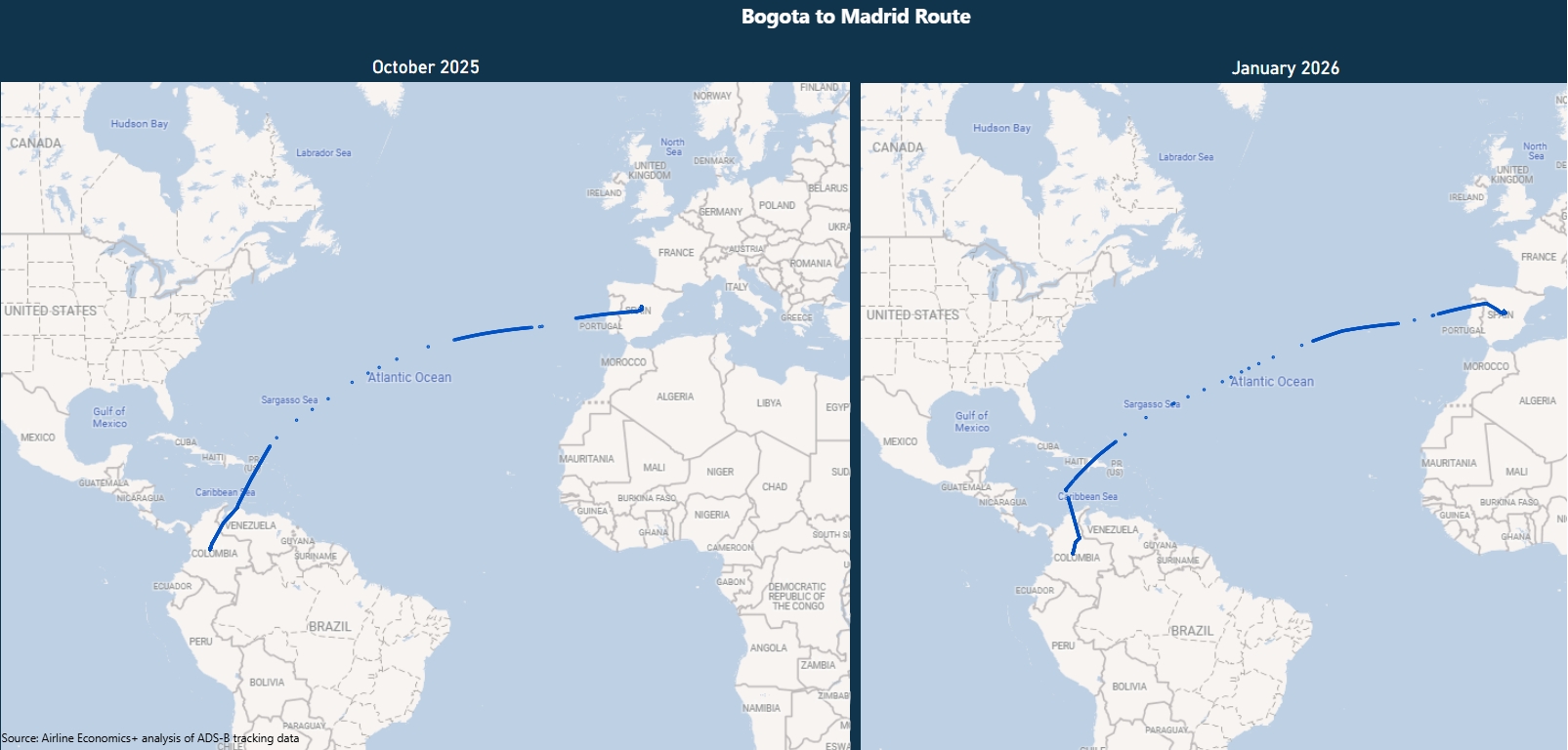
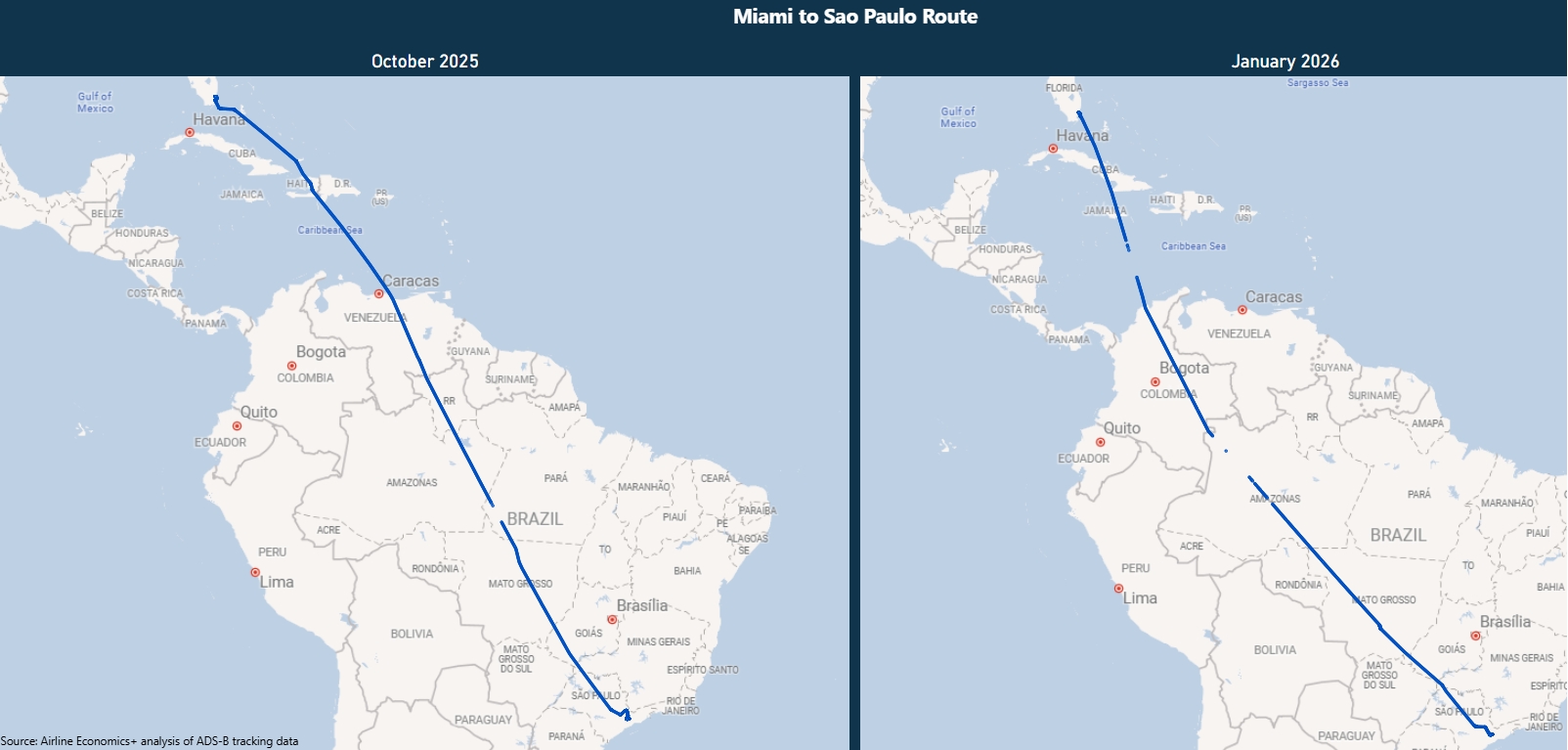
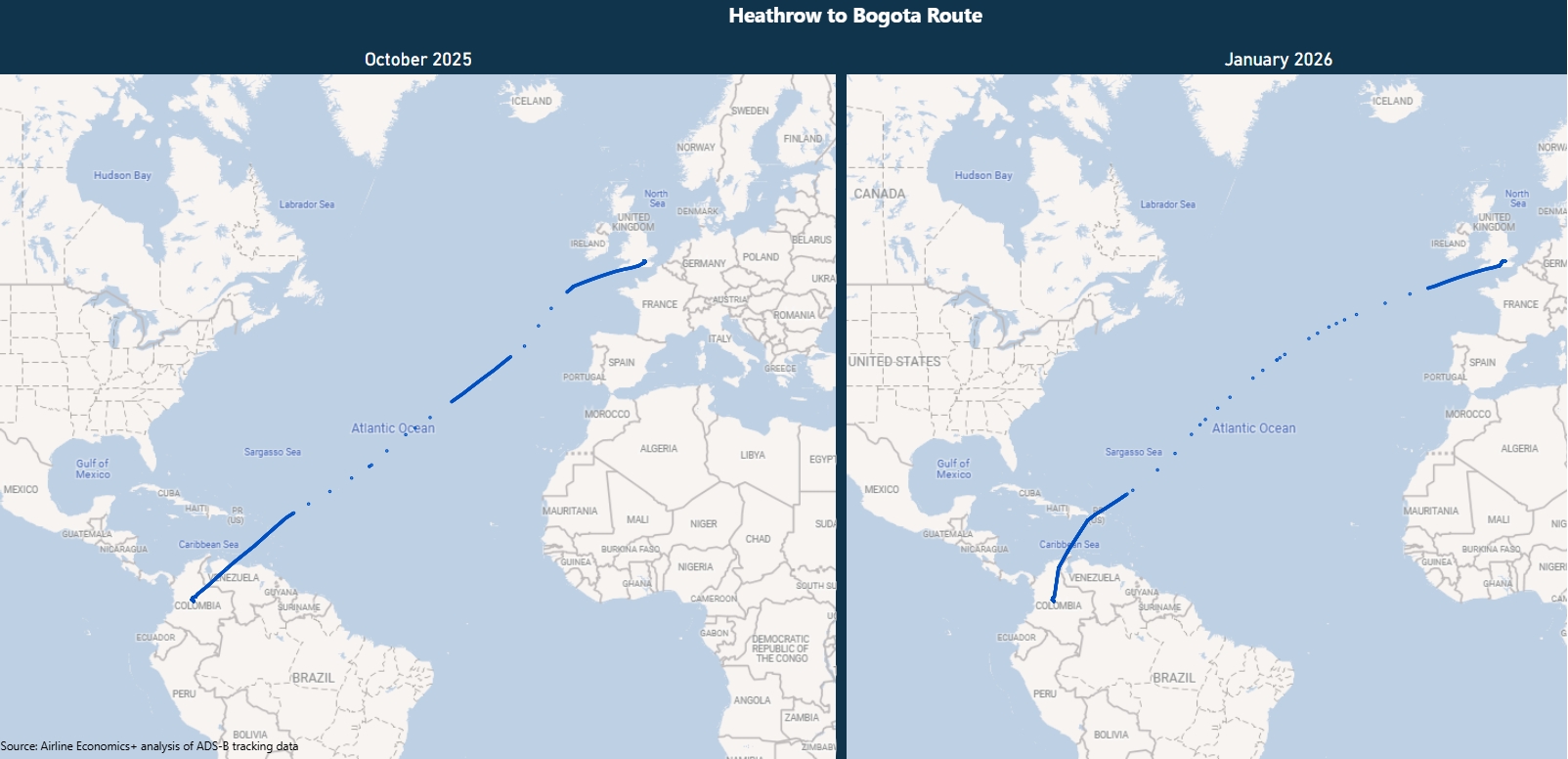
From an international aviation perspective, the operational impact of this restriction has been limited. The Maiquetía FIR is relatively small, and Venezuela’s central location allows for practical rerouting. In the example in the charts, US carriers operating from JFK and MIA to South America have flown eastward, flying through the Piarco FIR managed by Trinidad & Tobago, or westward through Colombian airspace. Similarly, transatlantic flights between Spain and South America – a heavily trafficked route – now route north of Venezuela over the Caribbean before turning south. The resulting increase in flight time and fuel burn is negligible. Caribbean operations remain largely unaffected.
While most international carriers have opted to reroute around the Maiquetía FIR according to the maps with seemingly little disruption, Copa Airlines appears to have notified the FAA specifically for its service between Panama City and Port of Spain, which ADS-B tracking shows the most direct routing crossing Venezuelan airspace during the period with only a few exceptions.
Copa flights on January 5 and again today on January 6 transited the Maiquetía FIR – apparently the only airline still doing so.
On January 3, the FAA went further than closing the Maiquetía FIR to US traffic, restricting US-registered aircraft from the airspace in neighbouring FIRs that cover the neighbouring airspace east of Trinidad, extending up the Caribbean island chain, and north towards Curacao and Puerto Rico for 24 hours. That closure effectively halted flights between the US and the Caribbean, particularly to/from San Juan (the largest hub in the region) as well as leading to cancellation of services from Europe, during the post-Christmas snowbird season. It will be interesting to see whether that has an impact on first quarter earnings for carriers with exposure to the region, particularly if the US administration decides to take further action in the region.
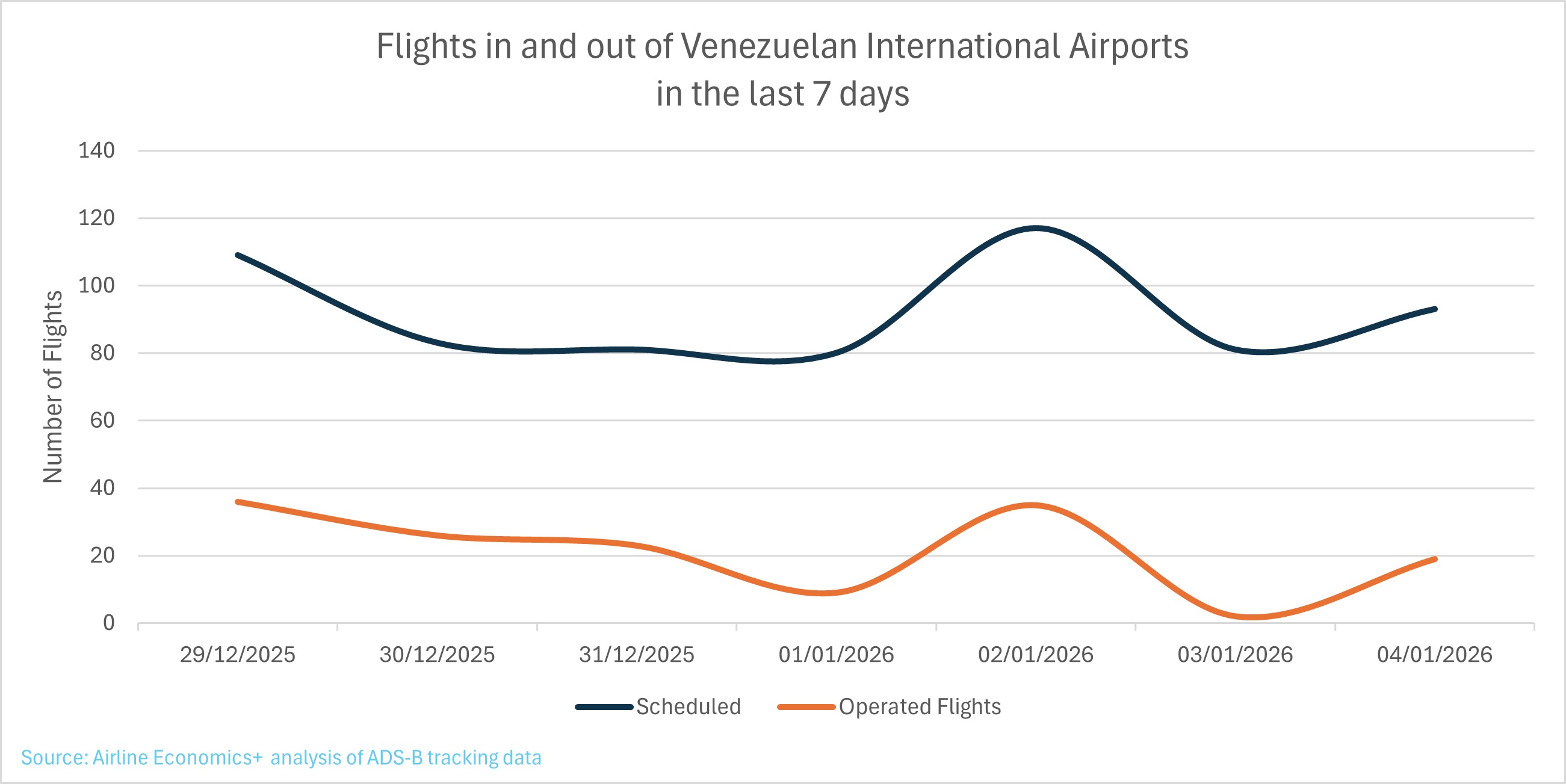
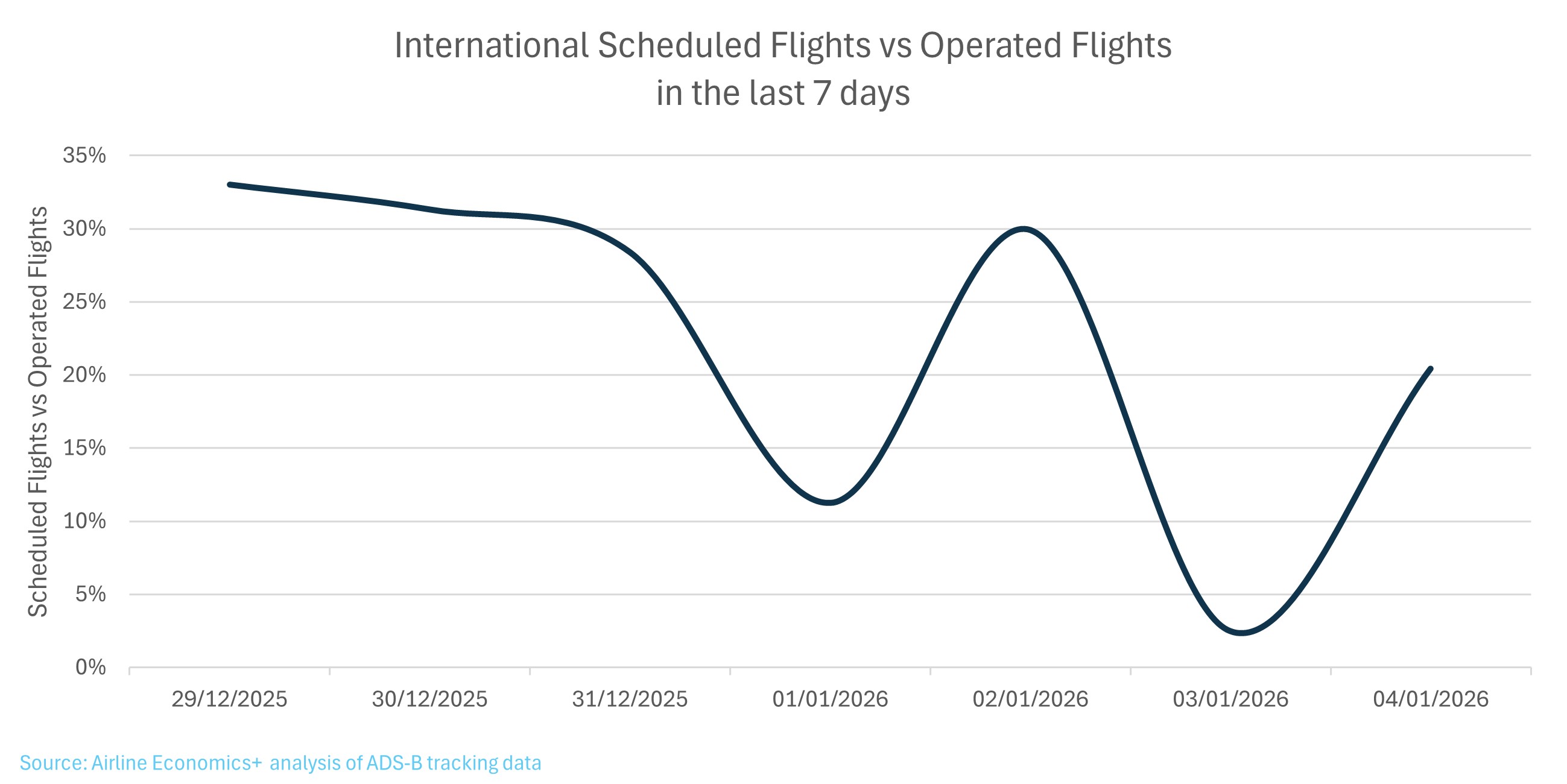
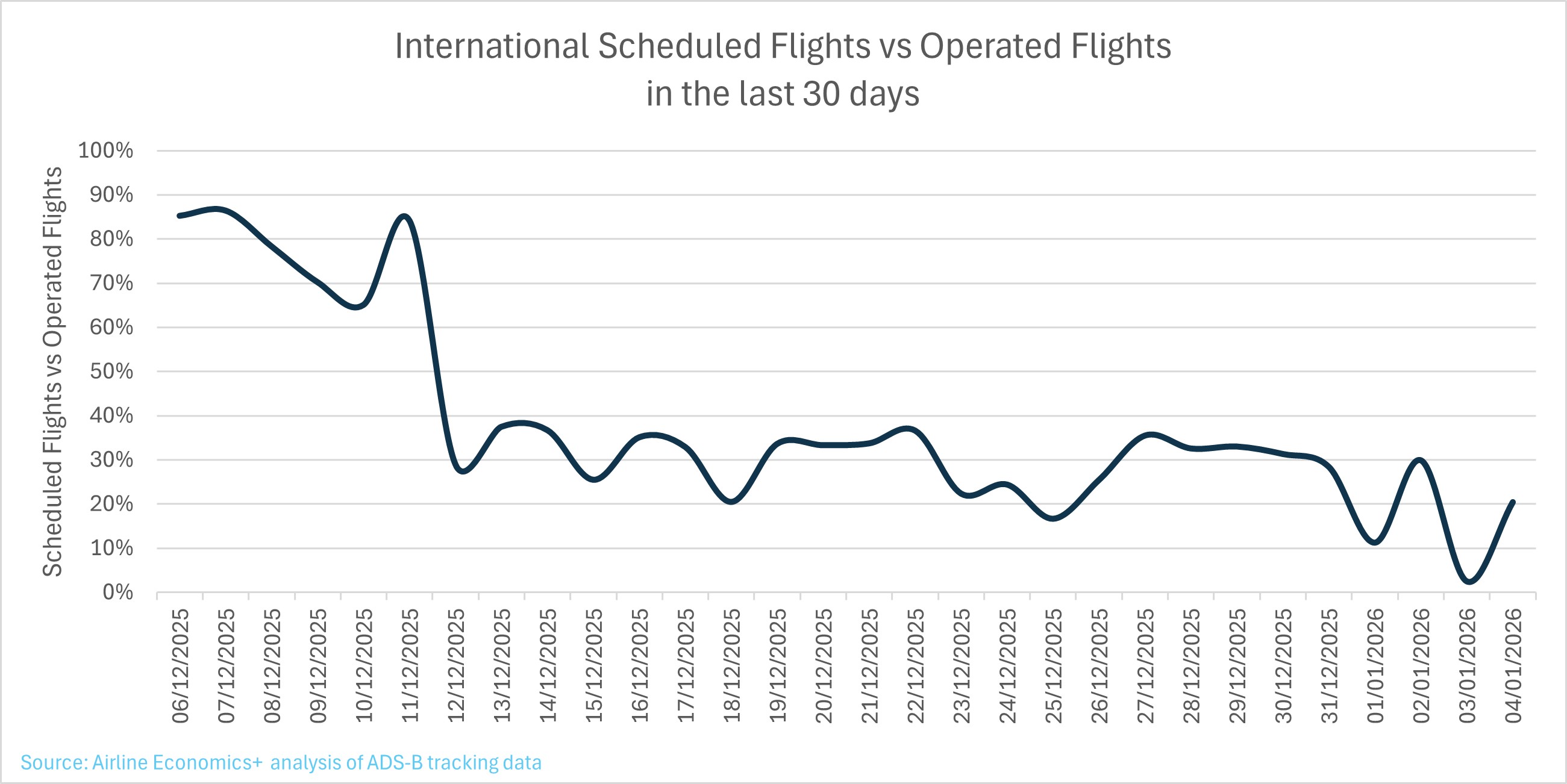
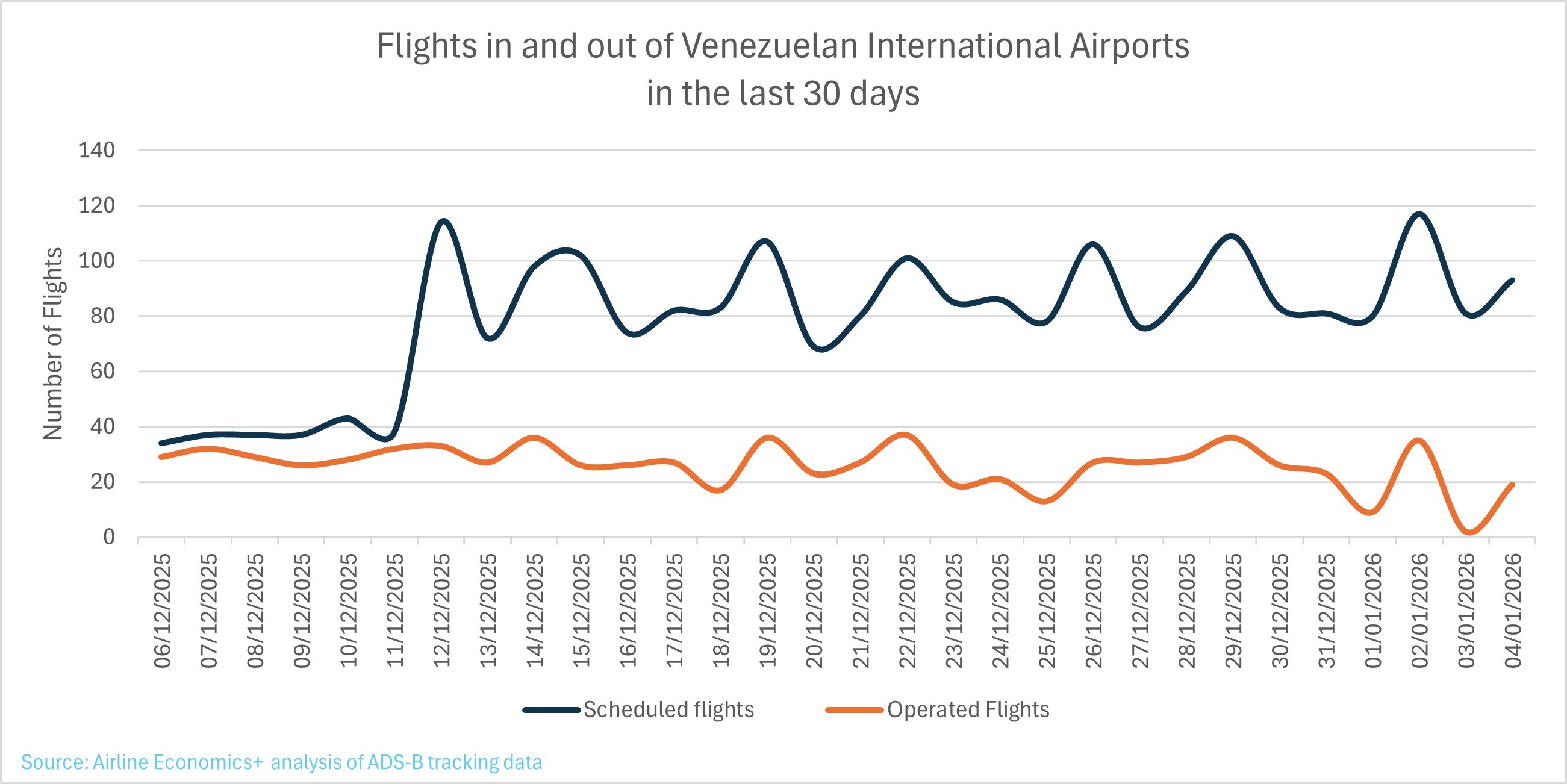
Traffic data over the past 30 days shows a sharp decline in international flights to/from Venezuelan airports compared to scheduled operations. In early December, actual flights were 60–80% of scheduled levels; since the overflight restriction, this has dropped to below 40%, reaching near zero on January 3 during the US operation. The spike around December 11 remains unexplained but could be attributed to Copa’s resumption of its suspended Caracas services creating a temporary burst of increased activity, while other regional carriers—including Satena, Wingo, and domestic Venezuelan airlines like Laser— reported preventive suspensions, some of which ended around this time. Moreover, the FAA’s security NOTAM for the Maiquetía FIR was initially issued November 21, and Spain’s advisory remained in effect until December 31, while Portugal’s advisory expired around December 10. Once Portugal lifted its advisory, Portuguese operators like TAP and IberoJet may have briefly resumed flights but then likely pulled back as Spain's broader advisory persisted.
This patchwork of advisories – one lifted, another still active – could have created brief pockets of resumed overflights or service, contributing to the spike.
Additional charts illustrate the gap between scheduled and operated flights, indicating widespread cancellations and disruption amid ongoing restrictions and the obvious political uncertainty.
A review of Latin American carriers, particularly LATAM, shows much of their Venezuelan activity is via codeshare with local airlines such as Avior and Conviasa. Avior announced on December 4 that normal operations would resume from December 5, and Conviasa also appears to be operating normally.